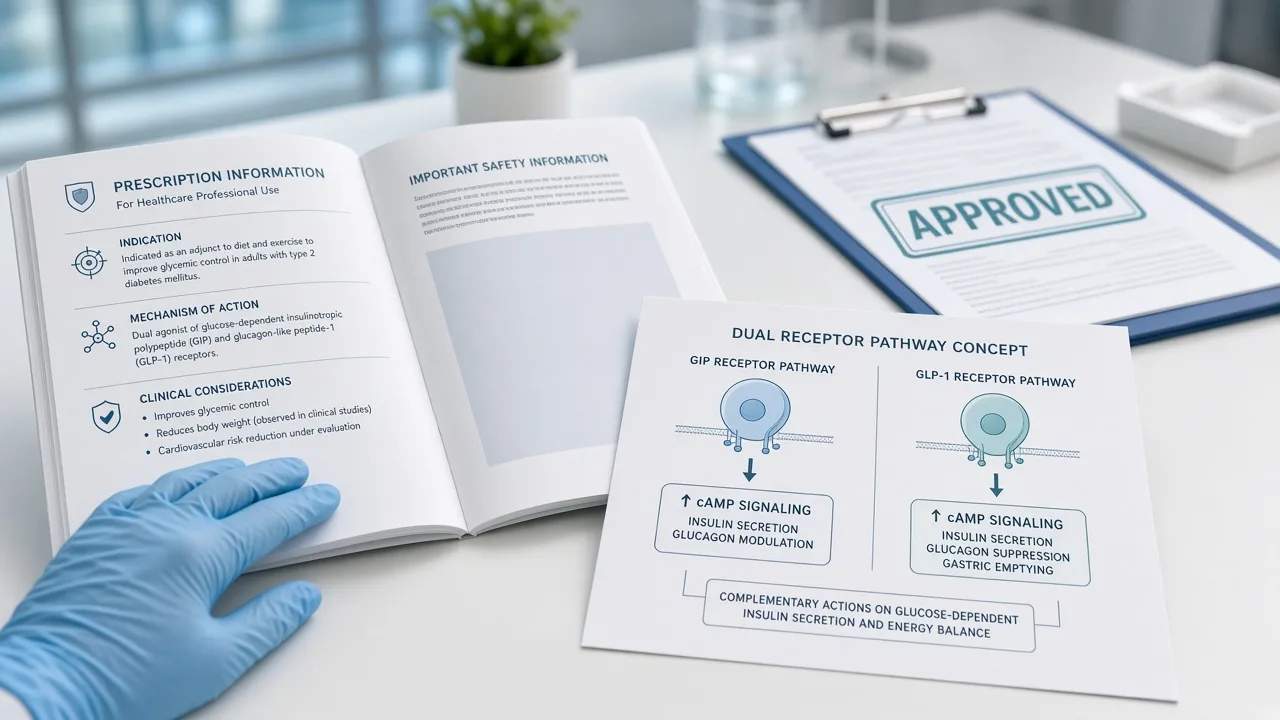

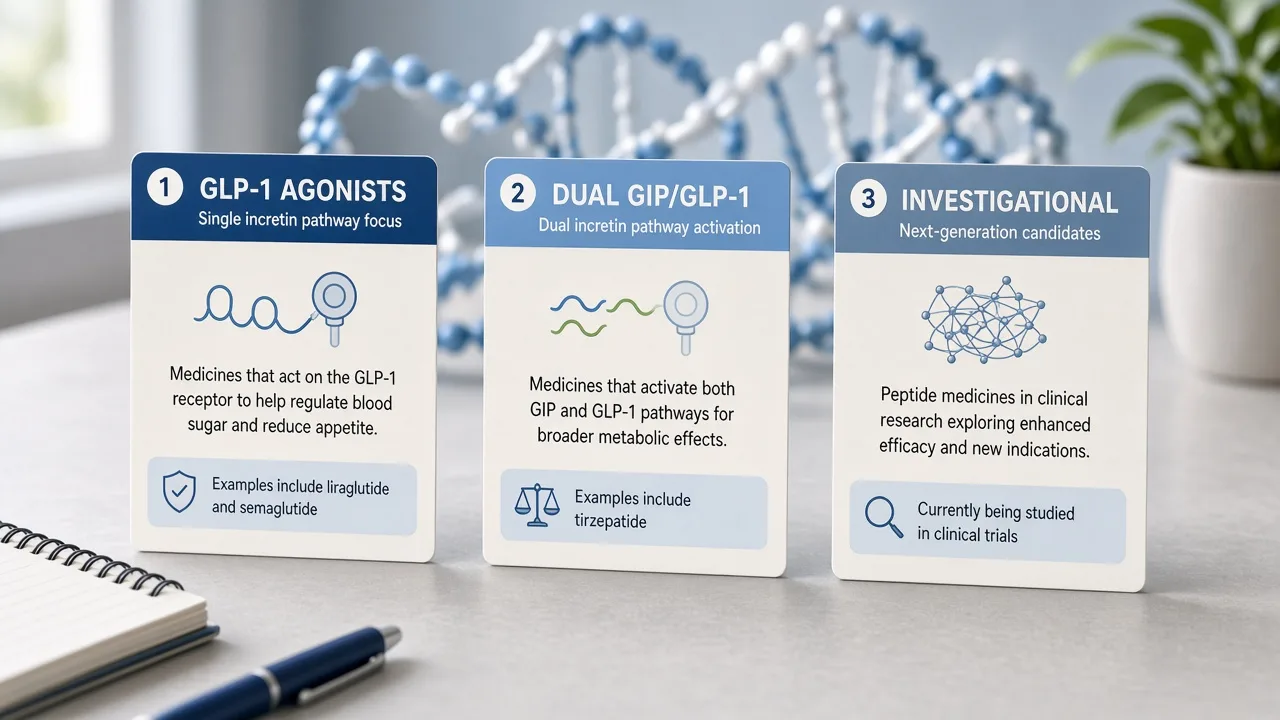
Public talk about weight-loss and diabetes peptides often collapses many different molecules into one viral label. This guide explains how readers can separate glucagon-like peptide-1 (GLP-1) receptor agonists, dual GIP/GLP-1 agonists, and triple agonists still in trials. It is research and regulatory literacy only. It is not medical advice, not a ranking of products, and not dosing or purchasing guidance.
A category map before brand names
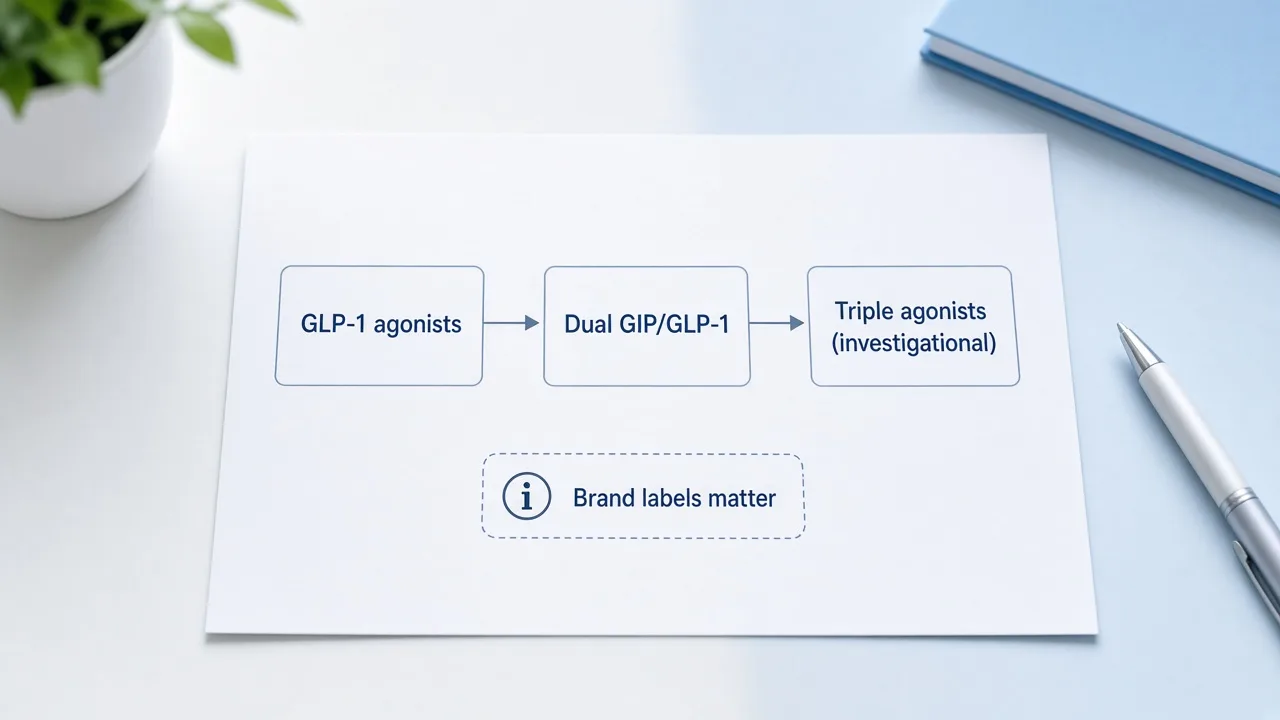
Start with mechanism families, not influencer nicknames. GLP-1 receptor agonists primarily target the GLP-1 pathway. Dual agonists such as tirzepatide target both GIP and GLP-1 receptors. Triple agonists in development, including retatrutide, add glucagon-receptor activity in sponsor descriptions.
Those families are useful reading tools. They are not permission slips to treat every online powder or compounded vial as equivalent to an approved pen.
Brand labels beat viral synonyms
Approved medicines are defined by their prescribing information: indication, population, limitations of use, and warnings. Public nicknames often erase those boundaries.
When a headline says only a molecule name, ask which brand, which indication, and whether the product is approved, compounded, or investigational.
Approved finished drugs versus investigational peptides
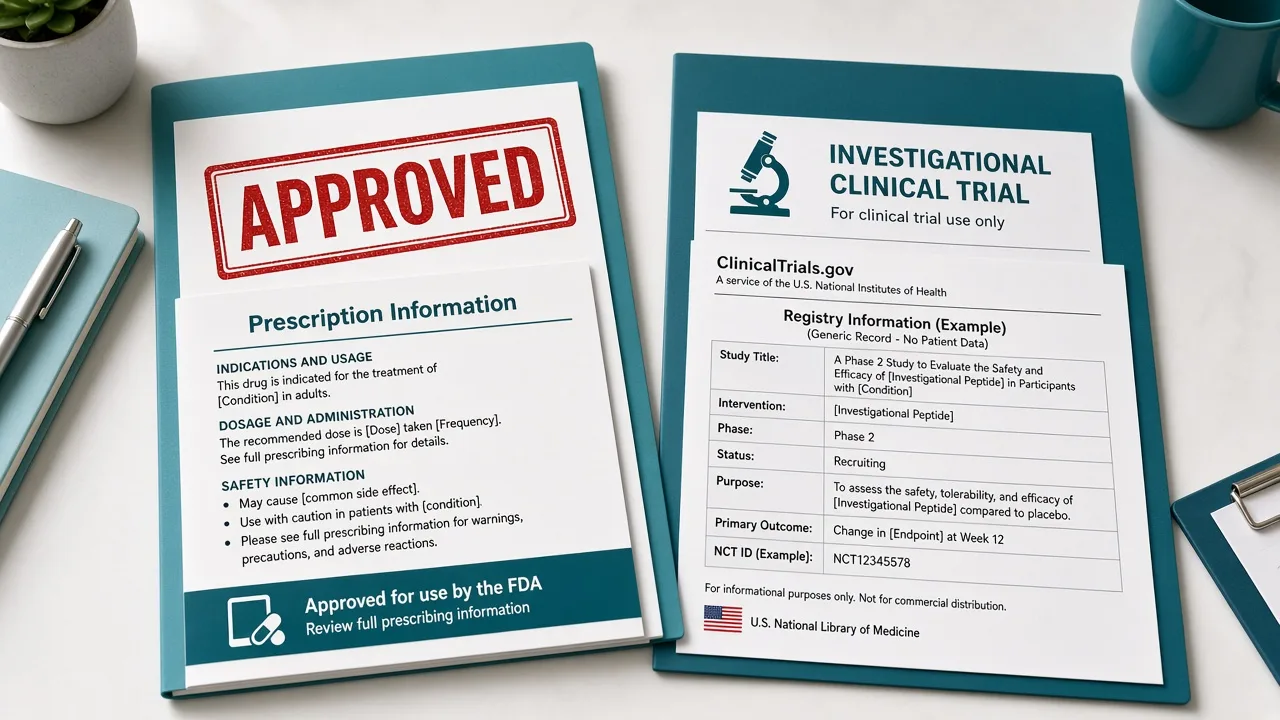
An FDA-approved finished drug has been reviewed for a labeled use. An investigational peptide is still being studied. Topline Phase 3 press releases are not the same as approval.
FDA has also warned about unapproved GLP-1 related products sold to consumers, including products falsely labeled for research use. That warning is a literacy signal about marketplace noise.
- Approved: check the current FDA label for the exact brand.
- Investigational: look for ClinicalTrials.gov records and peer-reviewed publications, not only press releases.
- Compounded or gray-market: not the same regulatory category as the branded approved product.
How to use the rest of this article cluster
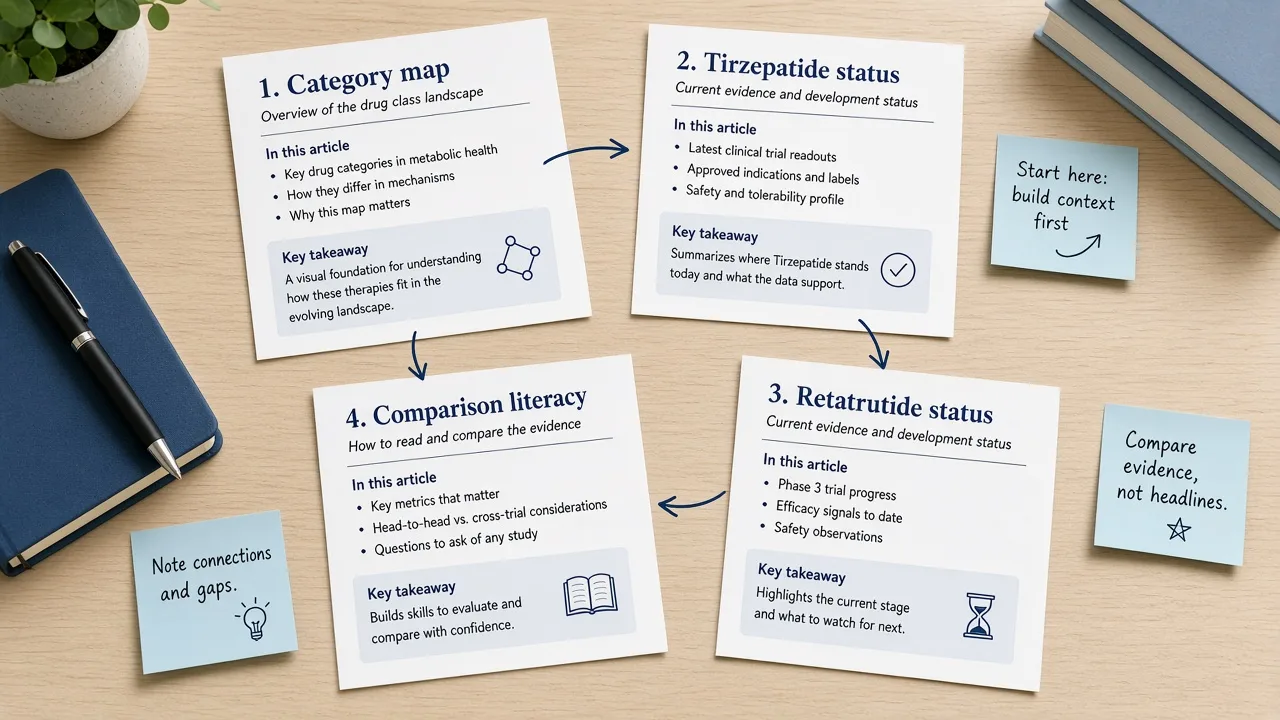
Read tirzepatide research status for an approved dual-agonist case study. Read retatrutide investigational status for an investigational triple-agonist case study. Later cluster articles will cover brand comparisons and compounding literacy without turning this map into a shopping guide.
When marketplace shortcuts appear, keep peptide safety education and the existing compounded vs approved peptide medicines explainer nearby.
Links back to the Research & Science hub
This article sits in the peptide research and science pillar. Return there for the evidence ladder, approved-versus-investigational framing, and trial-reading habits that surround every named molecule on this site.
If marketplace or research-use language is the main confusion, switch to peptide safety education. If you are comparing claims or reading headlines, use peptide comparisons and research news.