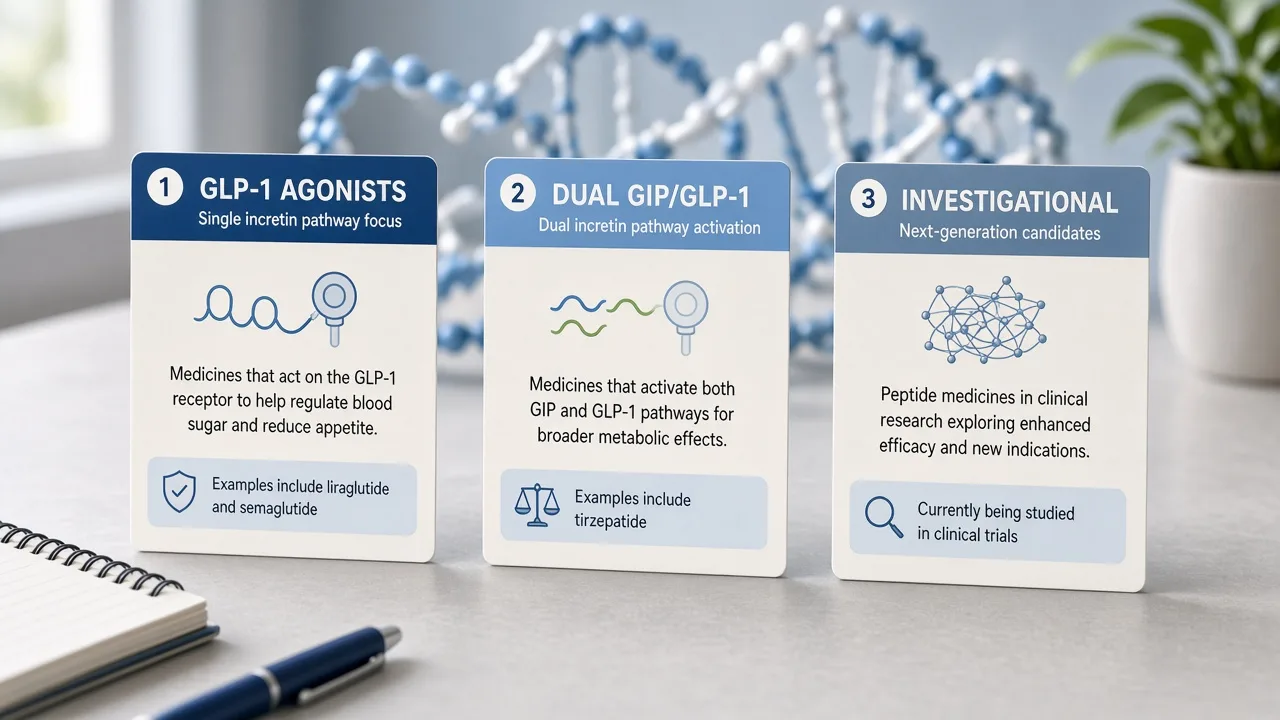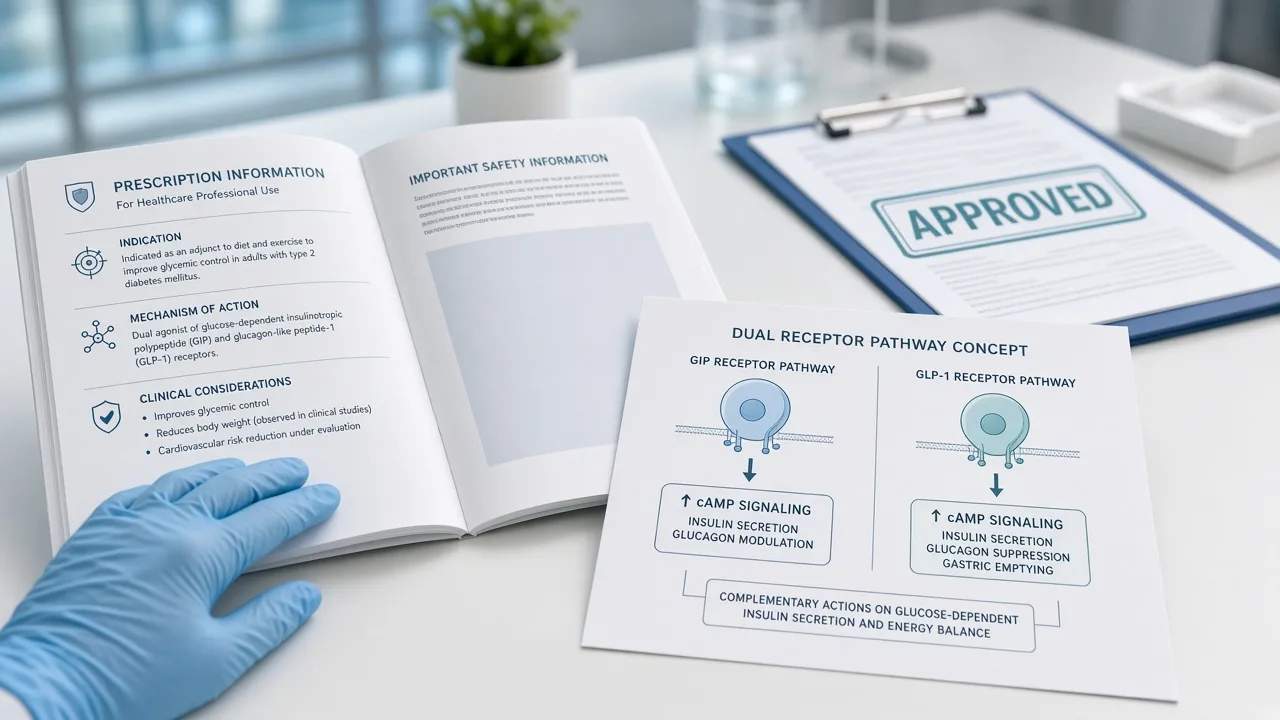


Retatrutide (development code LY3437943) is described by its sponsor as an investigational triple agonist of GIP, GLP-1, and glucagon receptors. It has been studied in Phase 3 programs, and public topline results have been reported. It is not an FDA-approved medicine. This article explains how to read that status without converting trial excitement into personal-use advice.
Investigational means not an approved finished drug

Retatrutide is being evaluated in clinical development. Until a regulator approves a specific product application, it is not an approved medicine patients can lawfully obtain as a finished FDA-approved drug.
Sponsor statements that a Biologics License Application is planned for a future quarter are planning disclosures. They are not approval dates.
How to read Phase 3 and topline news

Topline releases summarize selected endpoints. Full protocols, adverse-event detail, and peer-reviewed papers carry more of the evidence structure readers need.
ClinicalTrials.gov records help verify that a named study exists, its phase, and its reported status. They do not turn a trial into a consumer product.
Why FDA compounding statements matter here
FDA has warned that retatrutide is not eligible for the compounding pathways it describes and has warned about unapproved products marketed to consumers. That is a major literacy boundary for anyone encountering gray-market offers.
Boundaries for Viral Peptides readers

This site will not provide retatrutide dosing, cycling, reconstitution, or sourcing guidance. Interest in trial news is not a protocol.
Compare this page with tirzepatide research status to see the difference between approved dual-agonist brands and an investigational triple agonist. For headline habits, keep peptide news vs peer review nearby.
Links back to the Research & Science hub
Return to peptide research and science for approved-versus-investigational framing and trial-phase literacy. FDA compounding and research-use marketplace boundaries belong under peptide safety education, especially compounded vs approved peptide medicines.