
Peptide Basics: Amino Acid Chains Guide
Educational guide to peptide basics: what peptides are, how they differ from proteins, how researchers classify them, and how to read the science without hype.

Peptide basics is the foundation for everything else on Viral Peptides. This guide explains peptides in plain language, what they are, why length and structure matter, how signaling is discussed in research literature, and how to separate educational science from unsupported claims. It is written for beginners and advanced readers who want a clear overview before exploring more specific articles.
Key takeaways
- Peptides are short chains of amino acids linked by peptide bonds; educational sources often describe them as roughly 2 to 50 residues, shorter than typical proteins.
- Researchers classify peptides by length, origin, and function, these labels help you read papers, not prescribe use.
- Peptides often act as messengers in biological systems; published mechanisms are usually studied in controlled research settings.
- Many native peptides are short-lived in biological settings because proteases can cut peptide bonds, which is why papers discuss half-life and stability.
- Educational peptide content should emphasize evidence limits, experimental status, and clear separation from medical advice.
- Start with this guide for the big picture, then read related articles for deeper subtopics. Use the calculator only for educational reconstitution math.
Educational disclaimer
This guide is for research literacy and education only. It is not medical advice. Read our disclaimer.
What this Peptide Basics guide covers
This guide gives you a complete, broad orientation to peptides. Instead of jumping straight into one compound name or one laboratory method, it walks through the ideas that appear again and again in peptide science, definition, structure, classification, biological roles discussed in literature, research literacy, and careful reading habits.
How this page works as a map
Think of this page as a map. The articles listed below go deeper on specific questions such as half-life, receptor binding language, or a single research peptide discussed in published studies. If you only read one page first, start here. Then open the related article that matches your next question.
Why the guide stays deliberately broad
This guide is deliberately broad. Some ideas appear again in later articles with more detail. Here we connect the whole topic; those articles zoom in on one part at a time.
Educational boundaries on this site
Everything on Viral Peptides is educational. We explain how researchers talk about peptides in scientific literature. We do not provide medical advice, dosing guidance, or instructions for personal use of experimental compounds.
What are peptides? The core definition

Peptides are molecules made from amino acids joined in a chain by peptide bonds. Amino acids are the building blocks; a peptide bond is the chemical link between them. When that chain is relatively short, scientists usually call it a peptide. When the chain is longer and folds into a complex three-dimensional structure, they usually call it a protein. There is no single universal cutoff that every textbook uses the same way, but educational biochemistry sources such as StatPearls commonly describe peptides as short strings of about 2 to 50 amino acids, while noting that naming can vary by field.
Why length language matters when you read research
That length distinction matters because it shapes how readers interpret research. A short peptide may be discussed as a signaling fragment, a hormone-like messenger, or a synthetic research sequence. A protein may be discussed as an enzyme, receptor, structural fiber, or large therapeutic biologic. Peptide Basics starts with this vocabulary so later articles do not sound like marketing labels.
Natural biology versus laboratory research sequences
Peptides occur naturally in living systems and can also be produced in research laboratories as purified sequences for study. Natural examples discussed in biology education include short signaling molecules involved in communication between cells. Laboratory research peptides are designed or isolated so scientists can examine structure, binding, stability, or biological pathways in controlled experiments. Those two contexts, natural biology and experimental research, should not be collapsed into one casual claim about human use.
A short history of how peptide science grew
Historically, peptide science grew from classical biochemistry: isolating natural messengers, sequencing them, and later synthesizing analogues to test structure-activity relationships. Modern papers may still use that same logic even when methods are more advanced. Understanding the lineage helps you see why “peptide” is both a chemistry word and a research category.
Where to go for a deeper definition article
If you want a dedicated deep dive on definition and classification language, read our article What Are Peptides? Definition and Classification Guide. This page stays broader: it connects that definition to the rest of the learning path.
A practical beginner study path
If you are new, do not try to memorize compound lists first. Learn the language first. Read this guide once without rushing. On a second pass, collect terms you still find fuzzy, peptide bond, receptor, in vitro, half-life, endogenous, and look them up in our linked articles.
Week-by-week learning goals
Week-one goal: explain peptides versus proteins in your own words without copying a marketing slogan. Week-two goal: read an abstract and identify study type and endpoint. Week-three goal: open a Research & Science article and check whether claims stay inside the evidence presented.
Why named compounds come later
Only after that foundation should you explore named research peptides. Starting with names first is how people skip uncertainty and jump to hype. Peptide Basics exists to reverse that order.
Using this page as a syllabus
Use the table of contents on this page as a syllabus. Skip around if you already know a section, but return to safety and research literacy before you leave. Those sections are the guardrails.
Mini glossary for Peptide Basics
Key terms work better when they sit in one place. This glossary is short on purpose. It is a quick reference, not a textbook replacement.
- Amino acid: a molecular building block that can join into peptide chains.
- Peptide bond: the link between amino acids in a chain.
- Oligopeptide: a relatively short peptide sequence.
- Polypeptide: a longer amino-acid chain; proteins are folded polypeptides with complex structure.
- Endogenous: produced naturally within an organism.
- Synthetic research peptide: a sequence produced for laboratory study.
- Receptor: a biomolecule that can bind a ligand and participate in signaling research readouts.
- In vitro: experiments in cells or biochemical systems outside a living animal.
- In vivo: experiments in living organisms, often animal models in preclinical work.
- Half-life: a stability/time parameter under defined experimental or biological conditions.
Common myths to watch for

Myth one: “Peptide” always means a safe consumer supplement. Reality: the word spans natural biology, approved medicines in some cases, and experimental research compounds with very different evidence and regulatory status.
Animal findings are not automatic human proof
Myth two: An impressive animal study equals a proven human outcome. Reality: translation failure is common in biomedical research. Careful readers should demand the evidence tier.
Length alone does not make peptides interchangeable
Myth three: If two peptides are both short chains, they are interchangeable. Reality: sequence, target, stability, and data quality can differ completely.
Online confidence is not scientific consensus
Myth four: Online confidence equals scientific consensus. Reality: consensus is built from replicated evidence and critical review, not from repetition on social platforms.
Calculators are math tools, not dosing advice
Myth five: Educational calculators imply personal dosing advice. Reality: our calculator converts units for learning reconstitution math. It does not recommend use.
Common myths versus a careful reading habit
| Myth | Better reading habit | Why it matters |
|---|---|---|
| Peptide always means a safe supplement | Ask what object is being named: natural messenger, approved medicine, or experimental research sequence | One word covers very different evidence and regulatory contexts |
| Animal success equals human proof | Name the model and endpoint before generalizing | Translation failure is common in biomedical research |
| Same length means interchangeable | Compare sequence, target, stability data, and study quality | Short chains can still differ completely in biology discussed |
| Online confidence equals consensus | Look for replication, peer review, and stated limits | Repetition is not the same as evidence strength |
| A calculator implies personal dosing advice | Treat unit conversion as math education only | Keeps learning tools from becoming use instructions |
From amino acids to chains: structure without the jargon trap
Every peptide story starts with amino acids. There are twenty standard amino acids commonly used in human proteins, each with a shared backbone and a unique side chain. The backbone is what allows amino acids to link into chains. The side chains create chemical personality, hydrophobic, charged, polar, and that personality influences how a finished peptide behaves in water, near membranes, or near a receptor surface in experimental models. Foundational cell-biology texts describe the same building-block logic: amino acids join head-to-tail through peptide bonds into directional chains with an N-terminus and a C-terminus.
From dipeptides to polypeptides
When two amino acids join, they form a dipeptide. Add more residues and you get tripeptides, oligopeptides, and longer polypeptides. Educational writing often uses “oligopeptide” for relatively short sequences and “polypeptide” for longer ones. Proteins are polypeptides that usually fold into stable tertiary (and sometimes quaternary) structures with defined biological jobs.
Secondary structure and flexibility
Secondary structure language also appears early in peptide papers. Readers will see terms such as alpha helix and beta sheet. These describe local folding patterns stabilized by hydrogen bonds. Not every short peptide forms a rigid fold in solution; many are flexible. Flexibility itself can be scientifically interesting because it affects how a sequence samples shapes when approaching a binding partner in vitro or in a model system.
Sequence notation beginners should recognize
Sequence notation is another beginner hurdle. Papers write peptides with one-letter or three-letter amino-acid codes, sometimes with modifications marked at the ends. You do not need to memorize every code on day one. You do need to recognize that a single letter change can mean a different experimental molecule. When internet posts rename compounds casually, check whether they are still talking about the same sequence discussed in a paper.
Charge, solubility, and keeping structure separate from outcomes
Charge and solubility appear constantly in methods sections. A peptide rich in hydrophobic residues may behave differently in water than a highly charged sequence. Educational readers should treat those details as experimental context, not as lifestyle tips. The goal of Peptide Basics is comprehension, not improvisation.
You do not need organic chemistry fluency to read peptide basics responsibly. You do need to notice when a claim jumps from “this sequence can be described structurally” to “this sequence does X in people.” Structure is measurable. Human outcomes require clinical evidence. Peptide Basics keeps those layers separate on purpose.
Length language you will see in educational and research writing
| Term | Typical meaning in teaching texts | Reader tip |
|---|---|---|
| Amino acid | Single building block with a backbone and side chain | Start here when a page mixes nutrition talk with research talk |
| Dipeptide / tripeptide | Two or three linked amino acids | Often appears in basic chemistry or digestion examples |
| Oligopeptide | Relatively short peptide chain | Useful when papers emphasize limited length |
| Polypeptide | Longer amino-acid chain | May or may not be discussed as a folded protein yet |
| Protein | Usually a longer, folded polypeptide with a complex biological role | Do not treat every protein discussion as a short-peptide claim |
Peptides vs proteins vs amino acids
Confusion between amino acids, peptides, and proteins is one of the most common beginner traps. Amino acids are monomers. Peptides are short polymers of those monomers. Proteins are typically longer polymers with more complex folding and often more elaborate biological roles. All three appear in nutrition, biochemistry, and biomedical research, but they answer different questions.
Why casual naming blurs important differences
In research communication, calling every amino-acid polymer a “peptide” can blur important differences. A large recombinant protein drug is not the same object as a short synthetic research peptide, even if both are built from amino acids. Likewise, dietary protein intake is not equivalent to discussing an experimental peptide sequence studied in animals. Educational clarity starts by naming the object correctly.
Three questions that improve research literacy
A useful reading habit is to ask three questions whenever you see the word peptide: How long is the sequence? Is it endogenous (made in the body) or synthetic (made for research)? What kind of evidence is being cited, cell culture, animal model, human observational data, or randomized clinical trial? Those questions turn vague internet language into a research-literacy checklist.
Regulatory and clinical context still matters
Another practical distinction is regulatory and clinical context. Approved peptide therapeutics, when they exist in medicine, are developed, manufactured, and monitored under formal frameworks. Experimental research peptides discussed on blogs often are not. Peptide Basics teaches the science vocabulary without erasing that gap.
Focused comparison articles coming next
We will publish a focused article on peptides versus proteins. Until then, treat this section as your working comparison and use the Research & Science section when you move from vocabulary into study design and literature analysis.
Amino acids vs peptides vs proteins: a quick comparison
| Feature | Amino acids | Peptides | Proteins |
|---|---|---|---|
| What they are | Monomer building blocks | Short chains of amino acids linked by peptide bonds | Longer chains that usually fold into complex structures |
| Typical educational size cue | Single residue | Often described around roughly 2 to 50 residues, with field variation | Usually longer and more elaborately folded |
| Common beginner mix-up | Treating dietary amino acids as identical to research peptides | Treating every short chain as interchangeable | Calling every amino-acid polymer a peptide |
| Better first question | Is this about nutrition, metabolism, or sequence chemistry? | How long is the sequence, and what evidence is cited? | Is this an enzyme, receptor, structural protein, or biologic drug context? |
Endogenous messengers vs synthetic research sequences
Another comparison beginners need early is origin. Endogenous peptides are made in living systems as part of normal biology. Synthetic research sequences are produced so scientists can study structure, binding, stability, or pathways under controlled conditions.
When analogues borrow from natural messengers
Those categories can overlap in inspiration. Many research analogues begin from a natural messenger and then change residues to test a hypothesis. Educational writing should still keep the categories distinct, because evidence, manufacturing context, and regulatory status can differ.
Why origin and status should appear early in a claim
When a webpage uses the word peptide without saying whether it means a natural messenger, an approved medicine, or an experimental research compound, slow down. Origin and status are part of the definition in practice, not optional footnotes.
Origin comparison for clearer reading
| Category | What it usually means | What careful readers check next |
|---|---|---|
| Endogenous peptide | A sequence produced naturally in an organism | Which tissue or pathway context is being discussed? |
| Synthetic research sequence | A sequence made for laboratory study | What model, endpoint, and purity context are reported? |
| Therapeutic analogue discussed in reviews | A modified sequence explored or developed in drug research | Is it approved for a labeled use, investigational, or only preclinical? |
| Vague internet label peptide | Often mixes the categories above | Ask for origin, evidence tier, and regulatory status before trusting the claim |
How peptides are discussed as biological messengers

In biology education, many peptides are introduced as messengers. Cells release or present short sequences that other cells can recognize. Recognition often involves receptors, proteins on or in a cell that bind a ligand and trigger downstream signaling. When a paper says a peptide “signals,” it usually means the authors are studying binding, pathway activation, gene-expression changes, or physiological readouts in a model system.
Not every peptide is a hormone
Not all peptides are hormones, and not all hormones are short peptides. Still, the messenger framing helps beginners understand why peptides attract research attention: small changes in sequence can change binding preference, stability, or distribution in experimental systems. That sensitivity is scientifically powerful and easy to oversell outside the lab.
Conditional language for published mechanisms
Published mechanisms may include receptor agonism or antagonism, enzyme interactions, membrane effects, or modulation of inflammatory and repair pathways in preclinical models. The correct educational posture is conditional language: studies report, models suggest, evidence is preliminary, human data are limited. Absolute claims are a red flag.
Kinetics vocabulary without overselling
Kinetics language will show up quickly: affinity, potency, efficacy, desensitization, and off-target binding. You do not need to master pharmacology on the first read. You should notice whether a claim is about binding in a dish, a pathway score, or a whole-animal outcome. Those are different evidence layers.
Next read for signaling pathway language
If you are exploring cellular signaling vocabulary next, our article on peptides and cellular signaling expands this section with more pathway language, still in an educational frame.
Stability, half-life, and why peptides can be fragile in research
Peptide papers frequently discuss stability because many sequences are vulnerable to proteases, enzymes that cut peptide bonds. In a living system or even in some laboratory conditions, a peptide may be broken down quickly. Reviews of therapeutic and research peptides often emphasize short plasma half-life and rapid proteolytic clearance as core practical limits. Half-life language describes how long a measurable amount remains under defined conditions. It is a research parameter, not a slogan.
Why conditions must stay attached to stability claims
Stability depends on sequence, modifications, temperature, pH, and the biological matrix being studied. A finding in buffered water is not automatically true in plasma. A finding in one species model is not automatically true in another. Educational readers should keep the experimental condition attached to the claim.
Stability engineering as research, not DIY
Researchers sometimes study chemical strategies that change stability in vitro or in animals. Those strategies belong to medicinal chemistry and drug-development research. They are not DIY instructions. On this site, half-life and stability topics stay explanatory so you can understand papers without crossing into unsafe how-to territory.
Dedicated half-life explainer
For a dedicated explainer, see Peptide Half-Life: Stability and Degradation in the article list below. Return here when you need the broader frame that connects stability to classification and research literacy.
Stability language: keep the condition attached to the claim
| Phrase you may see | What to ask | Educational caution |
|---|---|---|
| Stable in buffer | Which buffer, temperature, and time window? | Buffer results are not the same as plasma or in vivo results |
| Short half-life | Measured in which matrix or model? | Half-life is a research parameter, not a slogan |
| Protease sensitive | Which enzymes or conditions were tested? | Explains fragility, does not create use instructions |
| Modified for stability | What changed in the sequence or design, and in what study type? | Medicinal-chemistry concepts, not DIY guidance |
How researchers classify peptides
Classification systems exist to organize literature, not to create shopping categories. Common educational groupings include:
- By length: dipeptides, oligopeptides, polypeptides, useful when comparing size and folding complexity.
- By origin: endogenous sequences found in organisms versus synthetic sequences produced for research.
- By function discussed in papers: signaling, antimicrobial research, structural fragments, enzyme-related peptides, and other research classes.
- By modification: sequences that include chemical changes such as amidation, cyclization, or nonstandard residues used to study stability or binding in vitro.
Classification axes used in peptide literature
| Classification axis | Example labels | What it helps you understand |
|---|---|---|
| Length | Dipeptide, oligopeptide, polypeptide | Size and folding complexity cues in papers |
| Origin | Endogenous vs synthetic | Whether the sequence is natural biology or laboratory-made for study |
| Function discussed | Signaling, antimicrobial research, structural fragment | What kind of experimental question the paper is asking |
| Modification | Amidation, cyclization, nonstandard residues | Why stability or binding results may differ from an unmodified sequence |
Why classification changes how you read a paper
Once you know the class labels, abstracts become easier to parse. An antimicrobial peptide paper may focus on membrane interaction assays. A signaling peptide paper may focus on receptor pharmacology. A stability paper may focus on half-life, proteases, or formulation conditions in laboratory settings. Same word, “peptide”, different experimental questions.
Avoiding false equivalence across research peptides
Classification also prevents false equivalence. Two research peptides can share a similar length and still differ in receptor targets, solubility, and evidence quality. Educational comparisons should compare like with like: same evidence tier, same model system, same outcome measures whenever possible.
How comparisons depend on this vocabulary
On Viral Peptides, Comparisons & News covers side-by-side literature explainers. Peptide Basics gives you the vocabulary those comparisons depend on. If a comparison article names specific research compounds, read it together with Safety & Guides so mechanism curiosity does not turn into unverified personal guidance.
Peptide synthesis as a research concept (not a protocol)
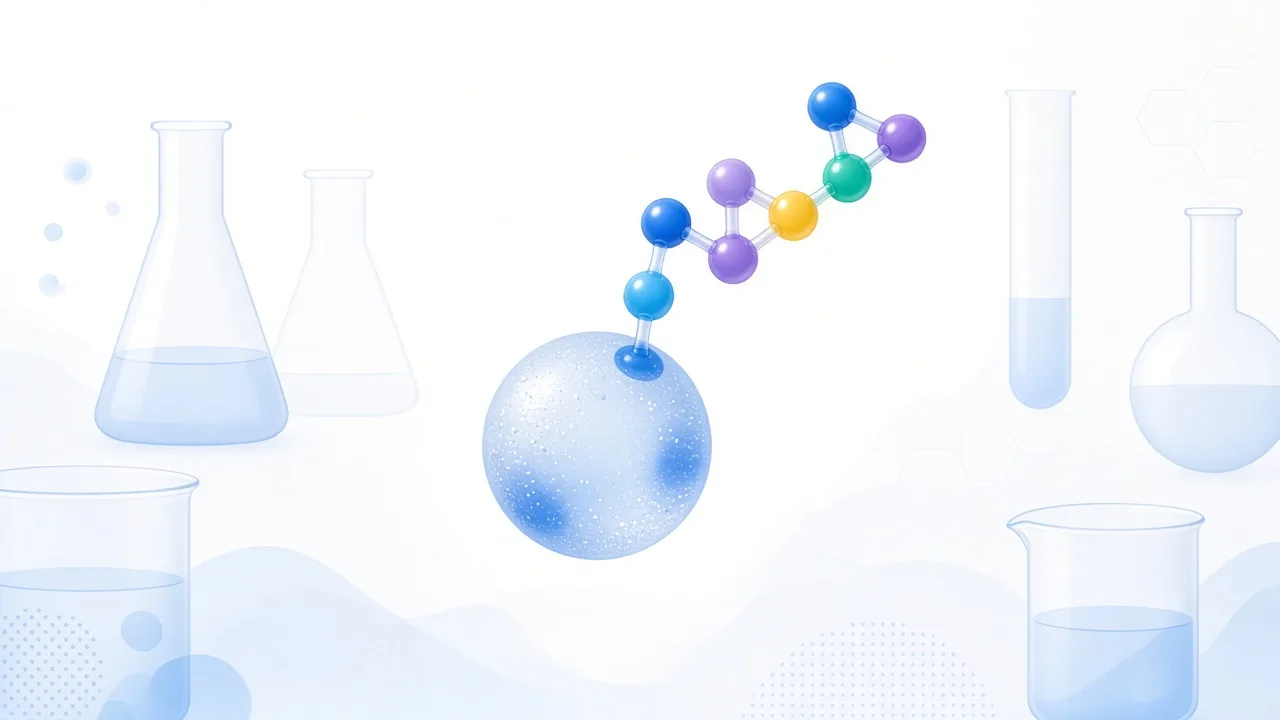
You will see “peptide synthesis” in many educational and scientific contexts. In research, it usually means chemists or automated systems assembling a defined amino-acid sequence so it can be analyzed. The existence of synthesis methods is part of why peptide research expanded: scientists can make analogues and test hypotheses about structure and function.
Concept level only, not a workshop manual
This guide explains synthesis only at the concept level. We do not provide laboratory recipes, reagent lists, or step-by-step production guidance. Those details belong in professional laboratory settings with appropriate training, facilities, and compliance. Readers need the concept so papers make sense, not a workshop manual. Modern educational reviews typically describe solid-phase peptide synthesis, pioneered by Merrifield, as the common laboratory framework for building short sequences for study.
Quality concepts that appear in serious research
Quality concepts also matter educationally: identity confirmation, purity analytical methods, and batch documentation appear in serious research. Informal markets may not provide equivalent assurance. That difference is one reason experimental compounds discussed online require caution and why our disclaimer is not decorative.
Where synthesis vocabulary expands next
Our Peptide Synthesis Methodologies article expands the research vocabulary around assembly and analysis while remaining educational. Use it after you understand the basics on this page.
Research literacy: how to read peptide claims
The internet often compresses years of preclinical work into a confident sentence. Research literacy expands that sentence back into its parts. Start with the study type. In vitro work happens in cells or biochemical systems. In vivo animal work happens in living non-human models. Human evidence, if it exists, should be identified as clinical trial, case series, or something weaker. Landscape reviews of peptide therapeutics repeatedly show that many candidates never leave early development, which is why study stage matters when you evaluate claims. Each tier supports different strengths of conclusion.
Identify endpoints without converting them into promises
Next, identify endpoints. A paper may measure wound-closure markers in animals, receptor activation in cells, or circulating concentrations in a pharmacokinetic study. An endpoint is not a lifestyle promise. Educational readers should be able to say, “This study measured X in Y model,” without converting X into a personal recommendation.
Look for limitations and translation gaps
Then look for limitations. Good papers discuss ranges used in experiments, variability, sample size, and unanswered questions. Marketing content usually skips limitations. Our editorial approach prefers the opposite: foreground uncertainty when human evidence is thin.
Watch for translation gaps. A pathway that looks promising in a cell assay may fail in animals. An animal result may fail in humans. A surrogate marker may not predict a clinical outcome. Peptide Basics trains you to expect those gaps instead of being surprised by them.
Separate identity and purity questions from biology
Finally, separate identity, purity, and legality questions from biology questions. Research compounds can be misidentified or poorly characterized outside regulated channels. Educational sites can explain science without pretending product quality is guaranteed. That is part of Safety & Guides and our site disclaimer.
Evidence tiers for reading peptide claims
| Evidence tier | What it can support educationally | What it cannot prove by itself |
|---|---|---|
| In vitro / cell or biochemical assay | Binding, pathway, or mechanism hypotheses under controlled conditions | Human benefit, safety, or real-world usefulness |
| Animal / in vivo preclinical study | Physiology or disease-model signals in a non-human system | Automatic translation to people |
| Early human study | Preliminary human observations, often safety or signal-finding focused | Broad clinical consensus or approved-use equivalence |
| Larger controlled human trials / formal review | Stronger evidence for specific outcomes when well designed and reported | Anything beyond the studied population, outcome, and labeled context |
| Anecdote or social-media certainty | A reason to ask better questions | Scientific consensus |
How to judge quality on peptide education pages
Good educational pages make it clear who wrote the content, how careful they are with evidence, and where uncertainty remains. On Viral Peptides, authors and reviewers are named on article pages, disclaimers are visible, and claims are framed as educational interpretations of research, not personal medical direction.
What expertise means on an education site
Expertise here means accurate terminology, honest limits, and clear sourcing habits. It does not mean improvising clinical advice. Trust grows when we say what we do not know.
A checklist you can reuse elsewhere
You can use the same checklist on any peptide page elsewhere: Is the author identified? Are study types named? Are human data distinguished from animal data? Is there a medical disclaimer? If those answers are missing, treat the page cautiously.
Where to go next on related topics
Readers usually arrive with one of a few questions. Mapping those questions to the right page makes learning easier.
- Definition and vocabulary: this guide, plus What Are Peptides?
- Stability and degradation language: Peptide Half-Life.
- Signaling vocabulary: Peptides and Cellular Signaling.
- Synthesis as a research concept (not a how-to lab protocol): Peptide Synthesis Methodologies.
- Evidence limits and responsible framing: Safety & Guides.
Next reads on Viral Peptides
After you finish this guide, choose a path based on what you need next. If you want definitional depth, open the What Are Peptides article. If you are moving into study interpretation, go to Research & Science. If you need responsible framing, continue with Safety & Guides.
Returning to the map after a deep dive
When you finish a related article, come back here once to place that subtopic on the map again. That habit turns scattered reading into a clearer understanding of peptide basics.
Safety, responsibility, and what this page is not

Peptide Basics is not a protocol manual. It does not tell you what to take, how to administer anything, or how to obtain experimental compounds. It does not replace a clinician. Experimental peptides discussed online may be unapproved for human use, and animal findings do not automatically translate to people.
Saying no to hype and anecdote-as-evidence
Responsible education includes saying no. No to hype language. No to stacking unverified claims. No to ignoring adverse-event uncertainty. No to treating forum anecdotes as clinical evidence. When we mention a named research peptide elsewhere on the site, we pair it with evidence limits and a medical disclaimer.
Slowing down after a bold social claim
If you are here because you saw a bold health claim on social media, use this guide to slow down. Ask what was measured, in what model, by whom, and whether independent human data exist. That habit is more valuable than memorizing compound nicknames.
Policy pages to read next
For policy language, read our Disclaimer and Safety & Guides. For who reviews content, read About Us.
How we keep Peptide Basics updated
Foundational science changes more slowly than news cycles, but terminology, review articles, and educational best practices do evolve. We update this guide when definitions need clearer wording, when related articles publish, or when research-literacy guidance should reflect better examples.
Editorial standards that guide updates
Editorial standards for Viral Peptides emphasize publicly discussable literature, reviewer oversight where noted, independence from manufacturer marketing, and visible disclaimers. You can read more about that process on our About page.
When a related article is more specific
If a section here conflicts with a newer related article, prefer the more specific article for that subtopic and treat this guide as the broad overview.
Topics that will keep expanding
Topics such as peptides versus proteins and peptide-bond education will continue to expand below as new articles are published.
Bookmarking this as a starting point
Bookmark this page as your starting point. When you finish a related article, return here once to reconnect that detail to the bigger picture.
Frequently asked questions
What is the Peptide Basics guide?
Peptide Basics is our educational overview of peptides, definitions, structure vocabulary, classification, research literacy, and responsible reading, with links to deeper related articles.
Are peptides the same as proteins?
Not exactly. Peptides are typically shorter amino-acid chains; proteins are usually longer and more elaborately folded. Fields may draw the line differently, so always check how a paper defines its terms.
Is this page medical advice?
No. Viral Peptides publishes educational research explainers only. It is not medical advice, diagnosis, or a recommendation to use any compound.
Should I read the What Are Peptides article or this page first?
Start with this Peptide Basics guide for the broad overview. Use the What Are Peptides article when you want a deeper definition-focused explanation. They complement each other.
What should I read after Peptide Basics?
Choose by intent: Research & Science for literature interpretation, or Safety & Guides for responsible framing.
Why does this page also list articles underneath?
The long guide gives a broad understanding. The articles below go deeper on more specific questions so you can keep learning without losing the overview.
Do you provide lab synthesis or usage instructions?
No. We explain research concepts for literacy. We do not publish lab production protocols, administration instructions, or personal-use guidance.
Sources & citations
Key definitions and research-literacy points in this guide are grounded in the publicly available educational and review sources below. Links open the original pages so you can verify context yourself.
- Forbes Kaprive J, Krishnamurthy K. Biochemistry, Peptide. StatPearls. NCBI Bookshelf.
- Lopez MJ, Mohiuddin SS. Biochemistry, Essential Amino Acids. StatPearls. NCBI Bookshelf.
- Alberts B, et al. The Chemical Components of a Cell. Molecular Biology of the Cell. NCBI Bookshelf.
- IUPAC. Peptides (Gold Book term P04479).
- Lau JL, Dunn MK. Therapeutic peptides: Historical perspectives, current development trends, and future directions. Bioorg Med Chem. 2018. PubMed PMID: 28720325.
- Wang L, et al. Therapeutic peptides: current applications and future directions. Signal Transduct Target Ther. 2022. PubMed PMID: 35165272.
- Zheng B, Wang X, Guo M, Tzeng CM. Therapeutic Peptides: Recent Advances in Discovery, Synthesis, and Clinical Translation. Int J Mol Sci. 2025. PMC12154100.
- Lucana MC, Arruga Y, Petrachi E, et al. Protease-Resistant Peptides for Targeting and Intracellular Delivery of Therapeutics. Pharmaceutics. 2021. PMC8708026.
Related articles
More specific explainers that go deeper on individual topics.
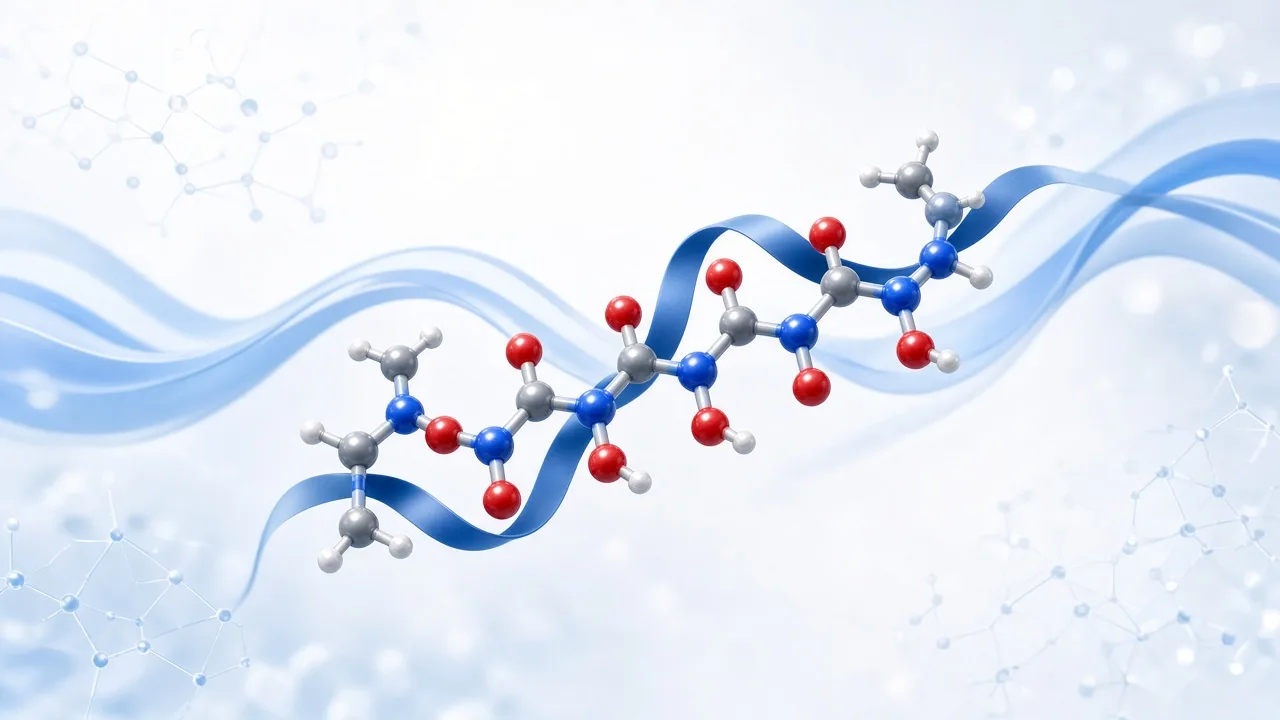
What Are Peptides? Definition Guide
Educational guide to what peptides are, how they differ from proteins, and how researchers classify amino-acid chains in the scientific literature.

Peptide Half-Life: Stability Explained
Educational guide to peptide half-life: stability, protease degradation, and longevity language used across research systems and published papers.