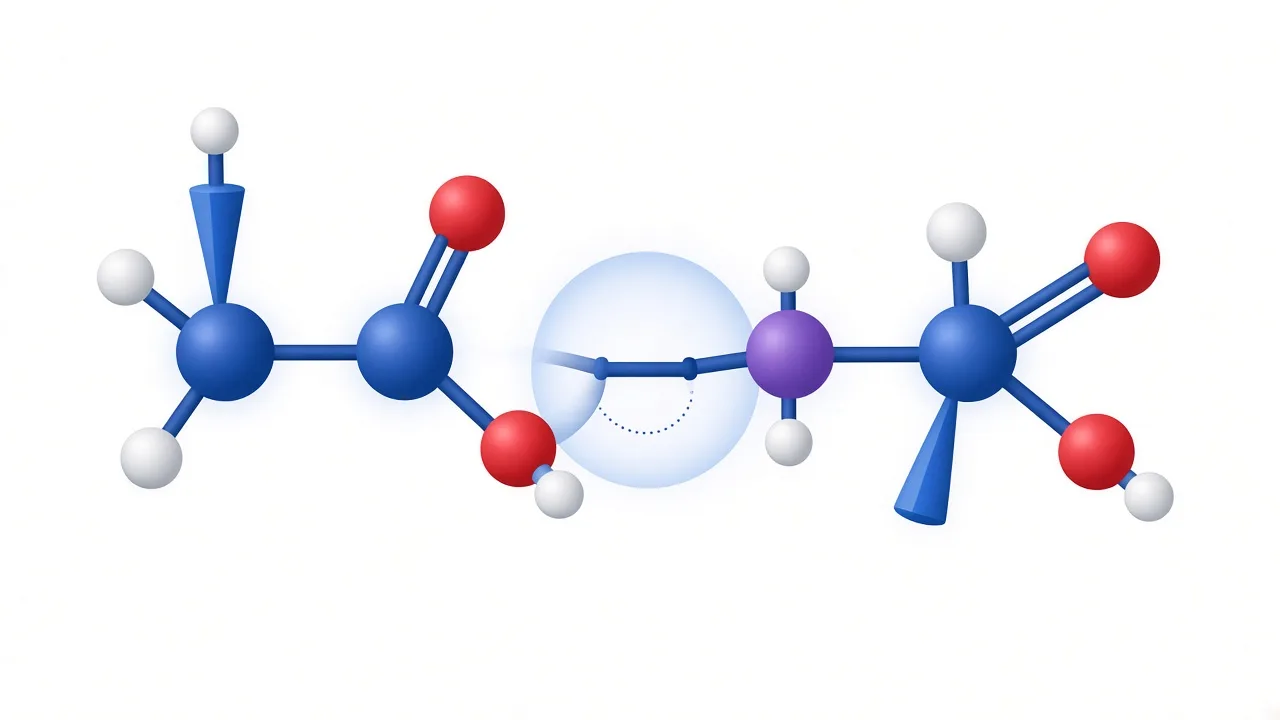

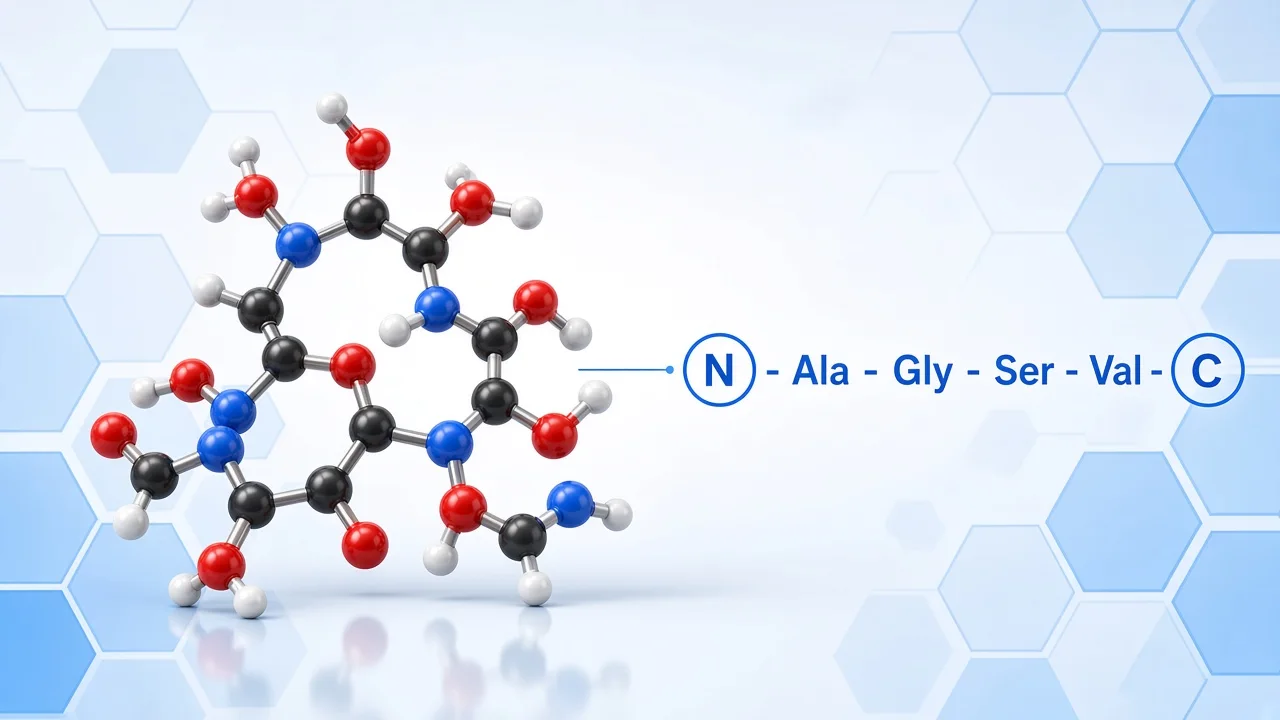
Peptide papers, databases, and product pages often compress a whole chain into a short string of letters. That compression is powerful and easy to misread. This article teaches sequence notation literacy: reading direction, one-letter and three-letter codes, fragment marks, modification shorthand, and the claims a string cannot support by itself. It is educational only. It is not medical advice and does not teach synthesis recipes or personal-use protocols.
Why sequence notation literacy matters
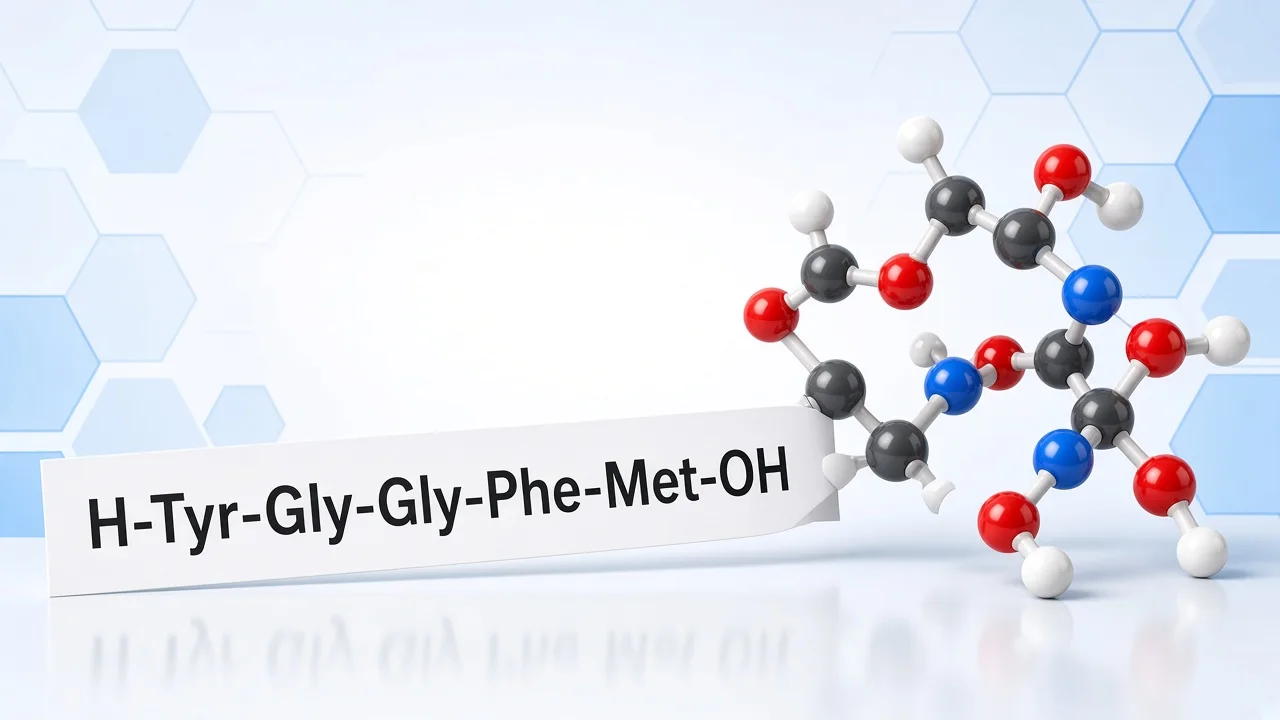
A sequence string is a compressed chemical sentence. Writers use it because full residue names are long. Readers get into trouble when they treat the compression as a complete biology story.
Skip the reading direction and you can invent the wrong molecule. Skip modification marks and you can invent the wrong chemistry. Skip methods and analytics and you can invent verified purity from a forum paste.
Bond chemistry explains the backbone that makes chains possible. Notation explains how writers name the residues along that backbone. Keep both pages nearby: How Peptide Bonds Work and What Are Peptides.
Three jobs a sequence string can do
It can name an intended residue order. It can support database search and alignment talk. It can help readers compare claimed identity across papers. It cannot, by itself, certify a seller vial or forecast a human outcome.
N-to-C direction is the default reading axis

Standard educational and IUPAC-linked practice writes the residue with the free amino group, or N-terminal residue, on the left, and the residue with the free carboxyl group, or C-terminal residue, on the right.
Residue numbering usually follows that same axis, counting from the N-terminus unless a paper states another convention. If a figure flips the axis without saying so, careful readers pause.
The reverse-string trap
Typing the letters backward is not a harmless style choice. It names a different chain. Social posts that reverse a string for visual layout can create a false identity if readers copy the letters as chemistry.
One-letter and three-letter codes
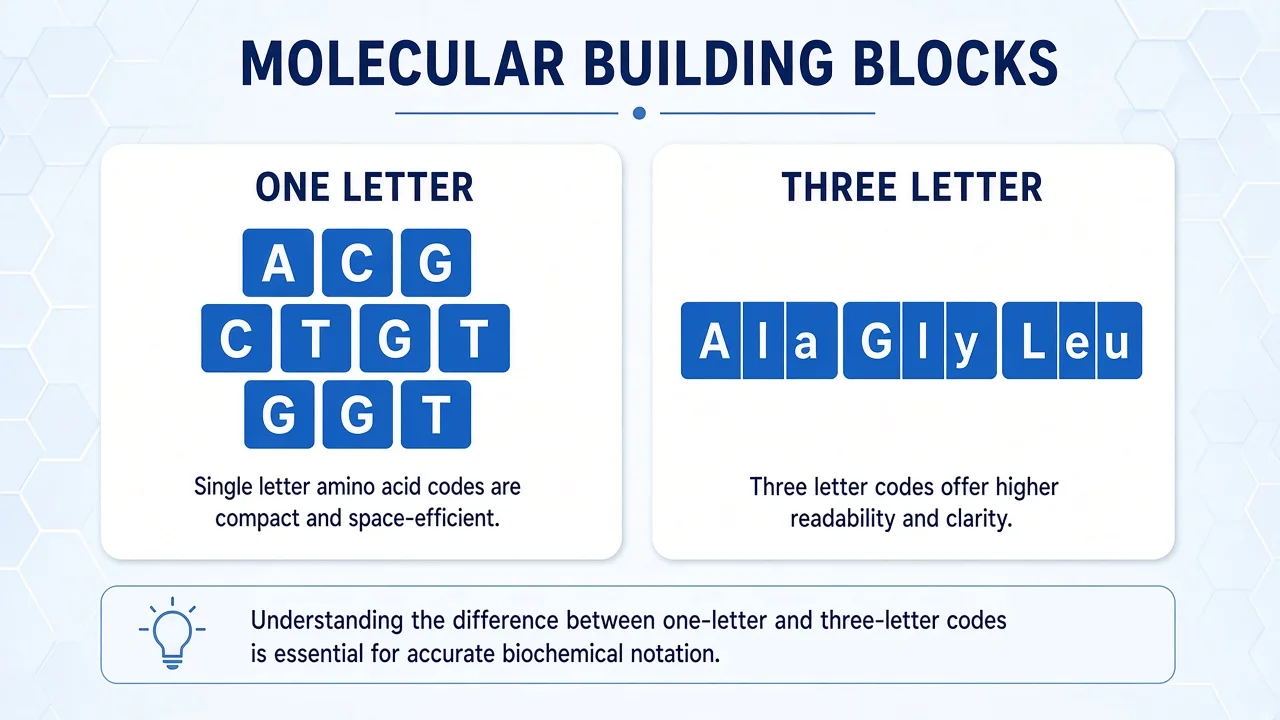
Standard amino acids have both one-letter and three-letter symbols. Examples include A or Ala for alanine, G or Gly for glycine, and C or Cys for cysteine. The two systems name the same residue set; they differ in compactness and clarity.
One-letter codes save space in long chains and alignments. Three-letter codes reduce ambiguity when modifications, unusual residues, or teaching examples appear. Neither code system turns a string into proof of biological effect.
- A / Ala: alanine
- G / Gly: glycine
- C / Cys: cysteine
- F / Phe: phenylalanine
- W / Trp: tryptophan
- X / Xaa: unknown or other residue in many notations
Ambiguous and special symbols need a legend
Some symbols are reserved for ambiguous or special cases in common tables, such as B for Asx or Z for Glx. If a paper uses those symbols, read the paper’s legend. Do not invent a residue identity from memory alone.
Hyphens, termini, and fragment marks
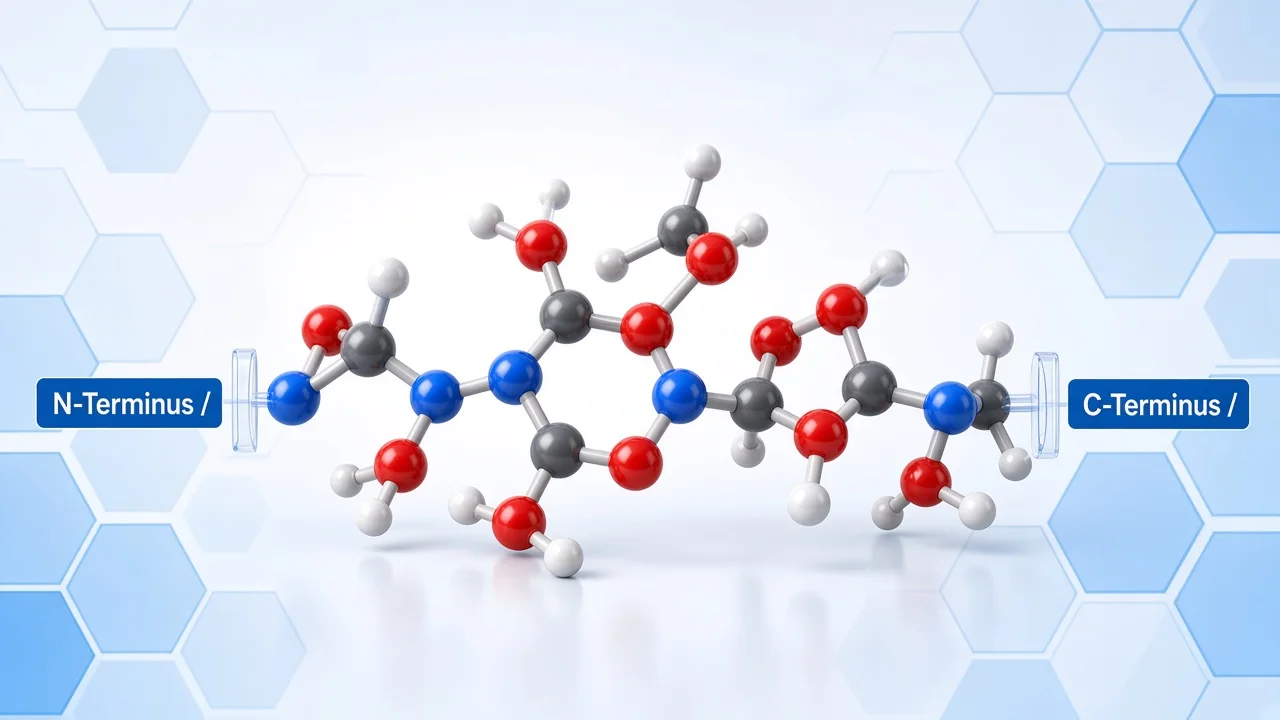
Hyphens are a common connecting symbol between residue codes, representing the peptide-bond link in abbreviated formulas. Writers may also show free ends with H- and -OH style markers in some teaching formulas.
Fragment notation matters too. In common one-letter practice, absence of end punctuation can imply a known terminus, while a slash can mark that the fragment end is not known to be the true end of the complete molecule. Always check the local convention in the paper or database you are reading.
Database habit
Database entries and paper supplements can mix compact strings, hyphenated three-letter forms, and figure footnotes. If two sources disagree, compare direction, code system, and whether the string is a full chain or a fragment.
Modification marks are not optional decoration

Acetylation, amidation, disulfide bridges, D-amino acids, and non-canonical residues are often compressed into parentheses, prefixes, superscripts, or figure footnotes. Those marks change chemical identity.
Educational readers should treat modification marks as invitations to read methods, not as optional flair. A clean-looking letter string with a tiny note about D-residues or terminal caps is not the same molecule as the unmodified string.
Disulfides versus backbone peptide bonds
Disulfide links are not the same thing as the backbone peptide bonds that join residues in sequence order. Notation that marks Cys pairings is describing an additional covalent relationship. Bond literacy and sequence literacy work together here: How Peptide Bonds Work.
What a sequence string cannot prove by itself
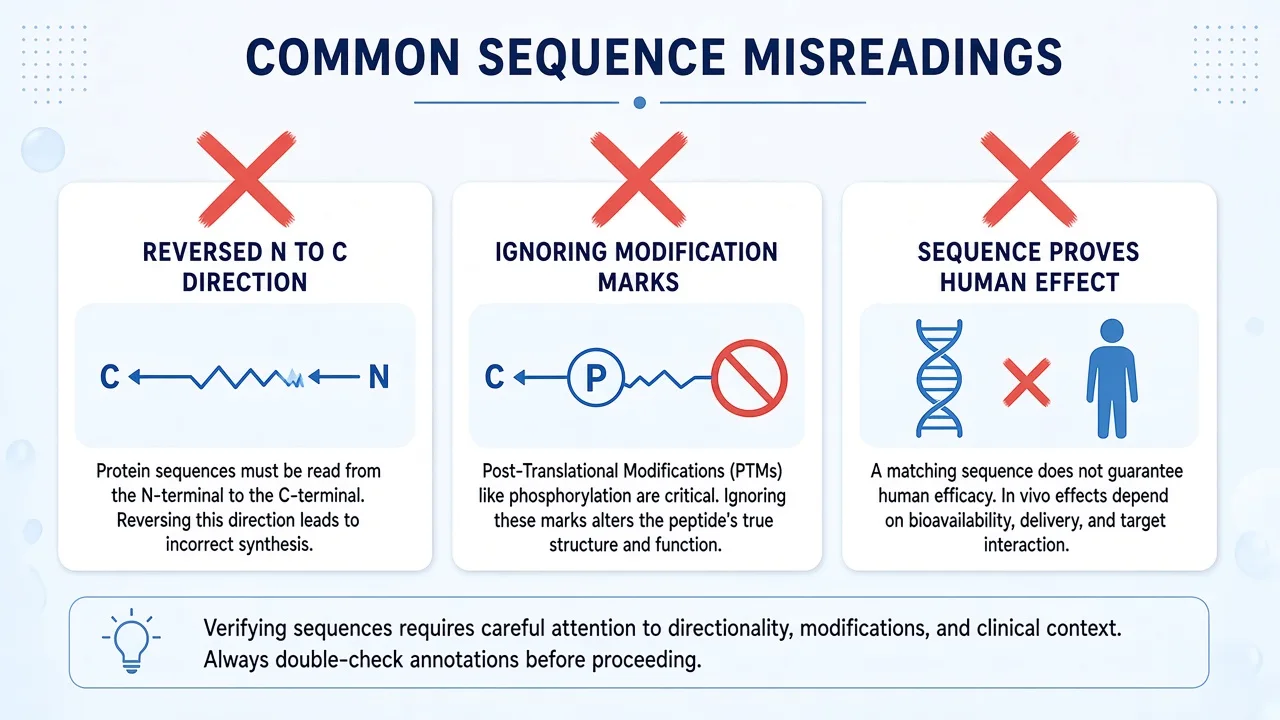
A string can propose intended chemistry. It cannot certify that a purchased sample matches that chemistry. It cannot prove folding, receptor engagement, or human relevance. It cannot replace analytical methods or study design.
When seller pages paste a sequence and stop there, literacy requires a second question: what evidence supports identity and purity under stated methods? Continue with peptide purity and analytics.
- Identity claim: what residue order is intended.
- Analytical claim: what methods support that identity and purity.
- Biological claim: what system and endpoint were measured.
- Human claim: whether appropriate human evidence exists at all.
Common misreads of sequence strings
Misread one: reversing N and C ends. Misread two: ignoring stereochemistry or modification notes. Misread three: treating a social-media sequence as verified material identity. Misread four: jumping from sequence to human outcome without evidence layers. Misread five: confusing length categories after the letters are parsed.
Length language still matters after notation is clear. Keep oligopeptides vs polypeptides and peptides vs proteins nearby.
Verification checklist before trusting a pasted sequence
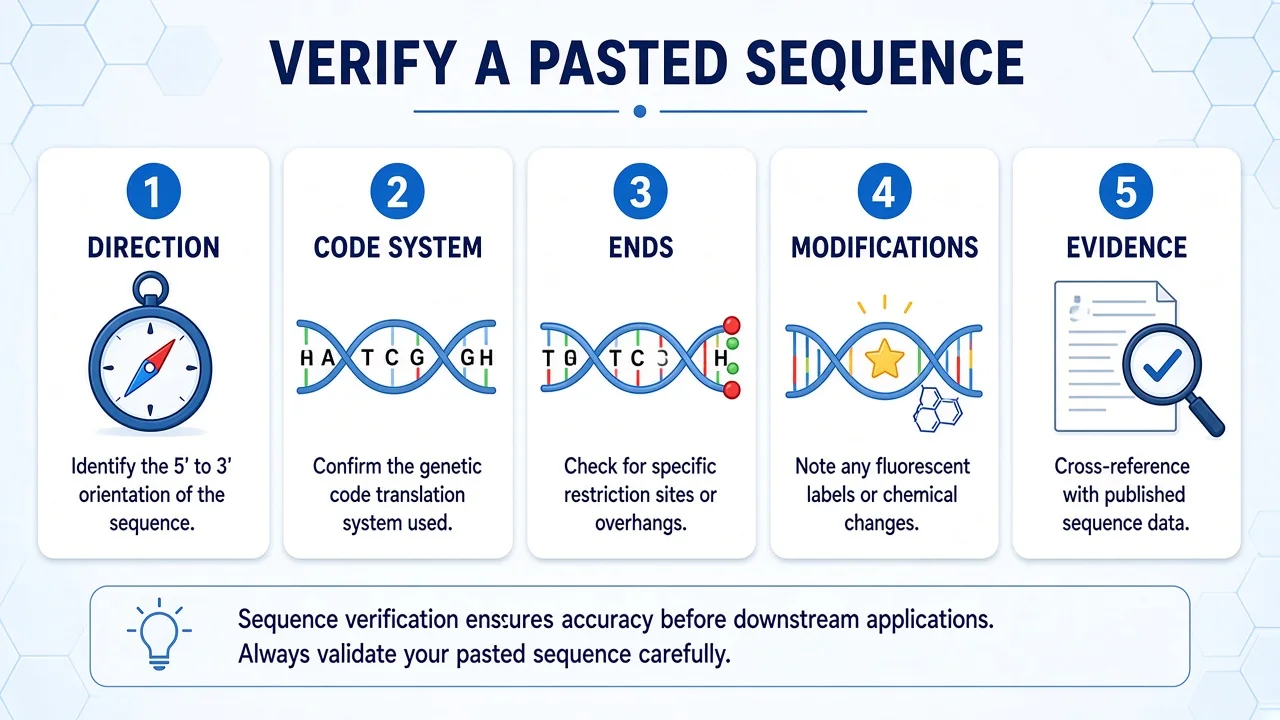
Use this checklist whenever a post treats a letter string as settled science.
- Direction checked: N-to-C stated or clearly conventional?
- Code system checked: one-letter, three-letter, or mixed with a legend?
- Ends checked: full chain or fragment with special end marks?
- Modifications checked: caps, bridges, D-residues, or footnotes?
- Evidence checked: sequence claim only, or sequence plus analytics and biology?
Pause rule
If the string is offered as proof that a product is pure, active, or ready for personal use, pause. Notation literacy does not authorize those leaps.
What this page will not do
It will not publish synthesis recipes, coupling protocols, or personal-use instructions. It will not validate seller sequences. It will not translate letter strings into medical claims.
Those refusals keep the page inside reading literacy.
Links back to the Peptide Basics hub
Return to Peptide Basics and What Are Peptides for the polymer map. Bond chemistry remains in How Peptide Bonds Work.
Synthesis vocabulary continues in peptide synthesis methodologies. Quality-claim literacy continues in peptide purity and analytics.