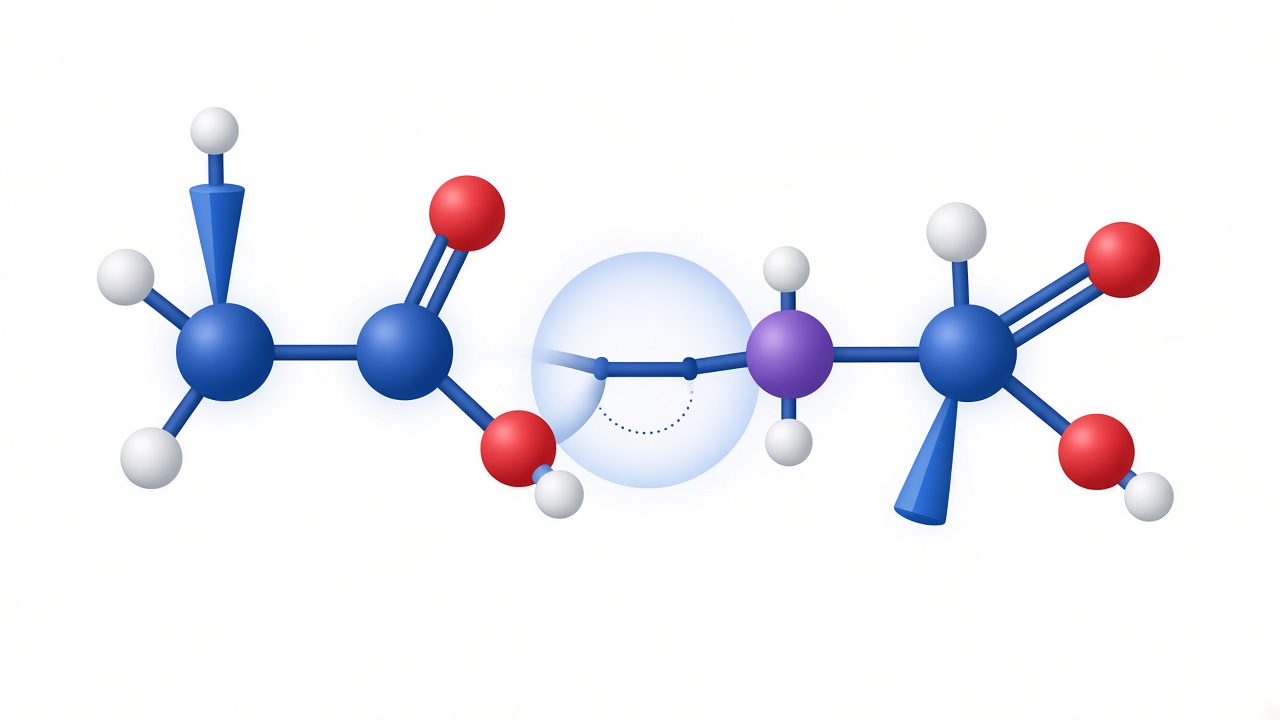


Peptide synthesis methodologies, as discussed in scientific literature, are research approaches for assembling amino-acid sequences in laboratory programs. This article compares major conceptual families at an educational level, especially solid-phase and liquid-phase ideas, without providing procedures. It is not a protocol, not a sourcing guide, and not medical advice.
Concept only: what this article will and will not do
Peptide synthesis is a phrase with multiple meanings. In cell biology, peptide bonds form on the ribosome during translation. In chemistry and biomedical research methods sections, peptide synthesis often means laboratory assembly of a target sequence. This article addresses the second meaning at a conceptual level.
Readers sometimes ask why an educational site discusses synthesis
Readers sometimes ask why an educational site discusses synthesis at all if protocols are forbidden. The answer is literacy: methods words appear constantly in papers, and unexplained jargon is how marketing fills the gap. Concept maps close that gap safely.
Why synthesis methodologies appear in research reviews

Synthetic access changed what questions researchers could ask. When sequences can be assembled as research tools, papers can test recognition, stability ideas, structure-activity themes, and candidate optimization inside formal programs. Landscape reviews treat synthetic enablement as part of the field's history.
Wang and colleagues discuss therapeutic peptides with attention
Wang and colleagues discuss therapeutic peptides with attention to applications and future directions, including the practical realities that shape translation. Zheng and colleagues review recent advances in discovery, synthesis, and clinical translation, giving educational readers a current map of how synthesis sits beside discovery and development themes.
Methods literacy protects readers from two opposite errors. One error is ignoring manufacturing concepts and treating every sequence as if it appeared by magic. The other error is mistaking a methods overview for a DIY invitation. Educational reading stays between those poles.
Identity and purity conversations
Identity and purity conversations in research also depend on synthesis context. A methods section that explains how a sequence was prepared helps other scientists interpret impurities, characterization, and reproducibility. That is scientific communication, not consumer instruction.
Synthesis mentions can also signal scope. A process-chemistry paper may care about scalability concepts and impurity profiles. A biology paper may only need enough detail to establish what ligand was used. Matching depth to claim is part of fair reading.
Across the therapeutic-peptide literature
Across the therapeutic-peptide literature, synthesis is often a supporting actor rather than the star. Discovery biology, delivery constraints, and evidence quality still decide whether a candidate moves. Keeping synthesis in proportion is part of mature reading.
Solid-phase peptide synthesis: educational concept map
In educational summaries, solid-phase peptide synthesis (often abbreviated SPPS in literature) anchors the growing peptide to an insoluble support during assembly cycles. The conceptual advantage discussed in reviews is staged building with intermediate handling suited to iterative cycles.
- Support-anchored growth: chain assembly discussed as occurring on a solid support.
- Iterative cycles: repeated building stages described conceptually in methods overviews.
- Protection concepts: temporary masking of reactive groups as a literature theme.
- Release and characterization: separation from support and identity checks as research endpoints.
- Program context: used inside formal laboratory and industrial research settings.
Readers of methods sections will often see language about protected
Readers of methods sections will often see language about protected amino-acid building blocks, coupling cycles, and cleavage from support as high-level process stages. Those words are landmarks for understanding papers. They are not a procedure to copy from a website.
Reviews frequently associate solid-phase approaches
Reviews frequently associate solid-phase approaches with the expansion of synthetic peptide research because iterative assembly became more practical for many laboratory programs. That historical point explains why SPPS language is common. It does not rank methods for informal use.
When you encounter SPPS in an abstract, ask what the authors needed
When you encounter SPPS in an abstract, ask what the authors needed the synthetic peptide for: assay standard, structural study, candidate optimization, or another research aim. Purpose clarifies why methodology is being mentioned.
Solid support as a process strategy
Conceptually, solid support changes logistics more than it changes the meaning of a peptide bond. The bond is still an amide linkage between residues. The support is a process strategy discussed in research chemistry, not a different definition of what peptides are.
Liquid-phase approaches: educational contrast
Liquid-phase peptide synthesis describes assembly in solution rather than on a solid support. Educational comparisons usually focus on process philosophy: different handling of intermediates, purification concepts, and scale considerations as discussed in research and process literature.
Neither family is a moral winner
Neither family is a moral winner. Papers and reviews choose language based on sequence goals, process constraints, and program resources. A reader should notice which family is referenced and why, not hunt for a universal champion.
Hybrid and specialized process strategies also appear in advanced
Hybrid and specialized process strategies also appear in advanced literature. For Wave-1 literacy, it is enough to recognize that synthesis methodology is a toolbox of research approaches, not a single recipe name.
If a popular article uses synthesis buzzwords without explaining
If a popular article uses synthesis buzzwords without explaining purpose, characterization, or research context, it is probably performing aesthetics rather than education.
Some reviews discuss when solution-phase ideas are attractive
Some reviews discuss when solution-phase ideas are attractive for particular process goals. Those discussions remain inside professional research and manufacturing analysis. They are not transferable as home instructions, and this site will not translate them that way.
Quality, identity, and impurity themes in synthesis talk

Educational synthesis literacy includes knowing why papers care about characterization. A sequence string on a label is a claim. Analytical evidence is how research programs support that claim.
Impurity themes appear because incomplete reactions
Impurity themes appear because incomplete reactions, deletions, or related sequences can coexist with a target peptide in research materials. Methods and supplemental sections often address how authors checked identity and purity at a reporting level.
Readers should not confuse a purity percentage in a paper
Readers should not confuse a purity percentage in a paper with consumer-product marketing language. In research reporting, analytical details serve reproducibility and interpretation. They are not a shopping guide.
Biological assembly versus chemical research assembly
Cells assemble peptide bonds during translation with genetic instructions and ribosomal catalysis. Chemical research assembly builds defined sequences using laboratory process design. Both create amide linkages in the broad educational sense, yet the machinery, controls, and documentation differ completely.
Confusing those stories creates category errors
Confusing those stories creates category errors. A paragraph about ribosomal protein synthesis does not explain a methods line about SPPS. A chemistry review of synthetic peptides does not rewrite cell biology.
Nonribosomal peptide synthesis in microbes is yet another
Nonribosomal peptide synthesis in microbes is yet another biological theme in specialized literature. If a paper uses that phrase, it is usually discussing natural-product biochemistry, not solid-phase laboratory cycles. Shared words still need local definitions.
How Peptide Bonds Work remains the best companion for the covalent
How Peptide Bonds Work remains the best companion for the covalent chemistry shared across these stories, while this article keeps attention on research methodology vocabulary.
A quick disambiguation habit: if the paper mentions ribosomes
A quick disambiguation habit: if the paper mentions ribosomes, mRNA, or translation, you are in biology assembly territory. If it mentions solid support, coupling cycles, or process chemistry, you are usually in chemical research assembly territory.
How to read synthesis mentions in papers
Start by identifying whether synthesis is central or incidental. Some papers are process papers. Others briefly state that a peptide was obtained commercially or prepared in-house before moving to biology assays. The depth of methods should match the paper's claim.
Next, look for identity and purity characterization language
Next, look for identity and purity characterization language at a high level: chromatographic and mass-spectrometric themes are common in research reporting. Educational readers can notice whether characterization is present without needing to perform it.
Then connect synthesis to the study question
Then connect synthesis to the study question. A signaling assay, a stability experiment, and a structural study may all use synthetic peptides while caring about different quality attributes. Methods exist to serve questions.
Refuse protocol-seeking
Finally, refuse protocol-seeking. If your goal is practical laboratory work, that belongs in supervised professional training. This educational page stops at comprehension of published concepts.
If a secondary article spends more words on how exciting synthesis
If a secondary article spends more words on how exciting synthesis sounds than on why a sequence was needed, treat it as weak education. Purpose first, process family second, characterization third, hype never.
Synthesis inside the wider therapeutic-peptide landscape

Zheng et al. and Wang et al. help readers place synthesis beside discovery and translation. Synthetic enablement expanded what could be tested; it did not erase delivery limits, attrition, or the need for rigorous evidence in formal development.
Types of Research Peptides complements this methodology page
Types of Research Peptides complements this methodology page by sorting sequences according to research roles. Synthesis is how many research tools become available; classification is how readers keep those tools intellectually organized.
What Are Peptides remains the definition anchor
What Are Peptides remains the definition anchor. Without a clear sense of what a peptide is, synthesis methodology talk becomes floating jargon.
Educational synthesis literacy should leave you calmer
Educational synthesis literacy should leave you calmer, not more experimental. Understanding how research programs talk about making sequences is part of science reading, not a personal manufacturing plan.
The same calm applies when news stories announce a new peptide
The same calm applies when news stories announce a new peptide candidate. Ask whether the story is about discovery, synthetic access, preclinical models, or clinical translation. Those are different milestones, and synthesis alone is not the finish line.
Practical checklist for peptide synthesis research literacy
When a source mentions peptide synthesis, ask: biological translation, chemical laboratory assembly, or another specialized meaning? Then ask whether the source is teaching concepts or improperly implying a protocol.
Use trusted reviews for field context and foundational biochemistry
Use trusted reviews for field context and foundational biochemistry for definitions. Zheng PMC12154100, Wang PMID 35165272, and StatPearls NBK562260 are anchors used across this site cluster.
A practical reading checklist
If you remember only one sentence, remember this: peptide synthesis methodologies in research literature are conceptual families for laboratory sequence assembly, and learning those names is not the same thing as receiving instructions to perform them.
A practical reading checklist in practice
A short self-test helps. Can you contrast solid-phase and liquid-phase ideas in one paragraph without listing steps or reagents? If yes, you have the intended Wave-1 level of methodology literacy.