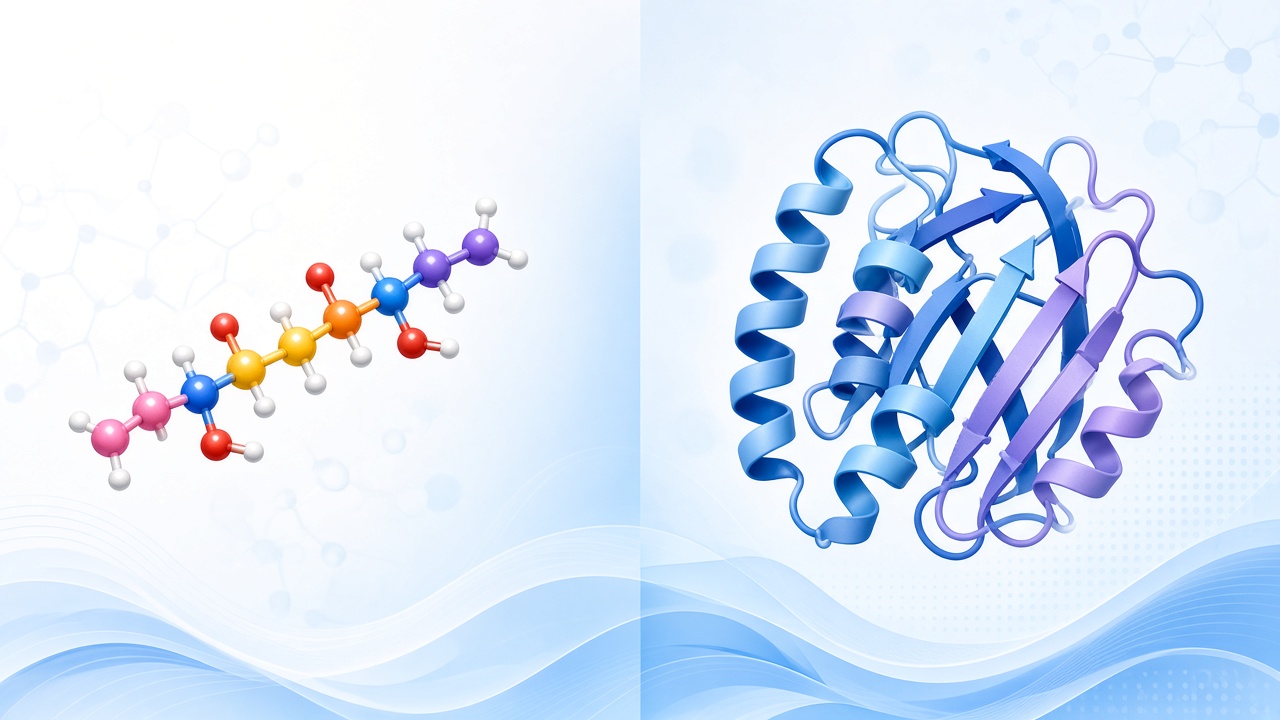

Peptides are short chains of amino acids linked by peptide bonds. This guide explains how educational sources define them, how length and origin shape classification, and how to read peptide language in textbooks and reviews without treating every name as interchangeable. It is educational only and is not medical advice.
A clear definition: what peptides are
Ask what are peptides in a biochemistry classroom and you will usually hear a length-and-linkage answer. Peptides are short chains of amino acids joined by peptide bonds. That answer is simple on purpose. It keeps the focus on chemistry and scale before anyone jumps to product names or lifestyle claims.
StatPearls peptide biochemistry framing
StatPearls material on peptide biochemistry emphasizes that peptides are polymers of amino acids connected through peptide bonds. Molecular Biology of the Cell chemistry chapters place amino acids, peptides, and proteins on one continuous story: monomers become short chains, and longer chains become the folded workhorse macromolecules of the cell. IUPAC defines peptides as amides derived from two or more amino acids by formation of a covalent bond from the carbonyl carbon of one amino acid to the nitrogen of another.
Educational scope and limits
This page is educational. It explains vocabulary used in textbooks and peer-reviewed reviews. It does not recommend personal use of any compound, and it does not replace primary literature or clinical guidance from qualified professionals.
Start with definition literacy
If you arrived from a headline rather than a textbook, start here anyway. Definition literacy is the cheapest way to reduce expensive confusion later when half-life, signaling, and binding words appear.
Amino acids, side chains, and the peptide bond
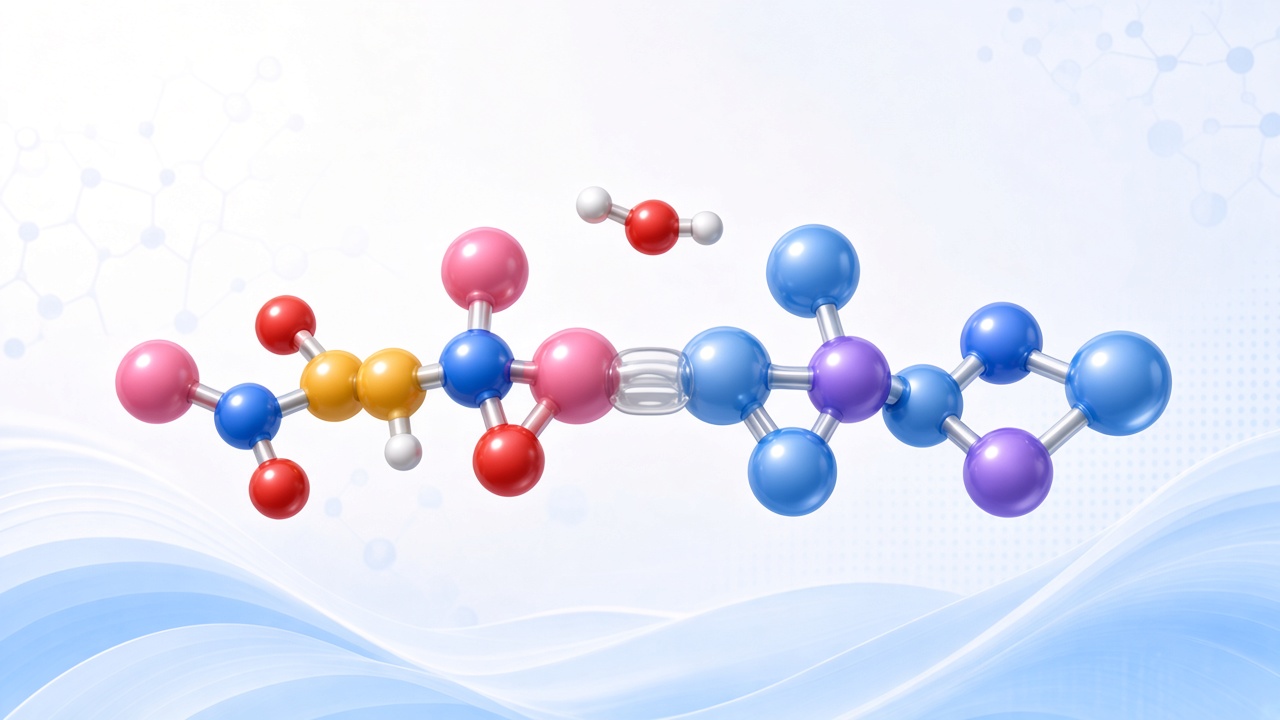
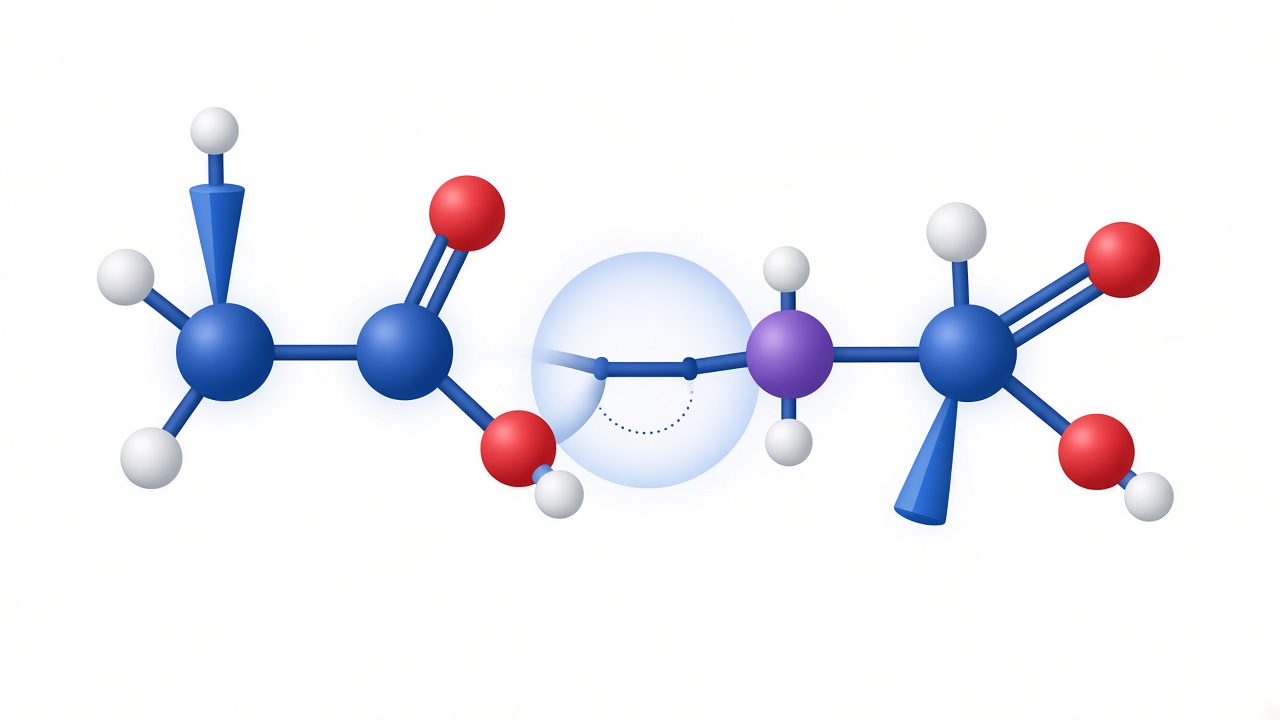
Amino acids are the building blocks. Each standard amino acid has an amino group, a carboxyl group, and a side chain that gives it chemical personality. When the carboxyl group of one amino acid links to the amino group of another, a peptide bond forms. Introductory chemistry often describes that step as a condensation with loss of water.
Side-chain chemistry in education
Essential amino acid education, such as the StatPearls overview of essential amino acids, reminds readers that side-chain chemistry matters for metabolism and nutrition discussions. In structure conversations, those same side chains influence solubility, local charge, and how a short chain might meet a receptor or enzyme. Length alone does not determine function, but length strongly influences what folding and interaction patterns are realistic.
N-to-C directionality
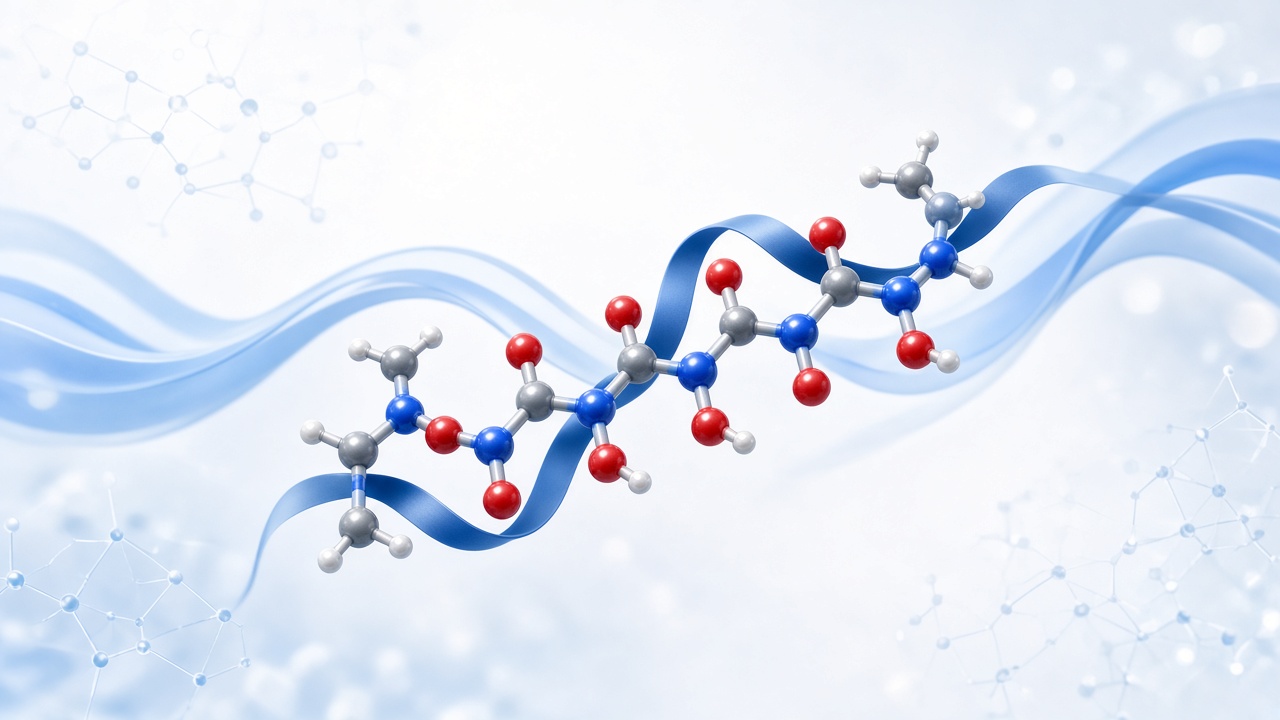
Directionality matters in every sequence string you see. Chains are described from the N-terminus to the C-terminus. Residue numbers and single-letter codes assume that oriented backbone. Once you can picture the repeating backbone and the side chains hanging from alpha carbons, paper notation becomes less mysterious.
Why equal-length peptides can behave differently
Side-chain chemistry also explains why two peptides of equal length can behave differently in research systems. Charge patterns, hydrophobicity, and local shape preferences are part of sequence personality. Educational reading keeps sequence details visible instead of treating peptide as a uniform substance.
Length, proteins, and teaching cutoffs
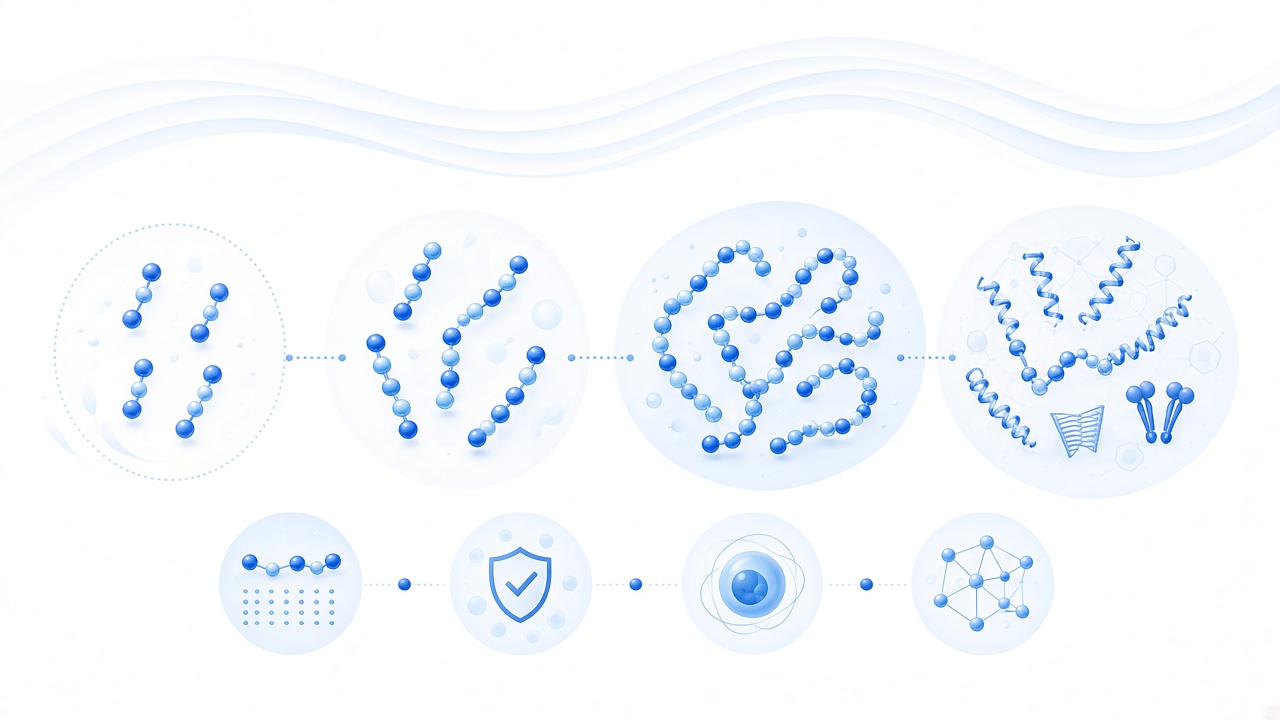
Length is the first classification axis most beginners meet. Many educational sources describe peptides as short chains, often from dipeptides upward into the tens of residues, and proteins as longer polymers that fold into stable three-dimensional structures. A frequently taught approximate range places peptides near 2 to about 50 amino acids. That range is a teaching convention for orientation, not a courtroom definition that every journal must obey.
- Dipeptides and tripeptides: two or three residues; often discussed as digestion products or minimal motifs.
- Oligopeptides: short chains commonly discussed in signaling and synthetic research contexts.
- Longer polypeptides: chains that approach or enter protein-like length and folding discussions.
- Proteins: typically longer, folded macromolecules with domains, active sites, or structural assemblies.
- Fragments: sequences clipped from larger proteins may still be called peptides in research writing.
Oligopeptide and polypeptide wording
Within peptide language, writers sometimes use oligopeptide for relatively short chains and polypeptide for longer ones. Polypeptide can also appear as a general term for any amino-acid polymer, including proteins. That dual usage is why careful readers look at context instead of treating every label as absolute.
Why the peptides versus proteins contrast is useful
The peptides versus proteins contrast is useful precisely because the chemistry is shared. Shared peptide-bond chemistry does not erase differences in folding complexity and typical biological jobs. Messengers and fragments often sit in peptide conversations; enzymes, transporters, and multi-domain scaffolds more often sit in protein conversations.
How researchers classify peptides
Classification is how literature stays organized when thousands of sequences exist. Educational grouping usually mixes three axes: length, origin, and function. Length tells you roughly where a chain sits on the polymer scale. Origin tells you whether a sequence is endogenous, a fragment of a larger protein, or assembled for research. Function language points to the biological or experimental question under study.
Origin language is especially easy to misuse online
Origin language is especially easy to misuse online. Endogenous means produced in a living system as part of normal biology. Synthetic, in research writing, often means chemically assembled for study. Neither word automatically answers evidence strength, purity, or regulatory status. Those are separate reading tracks.
Therapeutic-peptide landscape reviews also remind careful readers
Therapeutic-peptide landscape reviews also remind careful readers that field-level progress is selective. Some sequences become approved medicines through formal pathways; many candidates remain preclinical or fail for scientific and practical reasons. Classification helps you notice that unevenness instead of assuming every named peptide belongs in one evidence bin.
Roles peptides play in biological teaching
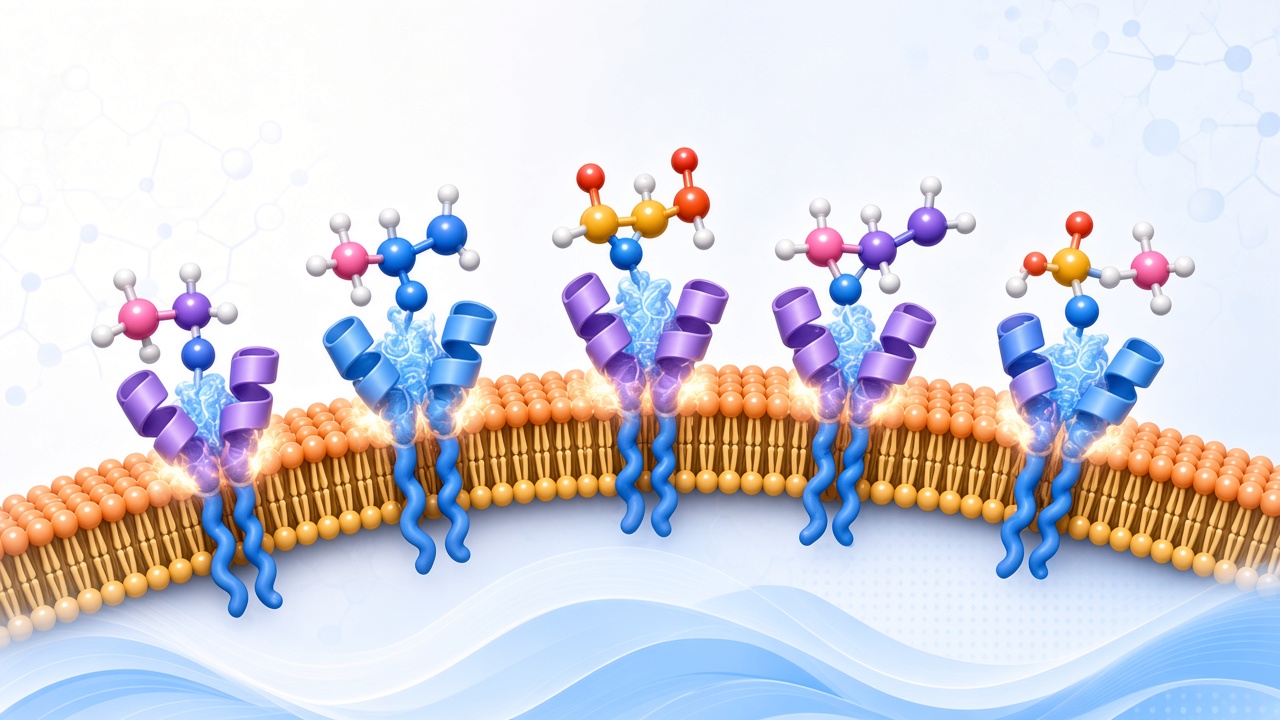
In physiology and cell biology teaching, many peptides appear as messengers. They help coordinate communication among cells, tissues, and organ systems by interacting with receptors and downstream pathways. That messenger story is why cellular signaling and receptor-binding vocabulary show up so often next to peptide definitions.
Digestion as a length continuum example
Digestion education offers a more ordinary illustration. Dietary proteins are broken into peptides and amino acids. Those shorter pieces are expected products of biochemistry teaching, not exotic new categories. The continuum from protein to peptide to amino acid helps beginners feel scale without importing marketing language.
Peptide epitopes inside protein
Structural biology education offers another illustration. A paper may discuss a peptide epitope even when the parent molecule is a folded protein. Writers zoom into a short recognition sequence without reclassifying the whole macromolecule. Learning that zoom habit prevents category errors when you read methods and figure legends.
Why half-life and signaling appear next to definitions
Once a definition is clear, two follow-on topics usually appear. The first is stability. Short chains can be vulnerable to proteases that cleave peptide bonds, so research writing discusses degradation and half-life in experimental environments. Peptide Half-Life explains that vocabulary without converting chemistry into instructions.
The second is signaling
The second is signaling. If a peptide is discussed as a messenger, readers need receptor and pathway language to understand what papers claim to measure. Peptides in Cellular Signaling and Receptor Binding Kinetics extend that thread for readers who want mechanism literacy after the definition.
These links exist because definition without context creates false
These links exist because definition without context creates false confidence. Knowing that a molecule is a peptide tells you it is an amino-acid chain with peptide bonds. It does not tell you evidence class, model system, or what any particular headline means.
A practical habit is layered literacy: definition
A practical habit is layered literacy: definition, length and origin class, evidence type in the paper, and clear separation of education from advice. That habit keeps curiosity productive and claims proportional.
Common misreadings of the word peptide

One misreading is treating peptide as a single lifestyle category. In science, peptide is a chemical and length-related class with many subclasses. Collapsing them into one trend story erases differences that matter for reading research.
A third misreading is confusing educational definitions
A third misreading is confusing educational definitions with product claims. Textbooks and StatPearls explain what peptides are. Marketing copy may borrow the same words to imply outcomes that the chemistry definition does not support.
A fourth misreading is ignoring model systems
A fourth misreading is ignoring model systems. In vitro binding, cell assays, animal models, and human trials answer different questions. Residue count does not automatically tell you evidence strength. Keep those axes separate when you evaluate a claim.
Practical literacy checklist for what are peptides
Use this definition guide as a map, not a ranking. Ask four questions when you meet a new name: How long is the chain? Is it endogenous, synthetic, or a fragment? What biological or experimental role is claimed? What evidence class supports that claim?
Cross-check definitions against trusted educational sources
Cross-check definitions against trusted educational sources such as IUPAC terminology, StatPearls peptide biochemistry, essential amino acid overviews, and Molecular Biology of the Cell chemistry chapters. Primary sources beat paraphrases when precision matters.
A practical reading checklist
If you remember only one sentence, remember this: peptides are short amino-acid chains joined by peptide bonds, and educational reading keeps length, origin, function, and evidence type visible instead of blurred together.
A practical reading checklist in practice
A short self-test helps. Can you explain what are peptides without naming a product, and can you state one way peptides differ from proteins? If yes, you have the core definition. If not, reread the length and classification sections before moving into compound-specific pages.