
Peptides and proteins are both chains of amino acids, yet researchers treat them as related but distinct categories. This article explains how length, structure, and function are used in textbooks and reviews to separate the two ideas, and why the boundary is useful even when it is not perfectly sharp. It is educational only and is not medical advice.
Why peptides vs proteins is a useful teaching contrast
People often meet the words peptide and protein in the same sentence and assume they are interchangeable. They are related, but they are not the same teaching category. Both describe chains built from amino acids and joined by peptide bonds. The useful contrast is about scale, folding, and the kinds of biological jobs those chains typically perform in living systems.
StatPearls and textbook polymer framing
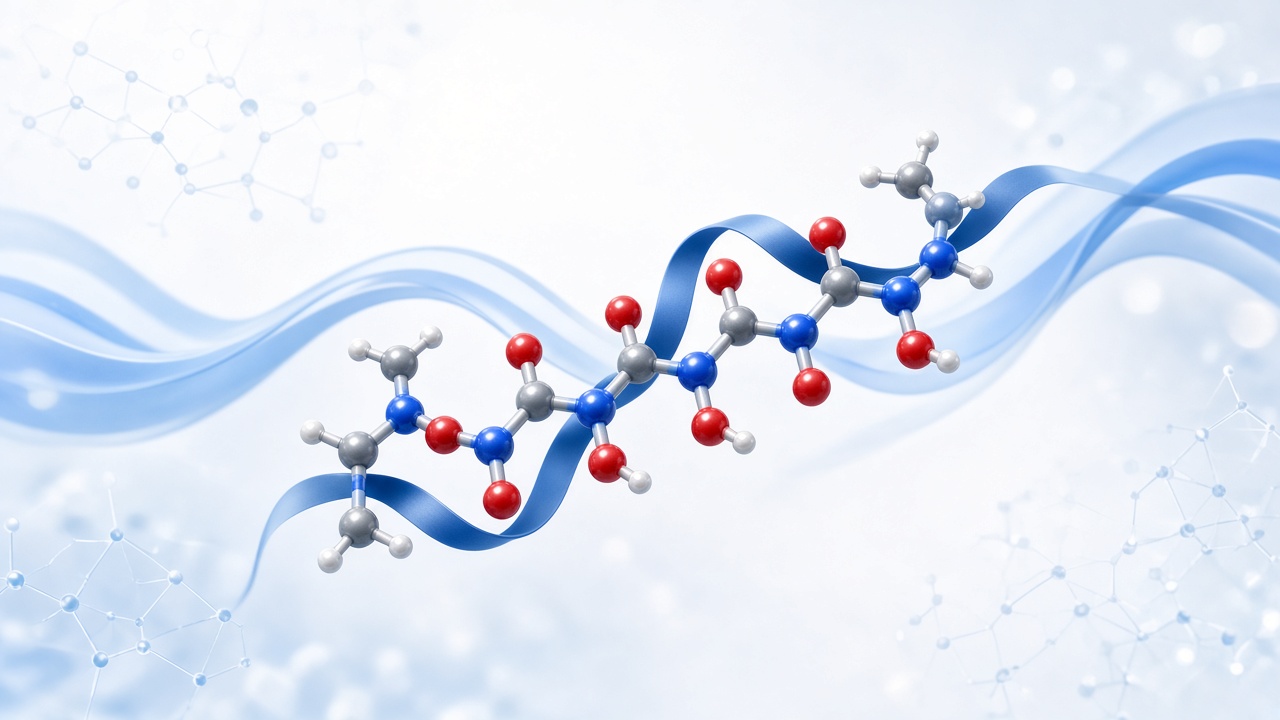
Educational overviews such as StatPearls discussions of peptides emphasize that peptides are short amino-acid polymers. Textbook chapters on cell chemistry, including Molecular Biology of the Cell material available through NCBI Bookshelf, place amino acids, peptides, and proteins on a continuous polymer story: monomers become short chains, and longer chains fold into the workhorse macromolecules of the cell.
Educational scope and limits
Nothing here is medical advice. The goal is literacy: being able to read a paper or textbook paragraph and recognize whether the author is talking about a short messenger-like chain, a fragment of a larger protein, or a folded protein with catalytic or structural roles.
Shared chemistry: amino acids and peptide bonds
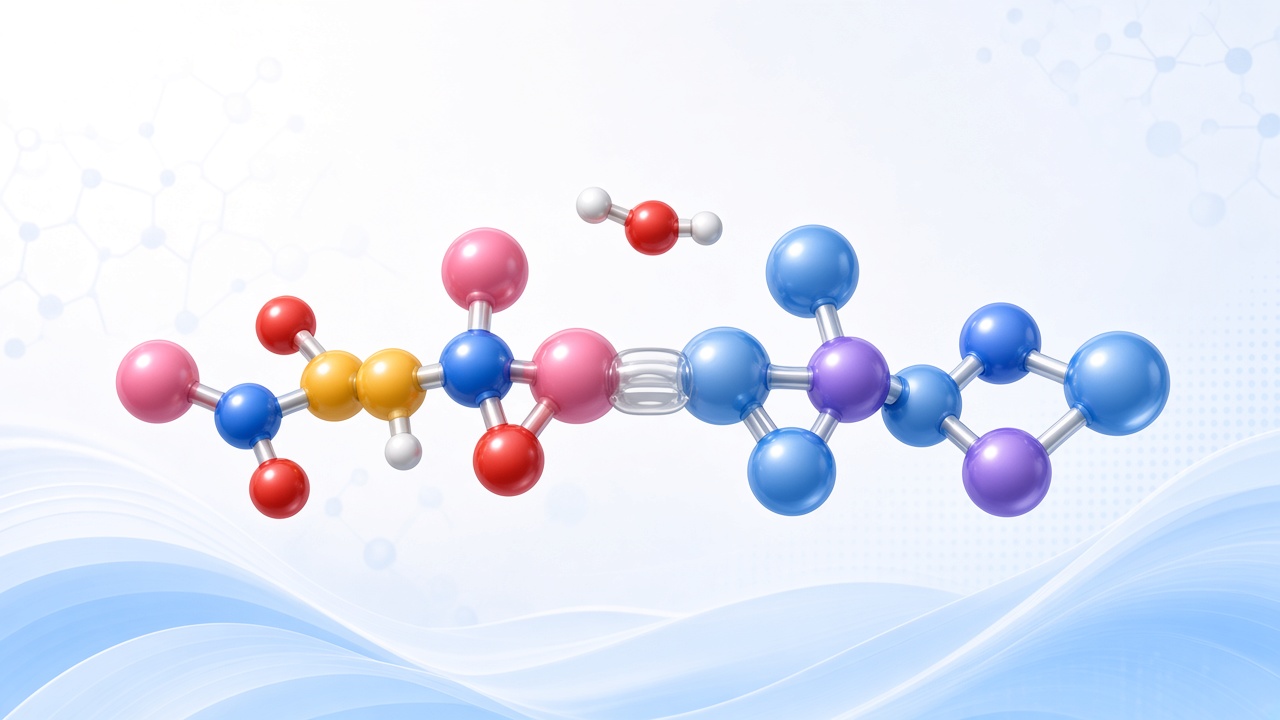
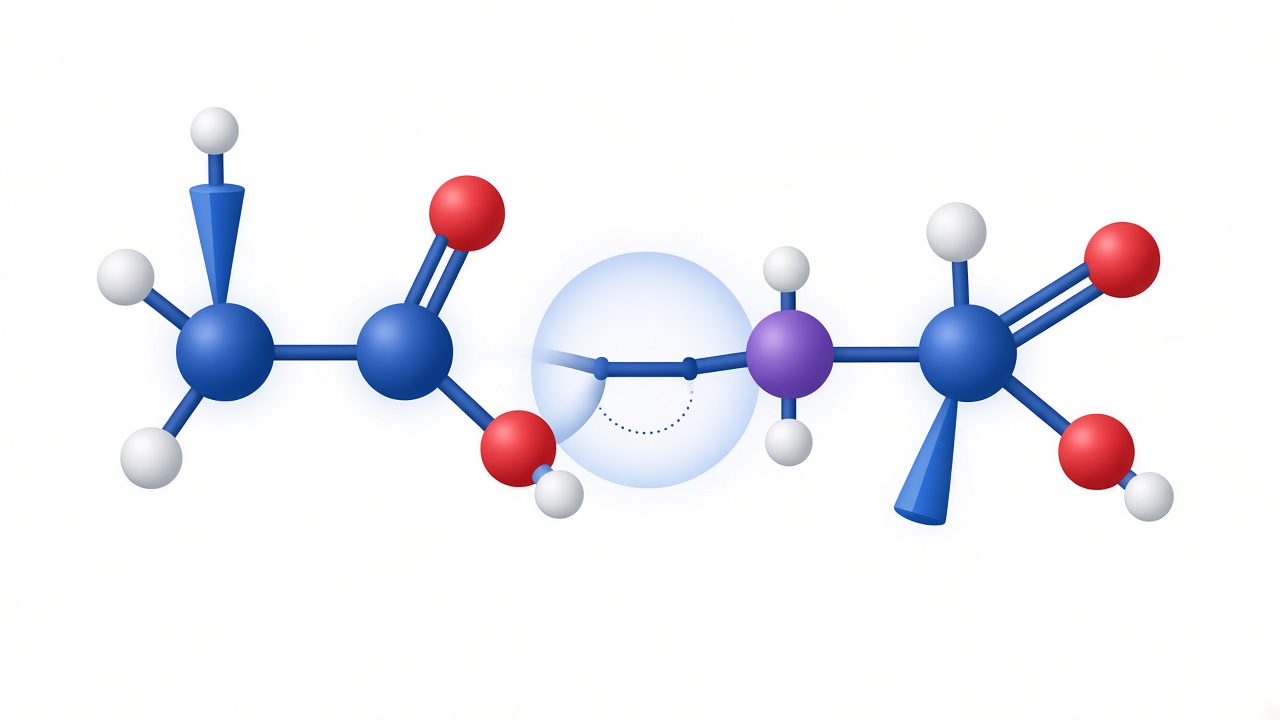
Amino acids are the building blocks. Each standard amino acid has an amino group, a carboxyl group, and a side chain that gives it chemical personality. When the carboxyl group of one amino acid reacts with the amino group of another, a peptide bond forms and a water molecule is released in the condensation reaction taught in biochemistry courses.
Length conventions used in educational sources
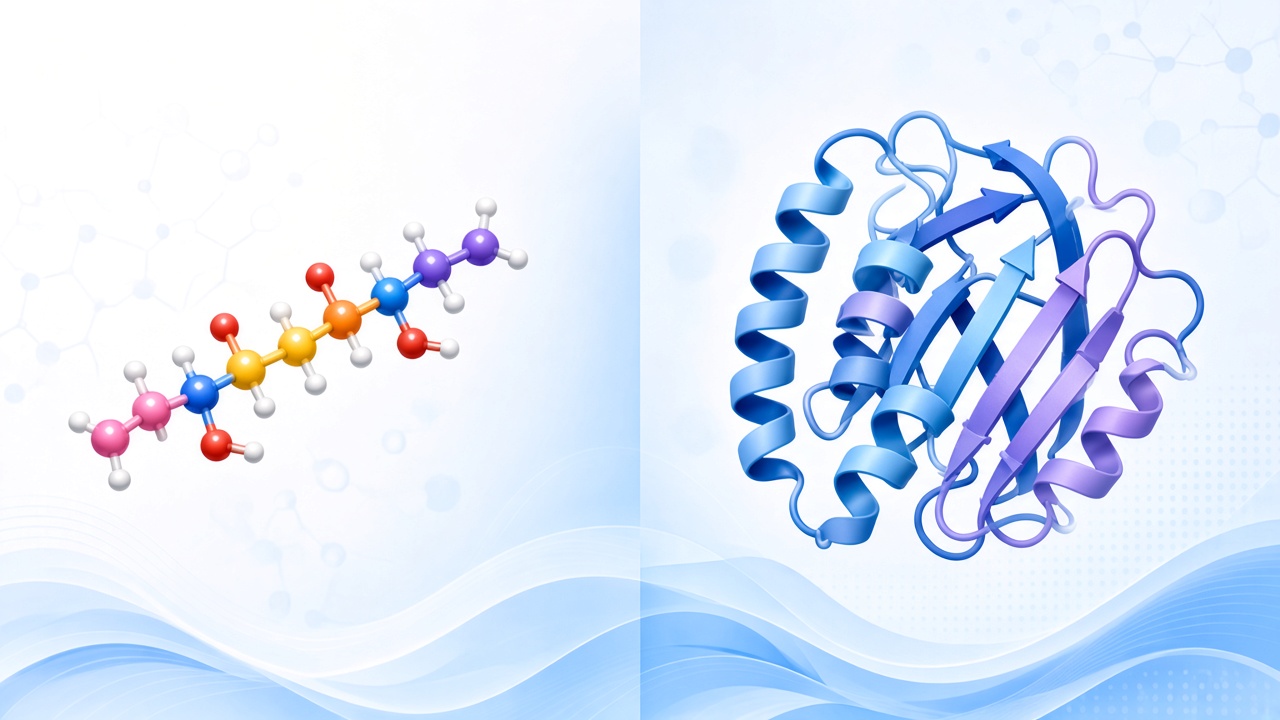
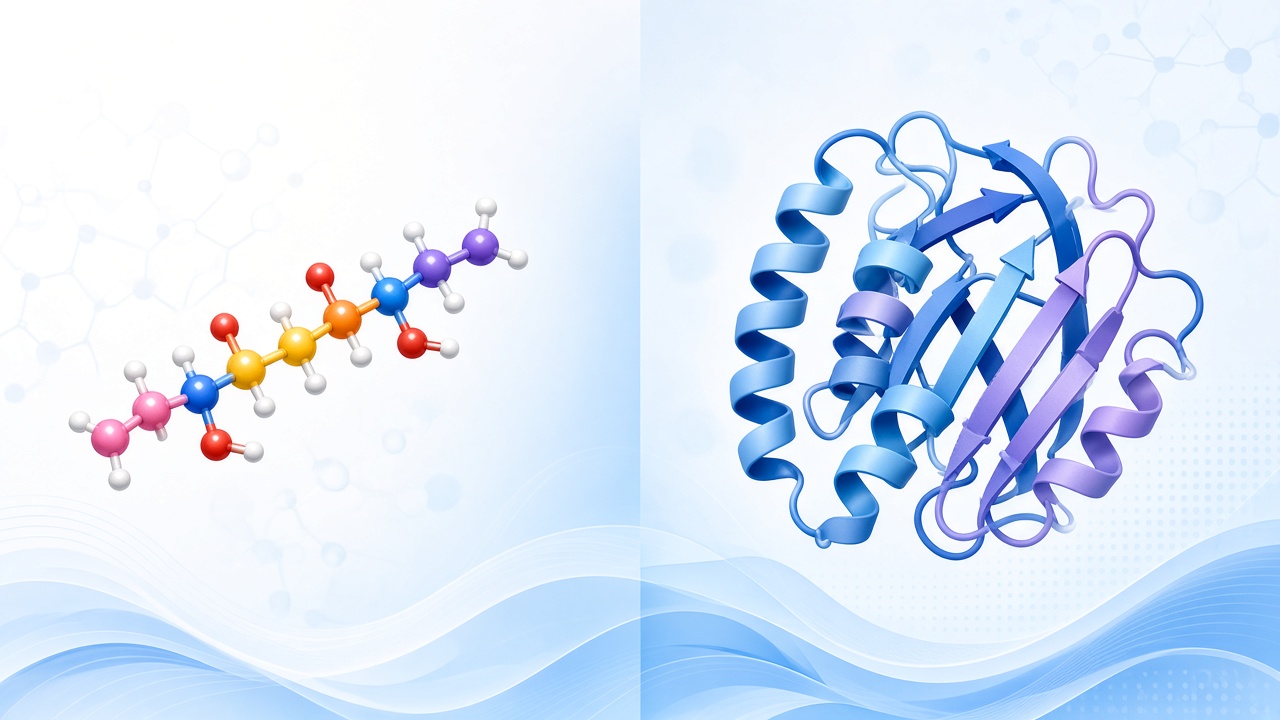
Length is the first and most common teaching axis. Many educational sources describe peptides as short chains, often from dipeptides upward into the tens of residues, and proteins as longer polymers. A frequently taught approximate range places peptides near 2 to about 50 amino acids, with proteins described as larger. That range is a convention for orientation, not a courtroom definition.
- Dipeptides and tripeptides: two or three residues; often discussed as digestion products or minimal motifs.
- Oligopeptides: short chains commonly discussed in signaling and synthetic research contexts.
- Longer polypeptides: chains that approach or enter protein-like length and folding discussions.
- Proteins: typically longer, folded macromolecules with domains, active sites, or structural assemblies.
- Fragments: sequences clipped from larger proteins may still be called peptides in research writing.
Oligopeptide and polypeptide wording
Within peptide language, writers sometimes use oligopeptide for relatively short chains and polypeptide for longer ones. Polypeptide can also appear as a general term for any amino-acid polymer, including proteins. That dual usage is why careful readers look at context instead of treating every label as absolute.
Why textbooks use a length cutoff
Why do textbooks bother with a cutoff at all? Because length correlates with typical structural behavior. Very short chains have fewer opportunities for complex tertiary folding. Longer chains can bury hydrophobic cores, form domains, and stabilize active sites. The cutoff is a way to teach that progression without pretending nature draws a neon line at residue fifty.
How to read peptide labels in papers
When you see a paper call something a peptide, ask what length is being discussed and whether the molecule is endogenous, synthetic, or a fragment of a larger protein. Those details often matter more than the single word peptide itself. Cross-check definitions against trusted educational sources rather than marketing copy that collapses every amino-acid chain into one lifestyle category.
Structure and folding: from flexible chains to domains
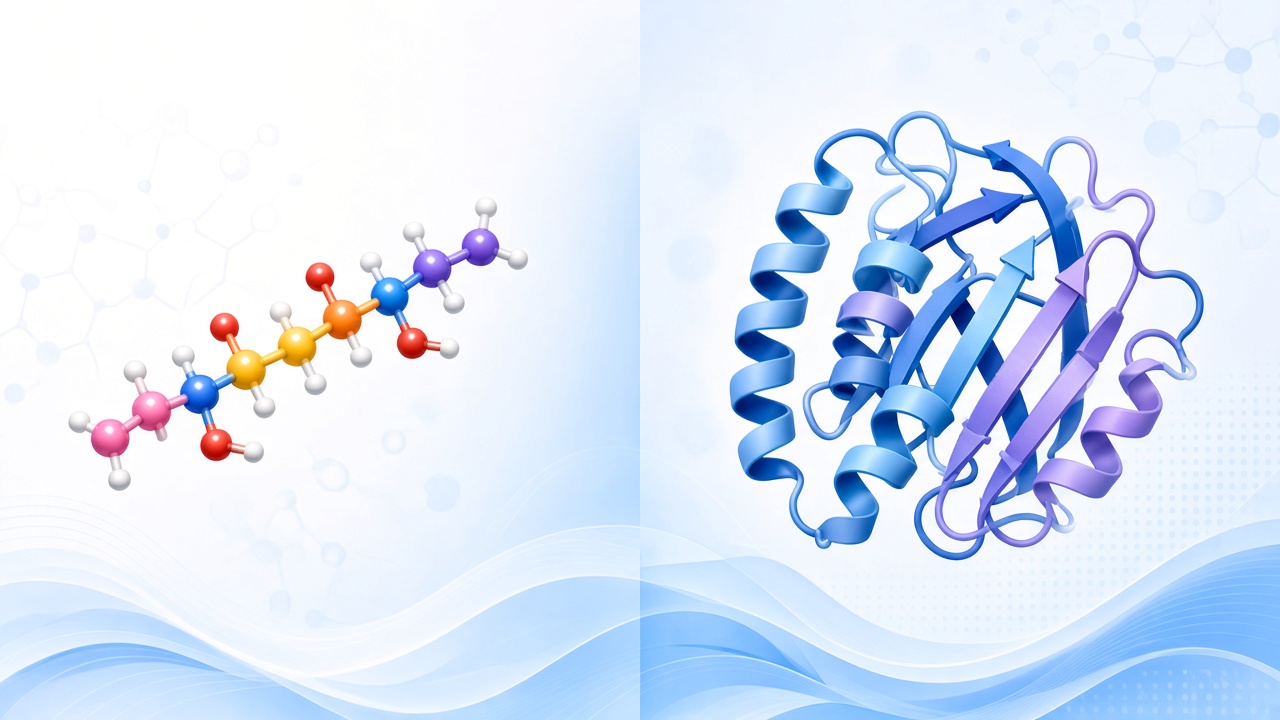
Structure is the second axis. Short peptides can adopt preferred local shapes, including turns or helical stretches, especially in certain solvents or when bound to a partner. Still, many short peptides remain relatively flexible in free solution compared with a stably folded protein domain.
Hierarchical structure in proteins
Proteins commonly display hierarchical structure: primary sequence, secondary elements such as alpha helices and beta sheets, tertiary packing of a domain, and sometimes quaternary assemblies of multiple chains. That hierarchy is a central theme in cell-biology chemistry chapters because folded shape enables catalysis, binding specificity, and mechanical strength.
Sequence motifs without full protein folds
Peptide research literature often studies how sequence motifs interact with receptors, membranes, or enzymes without requiring the full machinery of a multi-domain protein. That does not make peptides unstructured noise. It means their functional story is frequently about recognition epitopes, charge patterns, and short bioactive sequences rather than large catalytic pockets.
Post-translational emphasis differences
Post-translational ideas also differ in emphasis. Proteins may be discussed with extensive modification maps, disulfide-rich domains, and multi-subunit complexes. Peptide discussions more often focus on termini, amidation, cyclization, or local sequence features that affect receptor recognition and stability in experimental systems. Those are educational patterns, not absolute rules for every molecule.
Function in literature: messengers versus molecular machines
Function is the third axis and the one readers usually care about most. In broad educational terms, many peptides are discussed as messengers, hormones, neuromodulators, antimicrobial sequences, or bioactive fragments. Proteins are more often discussed as enzymes, receptors, transporters, antibodies, cytoskeletal elements, and transcription factors.
Why half-life talk follows function
This functional contrast explains why peptide half-life conversations appear so often. Short messenger-like chains can be vulnerable to proteases that cut peptide bonds, so papers discuss stability, degradation, and experimental half-life. Protein discussions may emphasize folding stability, domain integrity, and regulated turnover through cellular quality-control systems.
Roles are not personal recommendations
None of these roles imply personal-use recommendations. Educational reading means noticing what kind of biological question a paper is asking. A signaling-peptide paper may measure receptor binding or pathway markers in a model system. A protein-enzyme paper may measure catalytic rates or structural intermediates. Comparing them as if they were the same object type creates confusion.
Gray zones, exceptions, and how to read ambiguous language
Nature and scientific language both contain gray zones. Some compact proteins are relatively short. Some long synthetic chains are still discussed under peptide research programs. Fragments of large proteins may be named as peptides even though their parent molecule is clearly a protein. Reviews of therapeutic peptide development also show that research categories evolve with technology and clinical translation history.
Three questions for ambiguous labels
A practical reading habit is to separate three questions: How long is the chain? How folded or constrained is it in the relevant environment? What biological or experimental role is being claimed? If an article answers only with hype synonyms, it is not doing educational work.
Model systems and evidence strength
Another habit is to notice model systems. In vitro binding, cell assays, animal models, and human trials answer different questions. Length category does not automatically tell you evidence strength. A short peptide can have rich human pharmacology literature in approved medicine contexts, or it can remain experimental with sparse human data. Those are separate axes from residue count.
Keep status separate from chemistry
Finally, keep regulatory and sport-rule contexts out of chemistry definitions. Whether a sequence appears on an anti-doping list or in a compounding risk communication is a status fact for another reading track. It does not redefine what a peptide or protein is chemically.
Drug-development language can blur boundaries
Language borrowed from drug development can also blur the boundary. A review may discuss peptide therapeutics and protein biologics in adjacent paragraphs because both are macromolecular medicines in a broad industrial sense. That adjacency is about development history, not a claim that every short research sequence belongs in the same evidence class as an approved monoclonal antibody or an approved peptide hormone product.
Everyday educational examples without hype
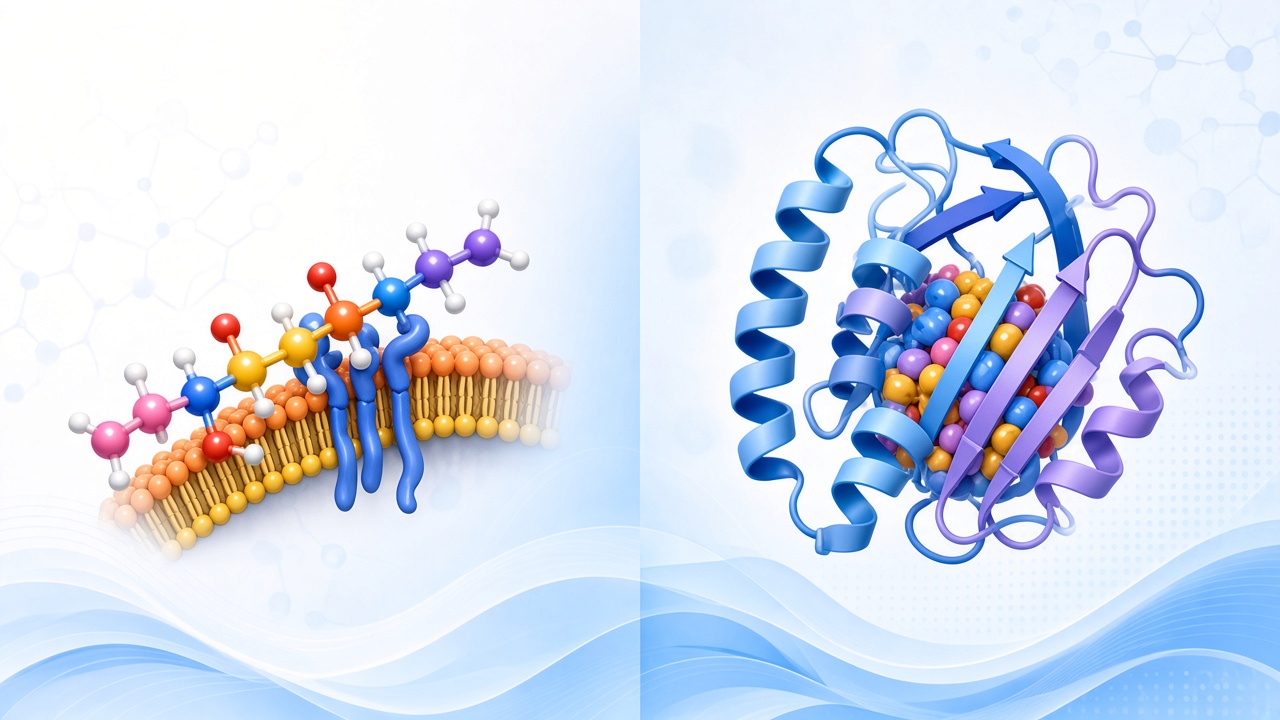
Digestion education offers a familiar illustration. Dietary proteins are broken into peptides and amino acids. Those shorter pieces are not mysterious new lifestyle categories; they are expected products of normal biochemistry teaching. The example helps beginners feel the length continuum without importing marketing language.
Messengers and protein machines in pathways
Hormone education offers another illustration. Some messengers discussed in physiology courses are short peptides, while many enzymes and receptors that respond to them are proteins. The messenger and the machine can belong to different length classes even when they participate in one pathway story.
Peptide epitopes inside protein
Structural biology education offers a third illustration. A crystallized protein domain may contain loops that look locally peptide-like, yet the functional unit under study is still the folded protein. Writers may zoom into a peptide epitope for binding discussion without reclassifying the whole macromolecule as a peptide.
Ordinary biology teaches the contrast
These examples are intentionally ordinary. Ordinary biology is enough to teach the contrast. Extraordinary claims about experimental research sequences still require extraordinary evidence discipline elsewhere on the site.
Practical literacy checklist for peptides vs proteins
Use this comparison as a map, not a ranking. Peptides vs proteins is a teaching contrast that helps you place length, structure, and function in the right mental bins. It does not declare winners and it does not tell anyone what to take, buy, or prepare.
Questions to ask about new names
When you encounter a new name online, ask whether the source is describing a short chain, a folded protein, or a fragment, and whether claims match that scale. Then open a primary educational source or paper abstract before accepting strong conclusions.
How this site frames the topic
Viral Peptides publishes educational explainers so readers can navigate scientific language with less marketing fog. For hub-level orientation, use Peptide Basics. For the core definition article, use What Are Peptides. For neighboring articles, continue with peptide-bond chemistry and half-life literacy rather than jumping straight to compound folklore.
A practical reading checklist
If you remember only one sentence, remember this: shared peptide-bond chemistry does not erase differences in length, folding, and typical function, and educational reading keeps those differences visible.
A practical reading checklist in practice
A short self-test helps. Can you explain, without product names, why a 12-residue messenger discussion differs from a multi-domain enzyme discussion? If yes, you have the core of peptides versus proteins. If not, reread the length and folding sections before moving into compound-specific pages.