


Peptide discussions online love winners. Scientific comparison is slower. To compare studies fairly, readers need matching questions, transparent methods, and honest limits. This article teaches a literacy workflow for comparing peptide-related papers and summaries without turning uneven evidence into a ranked product list. It is educational only and is not medical advice.
Why comparison literacy beats winner charts
Winner charts flatten mismatched papers into scores. Educational comparison keeps mismatches visible and refuses lifestyle rankings.
Educational scope and limits
This workflow helps readers compare studies. It does not recommend compounds, doses, or stacks.
False winner definition
A false winner appears when popularity, mechanism cartoons, or unmatched endpoints are treated as head-to-head proof.
Step one: match the scientific question
Two papers about the same peptide name can ask unrelated questions. Comparison fails if the questions differ.
Binding versus clinical outcome
Receptor-binding kinetics literacy is not interchangeable with patient-centered endpoints. Keep the question label on each paper.
Write the question down
Before comparing, write one sentence for each paper: population, intervention or exposure, comparator, and outcome.
Refuse title-only comparison
Titles are advertising surfaces. Methods sections carry the comparable facts.
Step two: compare design features that earn conclusions
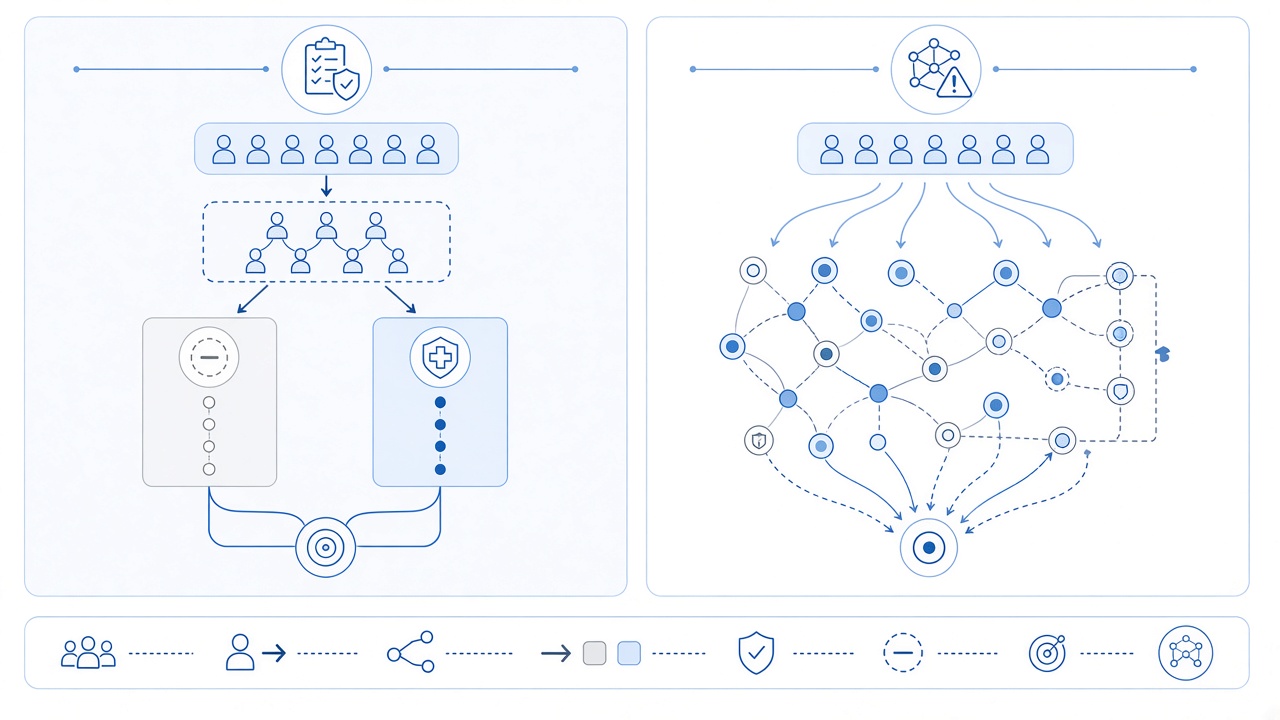
NIH educational materials emphasize that clinical research designs vary and that peer review evaluates whether analysis and conclusions are sound. Design quality is part of comparison.
Randomization and blinding
These features reduce allocation and expectation biases. Their absence weakens causal language.
Controls and comparators
A no-control before-after story is hard to compare with a placebo-controlled trial. Name the comparator explicitly.
Sample size and precision
Tiny studies can show dramatic percentages that vanish with better precision. Compare confidence intervals when available.
Pre-specification and multiplicity
Exploratory fishing across many markers creates false winners. Prefer stated primary endpoints.
Step three: compare context variables that change meaning
Even similar designs can be non-comparable if context differs.
- Model system match: yes or no.
- Population match: yes or no.
- Endpoint match: yes or no.
- Comparator match: yes or no.
- Follow-up match: yes or no.
Model system
Cell assays, animal models, and human participants are different worlds. Crossing them silently is a comparison foul.
Population
Healthy volunteers, patients with a diagnosis, and trained athletes are not interchangeable.
Identity and formulation
Sequence name, salt form, purity reporting, and delivery context in a paper can differ even when marketing uses one nickname.
Time horizon
Acute marker changes and durable outcomes answer different questions. Align follow-up windows before declaring superiority.
Keep the evidence-class ladder visible
A fair matrix labels each row with evidence class rather than pretending all citations are equal.
Layers without snobbery
In vitro work can be excellent for mechanism and still incomplete for human decisions. Respect the layer without over-promoting it.
Human evidence is heterogeneous
Case reports, uncontrolled series, and randomized trials are all human data with different strength. Do not blend them into one human proof stamp.
Reviews and primary studies
Narrative reviews can help orientation. Systematic reviews and meta-analyses, when well done, organize bodies of evidence but still inherit study limits.
Statistics literacy without intimidation
You do not need to become a statistician to avoid common traps.
Statistical significance is not importance
A tiny change can be statistically detectable and clinically trivial. Ask for effect size and outcome relevance.
Multiple outcomes
If twenty markers were tested and one is celebrated, ask what happened to the other nineteen.
Missing data and attrition
People who drop out can differ from people who finish. Compare retention reporting.
Using discovery tools without confusing search with proof
PubMed and ClinicalTrials.gov help you find records. Finding is not concluding.
PubMed as index
Use filters and careful terms, then read methods. A longer hit list can mean controversy as much as certainty.
ClinicalTrials.gov as protocol mirror
Registered study records can reveal planned endpoints and status. Compare published claims against registrations when possible.
Prefer full methods over abstract-only verdicts
Public-health explainers note that abstracts are starting points. Comparison quality rises when methods and limitations are visible.
Building a comparison table that resists hype
A good table has rows for studies and columns for question, design, population, endpoint, evidence class, and open limitations.
Avoid a single score column
Composite scores hide tradeoffs. If you need a decision, decide on a stated criterion, not a mysterious total.
Keep an unknowns column
Unknowns are data. Empty certainty is marketing.
Update when new studies appear
Comparison is a living file. One new well-designed trial can reorder confidence without rewriting chemistry.
Do not mix efficacy comparison with status axes
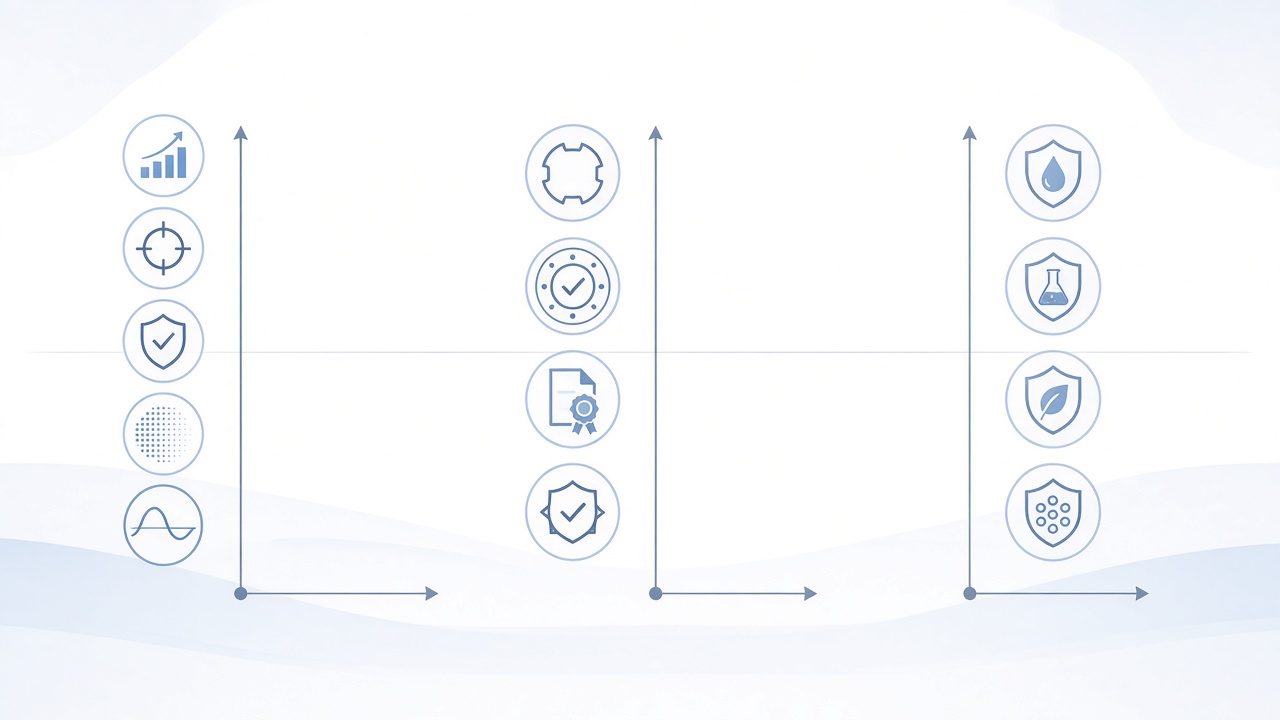
Regulatory status, compounding alerts, and anti-doping rules are important, but they are not efficacy scores.
Separate columns if needed
If status matters to your reading goal, put it in a separate column so it cannot masquerade as outcome evidence.
Safety-first remains in force
Comparison literacy does not authorize personal experimentation. See Safety-First Education.
No protocols from comparisons
A table of papers is not a use plan.
Closing: comparison as discipline
The goal is fewer false winners and more honest uncertainty.
A lasting habit
Match questions, interrogate design, align context, label evidence class, and leave unknowns visible.
How this site frames next steps
Practice on versus articles that refuse rankings, then stress-test headlines with Peptide News vs Peer Review.
Final reminder
Educational comparison is a reading skill. It is not a shopping engine.