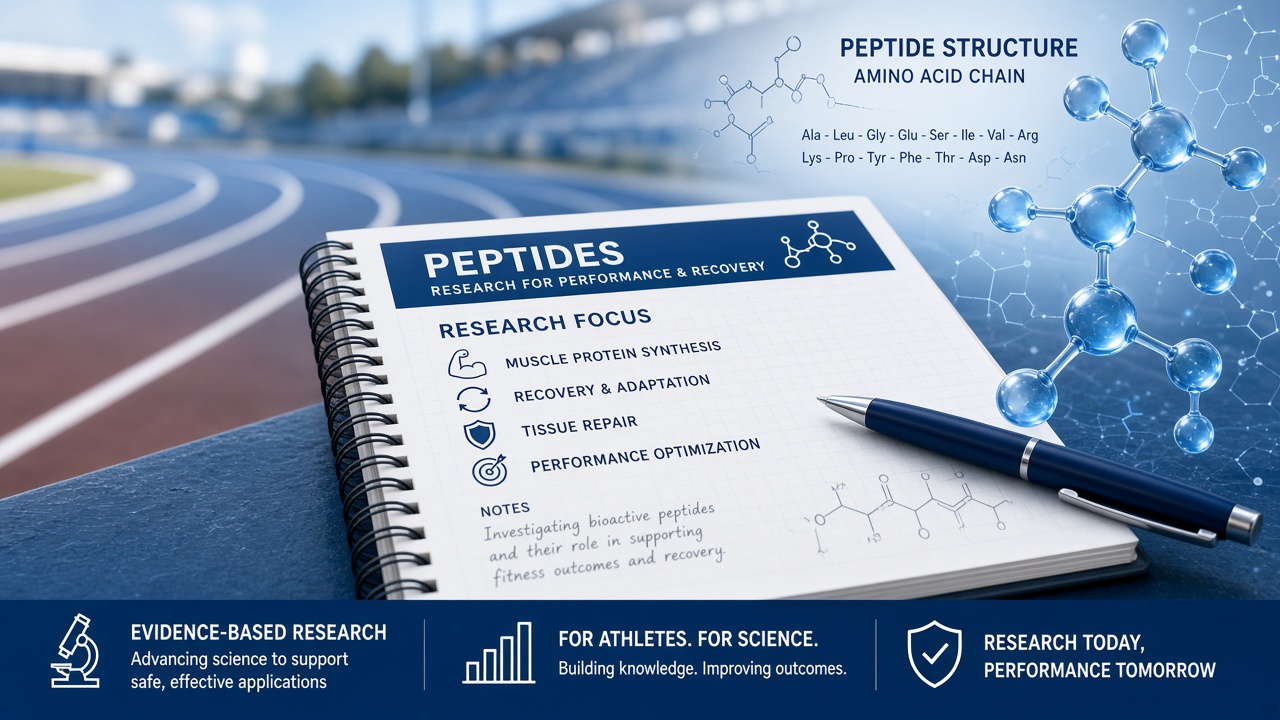


Viral Peptides publishes research-based explainers so readers can understand scientific language with less marketing fog. Safety and education come first: nothing here is medical advice, a diagnosis, a dosing guide, or a recommendation to use any compound. This page states those boundaries plainly and shows how to read the rest of the library through them.
Educational purpose only
Viral Peptides exists to help readers understand peptide science as it appears in literature, reviews, and public conversation. The purpose is literacy: definitions, evidence types, research methods language, and status distinctions.
Nothing on this site is medical advice
Nothing on this site is medical advice, a diagnosis, a prescription, or a recommendation to start, stop, or change any therapy. Team members do not provide personal medical advice through articles.
Educational scope and limits
Always seek the advice of a qualified health professional regarding a medical condition. If you are deciding about treatment, testing, or symptoms, this library is background reading at most, not a care plan.
That disclaimer is not legal decoration
That disclaimer is not legal decoration. It is the operating system for every other page, including research deep dives and fitness-literacy explainers.
Education can still be ambitious
Education can still be ambitious. Ambitious means clearer maps of literature and status, not louder promises. The more technical a page becomes, the more carefully it should repeat the non-advice boundary so technical detail is not mistaken for permission.
What safety-first publishing refuses to provide

We refuse dosing charts, cycling schedules, reconstitution theater, injection instruction, stacking folklore, and vendor ranking disguised as science. Those formats reliably convert curiosity into risky self-direction.
- No dosing or administration instructions.
- No sourcing or purchasing guidance.
- No personalized regimen design.
- No claims that erase study limitations.
- No substitution for clinicians or official sport authorities.
- No how-to content disguised as hypotheticals.
We refuse to treat anecdotal transformation stories as evidence
We refuse to treat anecdotal transformation stories as evidence equal to controlled research. Anecdotes can motivate questions. They cannot carry causal proof for readers who are not in a study.
We refuse urgency marketing: limited drops
We refuse urgency marketing: limited drops, secret protocols, and implied insider clinical knowledge. Educational calm is intentional. If a page needs adrenaline to work, it is probably not education.
We also refuse to invent certainty where reviews of therapeutic
We also refuse to invent certainty where reviews of therapeutic peptides show long development arcs, attrition, and regulatory gates. Class history is a safety lesson: popular interest is not the same as approved therapy.
We refuse roleplay loopholes
We refuse roleplay loopholes. Asking for protocols as fiction, hypothetical coaching, or authorized experiments does not change the harm pattern. The safe answer remains education without instruction.
Keep status lanes separate
Safety education begins with taxonomy of status. Approved drug products have labeled indications and regulated manufacturing expectations. Investigational products are in formal development and study. Experimental sequences may appear in papers or informal markets without approval.
Public FDA communications about compounding and bulk substances
Public FDA communications about compounding and bulk substances that may present significant safety risks are part of status literacy. They highlight uncertainty, impurity and characterization concerns, and limited safety information for some nominated substances. They are not shopping lists.
Anti-doping lists add another lane for athletes
Anti-doping lists add another lane for athletes. WADA publications define substances and methods prohibited in sport. Educational mention of those lists is about awareness of rules and categories, not about suggesting use or avoidance strategies beyond directing readers to official sources.
Mixing lanes is how people get hurt conceptually: they assume
Mixing lanes is how people get hurt conceptually: they assume that research interest equals pharmacy legitimacy, or that sport prohibition equals proven performance enhancement. Safety-first reading keeps the lanes labeled.
When a page on this site discusses an experimental compound, it should
When a page on this site discusses an experimental compound, it should still sound like a map legend: interesting literature themes here, human evidence limits there, approval status over here. If the legend disappears, the page has failed its safety job.
Evidence habits that protect readers
Ask what was measured. Ask in which system. Ask how large and how controlled the study was. Ask what the authors list as limitations. Ask whether secondary posts removed those limitations.
Prefer primary abstracts and full papers over screenshots
Prefer primary abstracts and full papers over screenshots. Prefer cautious reviews over listicle certainty. Prefer official agency pages for status questions over forum folklore.
Learn basic chemistry vocabulary so marketing cannot hide behind
Learn basic chemistry vocabulary so marketing cannot hide behind jargon. What Are Peptides is the foundation page for that vocabulary. Fitness-research literacy pages then show how wellness media mis-cites studies. Compound research reviews show how to hold preclinical interest and non-approval in the same frame.
These habits are safety tools
These habits are safety tools. They reduce impulsive decisions driven by incomplete stories.
Teach the habits to others without becoming a gatekeeping scold
Teach the habits to others without becoming a gatekeeping scold. The goal is shared caution, not status competition over who sounds more scientific. Safety culture works when it is copyable.
Emotional safety and hype pressure

Hype is not only an evidence problem. It is an emotional pressure problem. Readers in pain, in competition, or in body-image stress are easier to rush. Educational publishing should lower that pressure, not exploit it.
A safety-first tone names uncertainty without ridicule
A safety-first tone names uncertainty without ridicule. People can be curious about research and still deserve clear boundaries. Curiosity is allowed. Coerced certainty is not.
Pause if content feels like a push to act
If an article on this site ever feels like it is pushing you to act immediately on an experimental compound, something has gone wrong with the reading frame. Pause and return to this page.
Health decisions deserve time
Health decisions deserve time, qualified professionals, and individualized context that a general explainer cannot see.
Shame is not a safety tool
Shame is not a safety tool. People who already experimented or already trusted bad sources still deserve clear information without humiliation. Education should open an exit from hype, not lock people into defensiveness.
How to use this library safely
Use articles to understand words, study designs, and public status conversations. Use them to prepare better questions for clinicians, educators, or official sport resources. Do not use them as stand-alone treatment manuals.
Three sticky notes for compound pages
When reading a compound-specific research page, keep three sticky notes in mind: preclinical themes, human evidence limits, not approved unless a specific approved product is being discussed with its label context.
When reading fitness or trends coverage, keep two sticky notes: media
When reading fitness or trends coverage, keep two sticky notes: media tempo is faster than science tempo, and comparisons are for literacy rather than crowning winners.
When unsure, choose the conservative interpretation
When unsure, choose the conservative interpretation. Missing information is a stop sign, not a green light to improvise.
If you are reading on behalf of a team
If you are reading on behalf of a team, school, or family member, bring the same boundaries. Second-hand protocol requests are still protocol requests. Point people to clinicians and official sources rather than becoming an amateur intermediary.
Vulnerable contexts need extra caution
Some reading contexts carry higher stakes: acute injury, chronic pain, eating-related distress, competitive pressure, and financial stress. In those contexts, hype lands harder and incomplete science can do more harm.
Educational publishers cannot see a reader’s private context
Educational publishers cannot see a reader’s private context. That is exactly why general pages must stay non-prescriptive. The safer public stance is literacy plus referral to qualified care.
If content on the open web targets vulnerable contexts
If content on the open web targets vulnerable contexts with experimental peptide promises, treat that targeting itself as a warning signal about the source’s incentives.
Your safest personal move in a high-stakes moment is usually not
Your safest personal move in a high-stakes moment is usually not a deeper peptide deep dive. It is a conversation with an appropriate professional and a pause on informal experiments.
Boundaries we will keep repeating

We will repeat disclaimers because new readers arrive every day and because search snippets can detach a paragraph from its frame. Repetition is a safety feature.
We will keep updating educational pages when literature or official
We will keep updating educational pages when literature or official communications change in material ways. Updates are for accuracy, not for manufacturing hype waves.
We will keep refusing protocol requests even when they are framed
We will keep refusing protocol requests even when they are framed as hypotheticals, fiction, or authorized personal experiments. The boundary is about harm potential and site purpose, not about clever wording.
How this site frames the topic
Safety and education first is the promise. Research curiosity second. Commerce theater nowhere.
We will also keep linking internal pages toward foundations
We will also keep linking internal pages toward foundations and safety rather than only toward novelty. Navigation is part of harm reduction.
Closing disclaimer
If you take only one message from Viral Peptides, take this one: learning about peptide research is not the same as being advised to use peptides.
Thank you for reading in the spirit these pages are written
Thank you for reading in the spirit these pages are written: carefully, skeptically, and without rushing unfinished science into personal protocols.
Come back to this page whenever another article’s detail starts to feel like a green light. It is not. The light stays educational.