

Peptide stability is a chemistry and formulation topic in scientific literature. Researchers discuss differences between solid lyophilized material and peptides in solution, along with pathways such as hydrolysis, oxidation, and deamidation. This article summarizes those educational themes at a literacy level. It is not a laboratory standard operating procedure, not a home storage manual, and not medical advice.
Why storage literacy appears in research peptide education
Stability language shows up whenever peptides are synthesized, shipped, assayed, or formulated. Readers meeting research-use products online often want a lifestyle SOP. Education instead offers chemistry themes and limits.
Educational scope and limits
This article summarizes literature themes about solid versus solution stability. It is not permission to prepare or use research chemicals, and it is not a substitute for institutional laboratory procedures.
Not an SOP
Institutional labs use validated procedures, documentation, and quality systems. A website paragraph cannot replace those controls.
Lyophilized solids versus solutions: a core teaching contrast
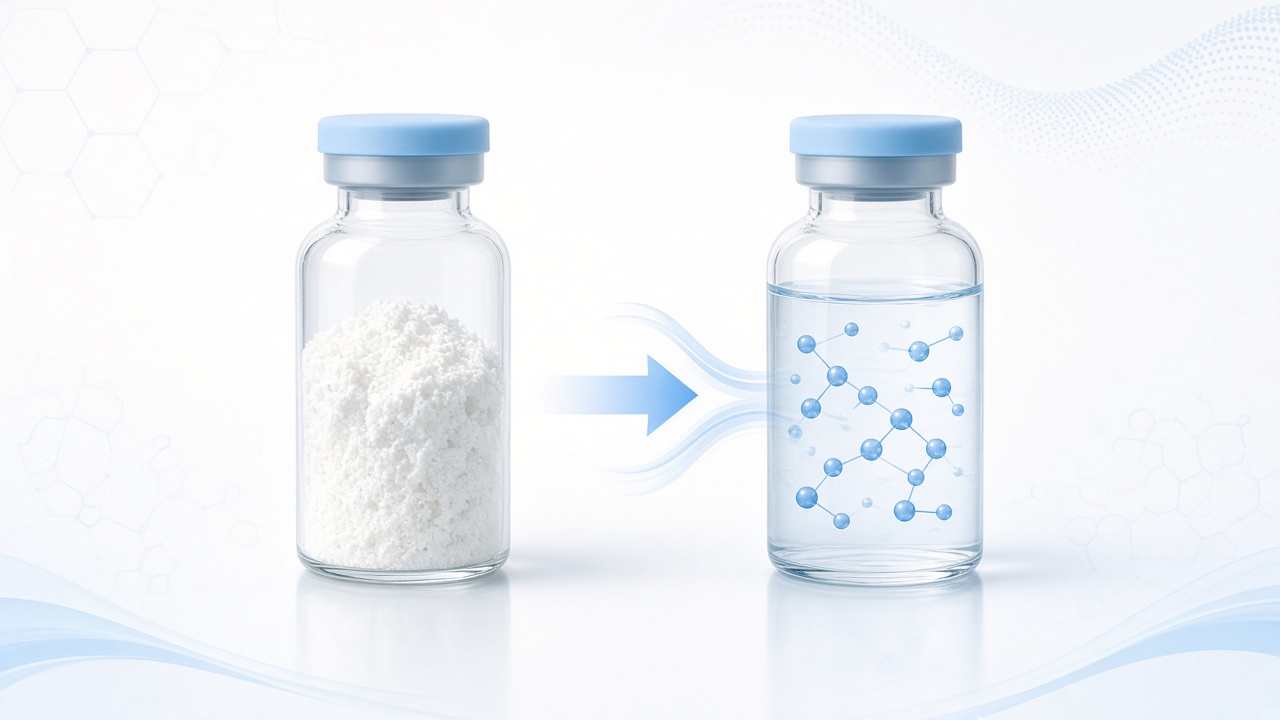
Educational and review sources often note that shelf-life in solution can be much more limited than for many lyophilized peptides held under protective conditions. The contrast is chemical: water and molecular mobility support many degradation reactions.
Water and mobility
Removing water reduces a key reactant for hydrolysis and can reduce mobility that enables collisions and rearrangements. Reintroducing solvent changes that picture.
Not an absolute rule
Sequence chemistry, residual moisture, pH history, and excipients can undermine simple slogans. Some solid-state pathways still proceed.
Solution data have limits for solids
Classic formulation discussions note that solution pH-rate behavior may not map cleanly onto reduced-moisture solids. Educational readers should not transplant one table into another context.
Degradation themes commonly taught in peptide stability literature
Reviews of peptide and protein instability discuss recurring chemical and physical pathways. Knowing the names helps you read papers without turning them into recipes.
- Hydrolysis: water-participating bond cleavage themes.
- Deamidation and related isomerizations: sequence- and condition-sensitive.
- Oxidation: residue-dependent, stress-accelerated in many discussions.
- Aggregation: physical association that can change assay behavior.
- Adsorption: loss to containers or surfaces in dilute solutions.
Hydrolysis and deamidation
Peptide bonds and side-chain amides can be vulnerable under certain pH and moisture conditions. Aspartic and asparagine contexts are frequently discussed in educational degradation maps.
Oxidation-sensitive residues
Residues such as methionine, cysteine, and tryptophan are often flagged for oxidative sensitivity in formulation reviews. Light and oxygen exposure appear as experimental stressors in analytical guidance.
Aggregation and adsorption
Physical loss pathways include aggregation and sticking to surfaces. These matter in analytical peptide handling discussions even when covalent chemistry is unchanged.
Analytical handling context is not personal-use instruction
Mass-spectrometry assay guidance discusses storage themes for peptide calibrators, including preferences for lyophilized long-term holding in research settings and caution about repeated freeze-thaw of solutions.
Purpose of those recommendations
The purpose is measurement integrity in laboratories. It is not a lifestyle cold-chain guide for self-use products.
Quantification caveats
Analytical papers emphasize concentration verification methods because dissolution variability can mislead assays. That is a metrology theme.
No translation into home protocols
Readers should not convert assay calibrator advice into injection preparation steps. This site will not bridge that gap.
Sequence dependence: why one peptide is not all peptides
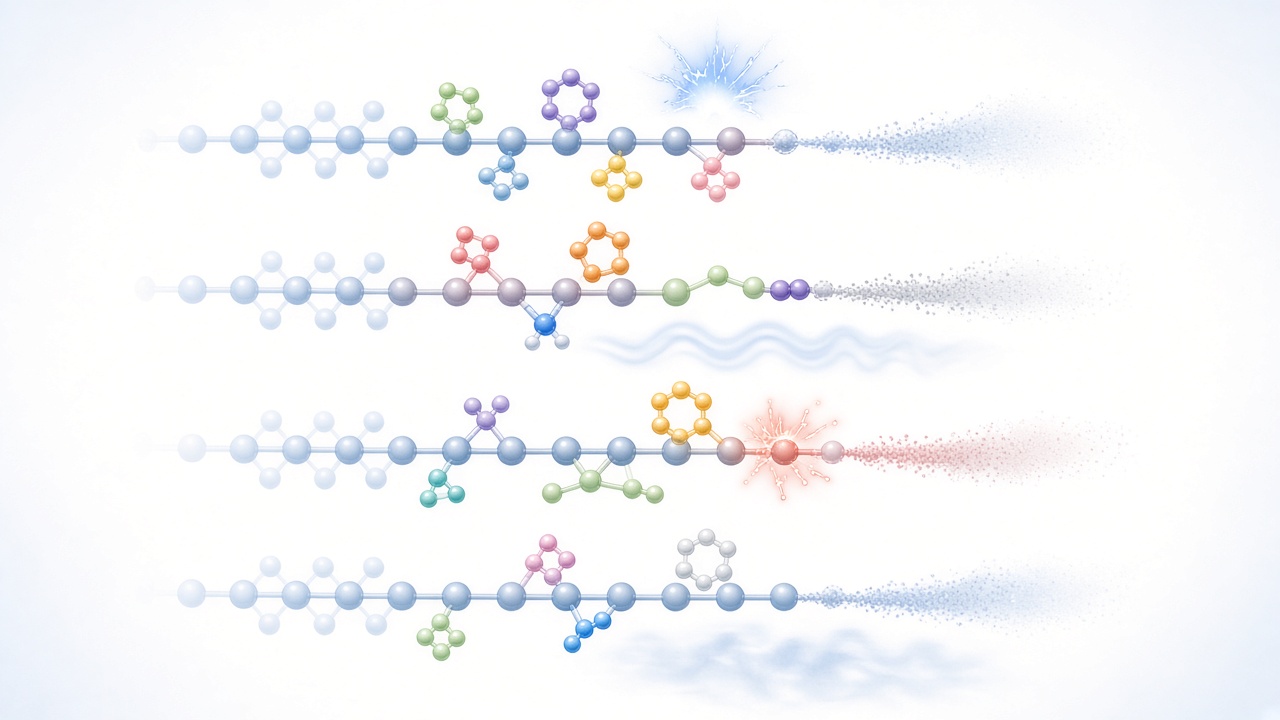
Instability is not a universal constant. Reviews stress that each sequence has its own vulnerability profile.
Residue maps in reviews
Educational summaries often map residues to pathways: oxidation-prone motifs, deamidation-prone motifs, photochemically sensitive aromatics, and so on.
Excipients and microenvironment
Formulation science discusses buffers, sugars, and other excipients as modifiers of stability. Those are specialist topics, not consumer checklists here.
Avoid one-temperature folklore
A single freezer slogan cannot capture sequence-specific chemistry. Literacy means expecting method sections to specify conditions for that molecule.
What papers mean by stress conditions
Stability studies use intentional stressors such as temperature excursions, humidity, light, and freeze-thaw cycles to reveal pathways. Stress testing is a research design tool.
Accelerated studies
Higher temperature or humidity can accelerate reactions for shelf-life modeling. Models have assumptions and can fail when mechanisms change.
Not a dare for consumers
Reading about stress tests is not an invitation to mishandle materials at home. It is a way to understand why papers report condition ranges.
Documentation culture
Laboratories document lot identity, storage location, and time out of controlled conditions. That culture is part of research integrity.
Regulatory-adjacent boundaries readers should keep separate
Chemistry themes are not the same as approved-drug labeling, compounding risk communications, or research-use-only disclaimers.
Approved medicine cold chain
Licensed peptide medicines have labeled storage statements grounded in regulatory dossiers. Those labels are product-specific and are not generalized here.
Research-use-only context
RUO labeling communicates intended research context for certain products. It is not a stability certificate and not a use guide for people.
Compounding quality is a different topic
Quality failures in compounding history are patient-safety topics. See the compounding versus approval education article for literacy on that axis.
Common misreadings of storage content online

Internet storage charts often overpromise certainty and understate sequence dependence.
Universal charts
A colorful chart claiming one rule for all peptides is usually marketing theater. Literature is more conditional.
Stability is not the same as safety or legality
A chemically intact research powder is not thereby an approved medicine or an anti-doping-safe choice.
Advice creep
Educational chemistry slides get rewritten as how-to-reconstitute manuals. This site resists that creep.
Practical literacy closing points
Remember the teaching contrast, the pathway names, and the refusal to convert papers into personal SOPs.
Questions to ask when reading a stability claim
Is the material solid or in solution? Which pathway is claimed? What sequence features matter? Is this analytical guidance, formulation science, or marketing? Is anyone converting it into personal-use instruction?
How this site frames next steps
Continue with research-use-only meaning, compounding versus approval literacy, and safety-first education. Chemistry literacy should reduce harm from confusion, not enable unsupervised use.
Final limit statement
If you need an institutional procedure, use your laboratory quality system. If you need medical storage advice for an approved medicine, use the product label and a clinician or pharmacist. This article is neither.