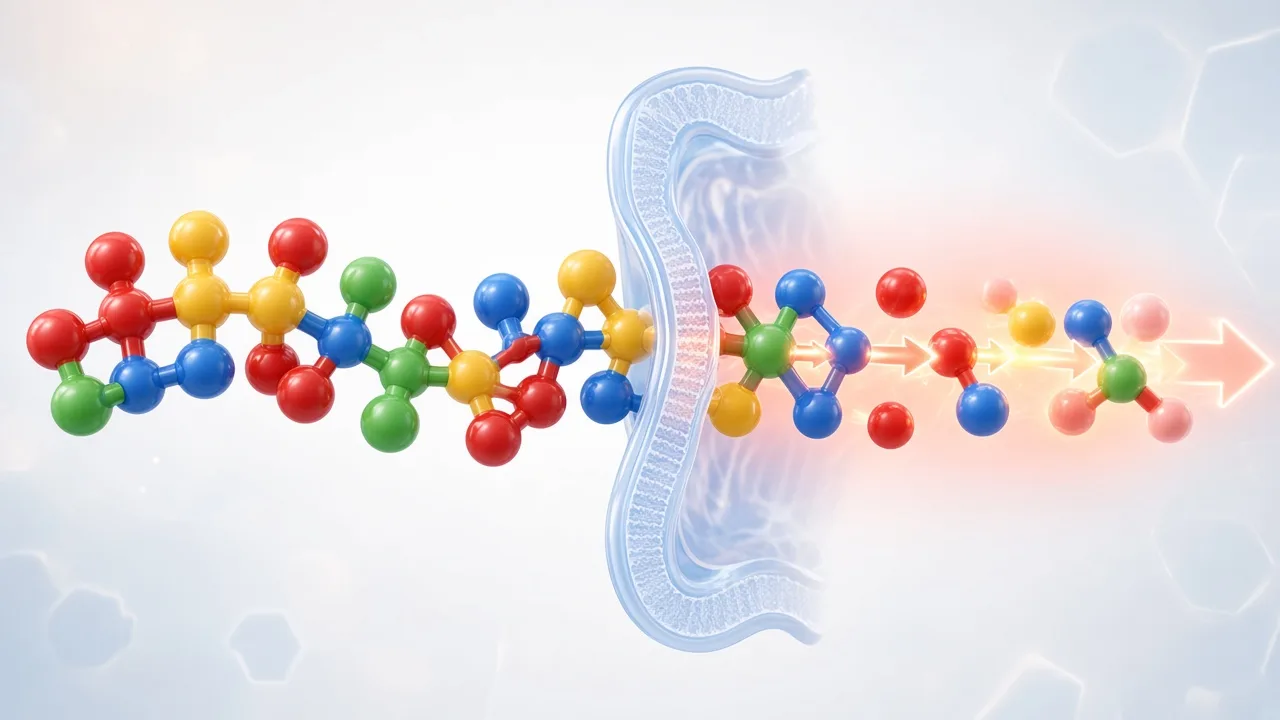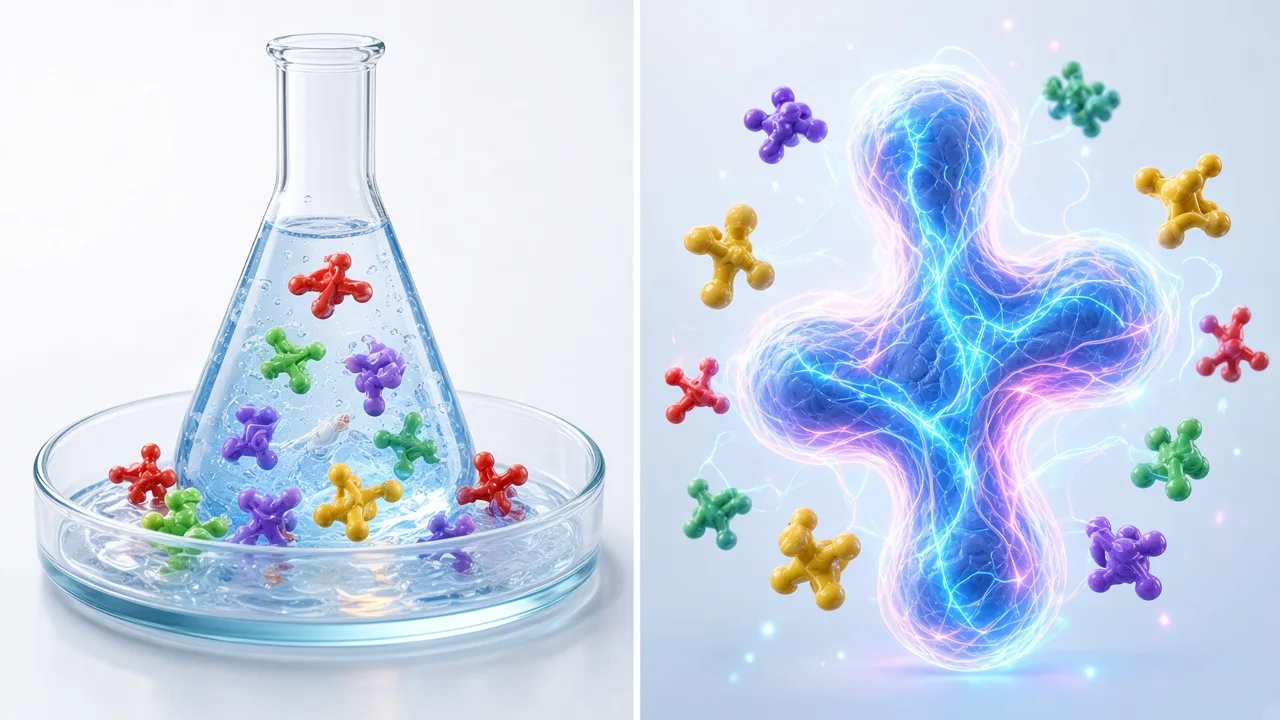

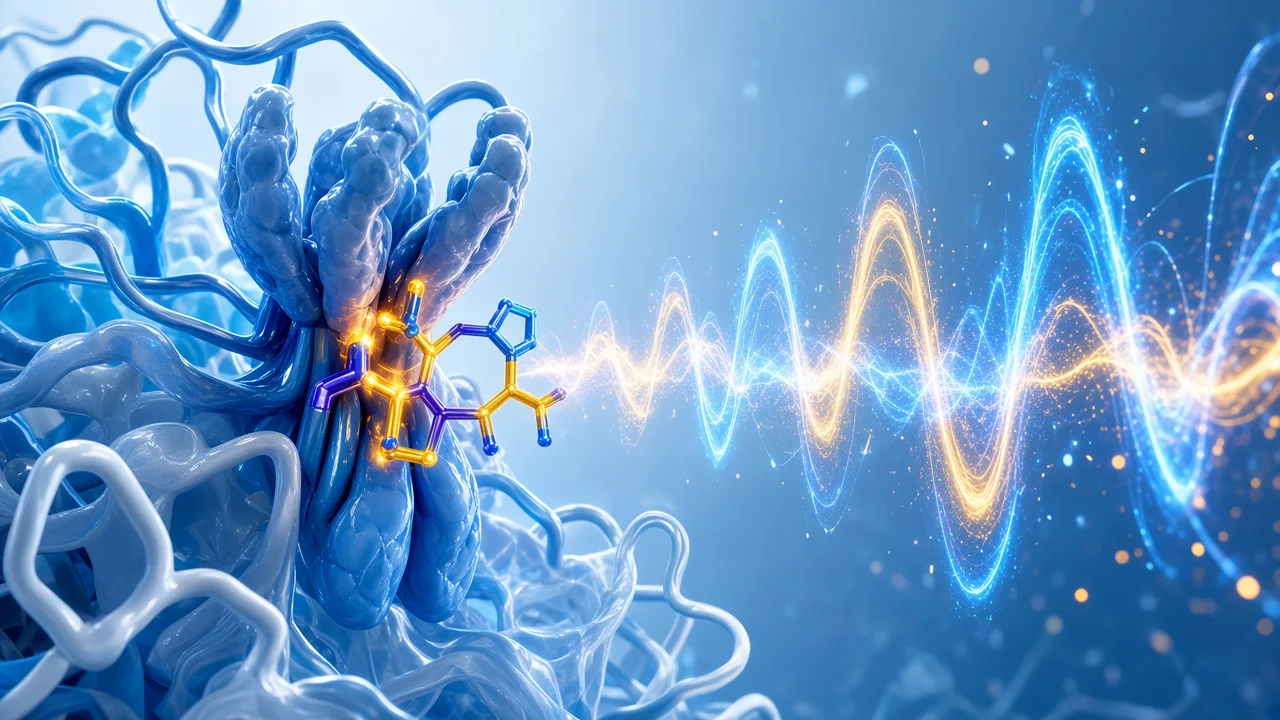
Affinity and efficacy are related pharmacology words that social posts often fuse into one vibe of “it works.” Affinity asks how favored a ligand-receptor complex is under stated conditions. Efficacy asks how large a functional response appears once the target is engaged in a stated system. This article keeps those columns separate for peptide research readers. It is educational only. It is not medical advice and does not provide dosing, assay recipes, or compound recommendations.
Why peptide readers need the affinity versus efficacy split
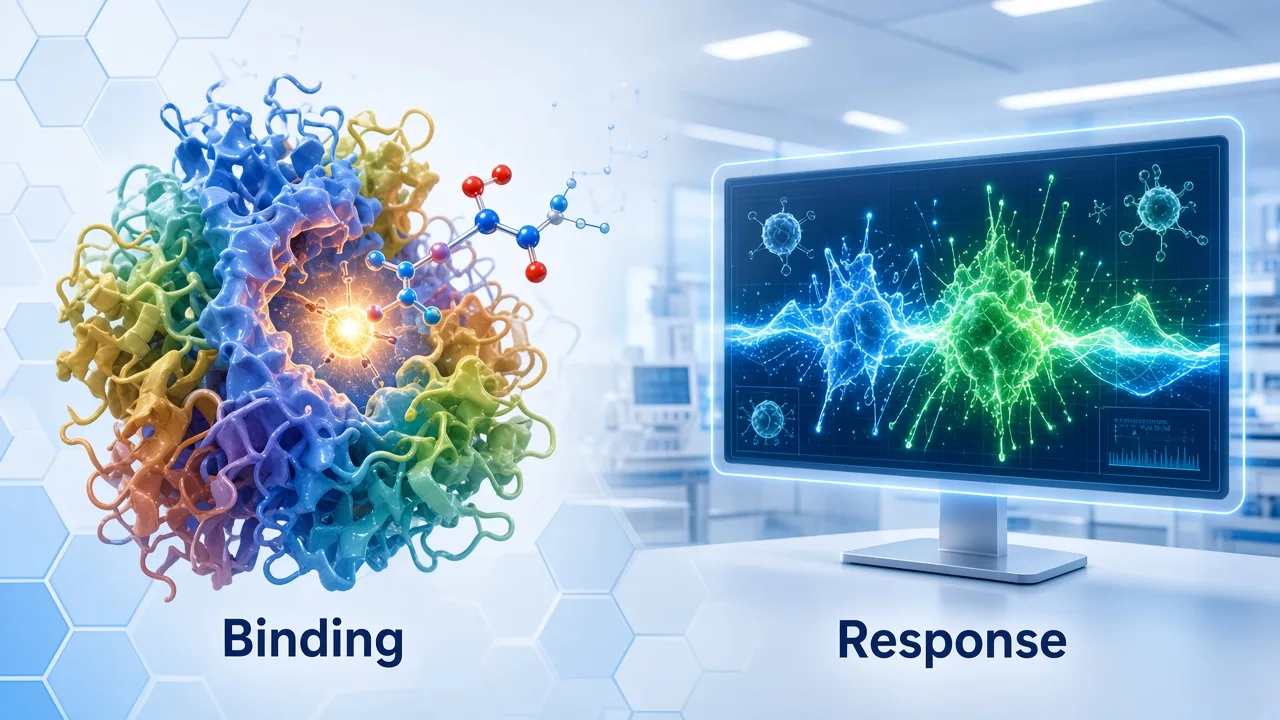
Peptide posts love single numbers. A nanomolar binding value looks decisive. A large assay percentage looks decisive. The literacy failure starts when those numbers are treated as the same kind of claim.
Affinity is a binding-column fact. Efficacy is a response-column fact. A careful reader can respect both without collapsing them into “this peptide works.”
This page is the dedicated split. Association, dissociation, and kinetics vocabulary still live in peptide receptor binding.
A practice sentence that keeps claims honest
Try this: “This paper shows engagement under stated conditions; it has not yet shown outcome class Y.” That sentence protects curiosity when a figure looks impressive.
What affinity means in educational pharmacology
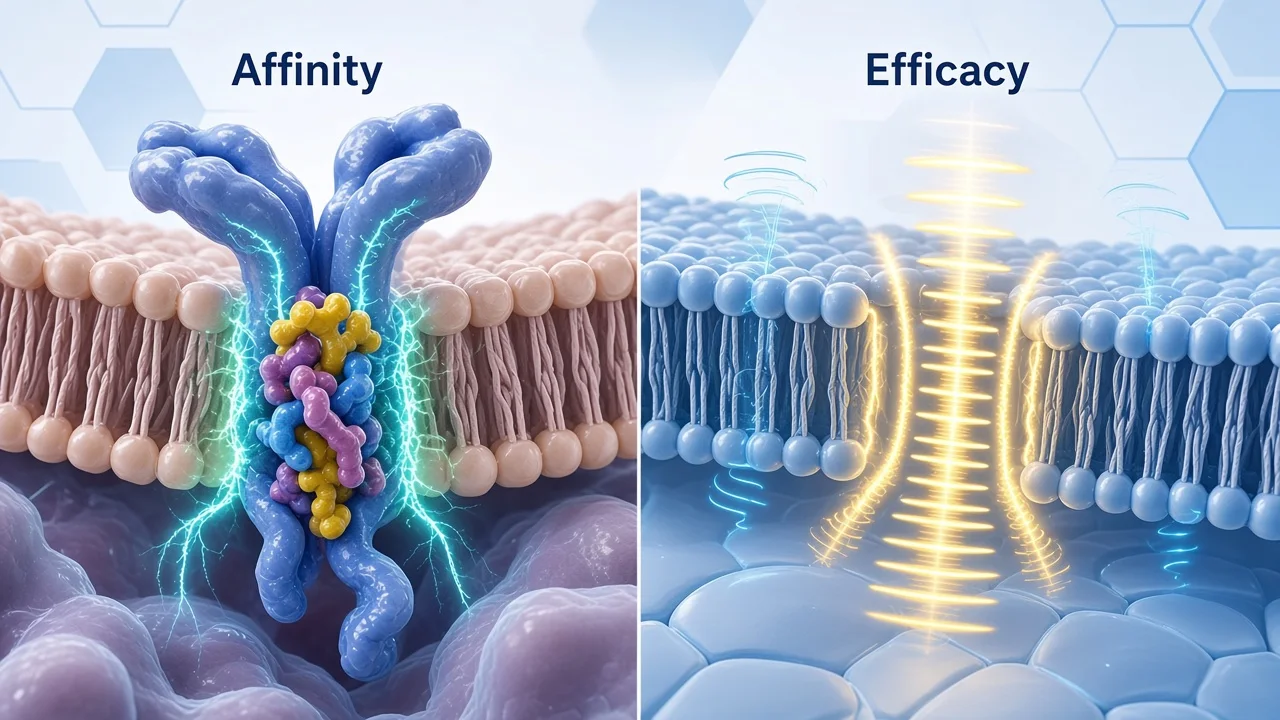
Affinity describes how readily a ligand forms a complex with a receptor under stated conditions. Teaching materials often relate higher affinity to needing less ligand to reach a given occupancy, all else equal.
In common equilibrium teaching language, a dissociation constant summarizes how favored the bound state is. Lower values of that constant are described as higher affinity. The exact number still depends on the experimental setup used to estimate it.
What affinity does not finish
Affinity does not prove functional magnitude. It does not prove selectivity across every related receptor. It does not prove human benefit. It does not convert a buffer concentration into a personal protocol.
What efficacy means in educational assay language
Efficacy, in this educational sense, is about the capacity of a bound ligand to produce a response in a stated system. Full agonists can produce the maximum response the system can show through that pathway. Partial agonists produce less than that maximum even when receptors are highly occupied.
Antagonists can bind with affinity while having little or no intrinsic efficacy of their own. They matter for literacy because they prove again that binding and activation are not identical events.
Efficacy is system-bound
A response size depends on the cell type, pathway readout, receptor density, and amplification after the receptor. Calling one peptide “more efficacious” without naming the system is incomplete literacy.
Keep affinity and efficacy in two columns
Column one: binding preference under stated conditions. Column two: functional response under stated conditions. Most binding-heavy peptide posts fail by writing one sentence that pretends those columns are the same.
A useful contrast: one ligand may occupy a receptor efficiently yet produce a small downstream effect. Another may show moderate affinity with a stronger functional readout in the same system. That pattern is why pharmacology teaching keeps the words separate.
- Affinity question: how favored is the bound complex?
- Efficacy question: how large is the functional response once engaged?
- Context question: which assay, cell, pathway, and endpoint?
- Leap question: is anyone converting this into a human promise?
Occupancy is a bridge, not a finish line
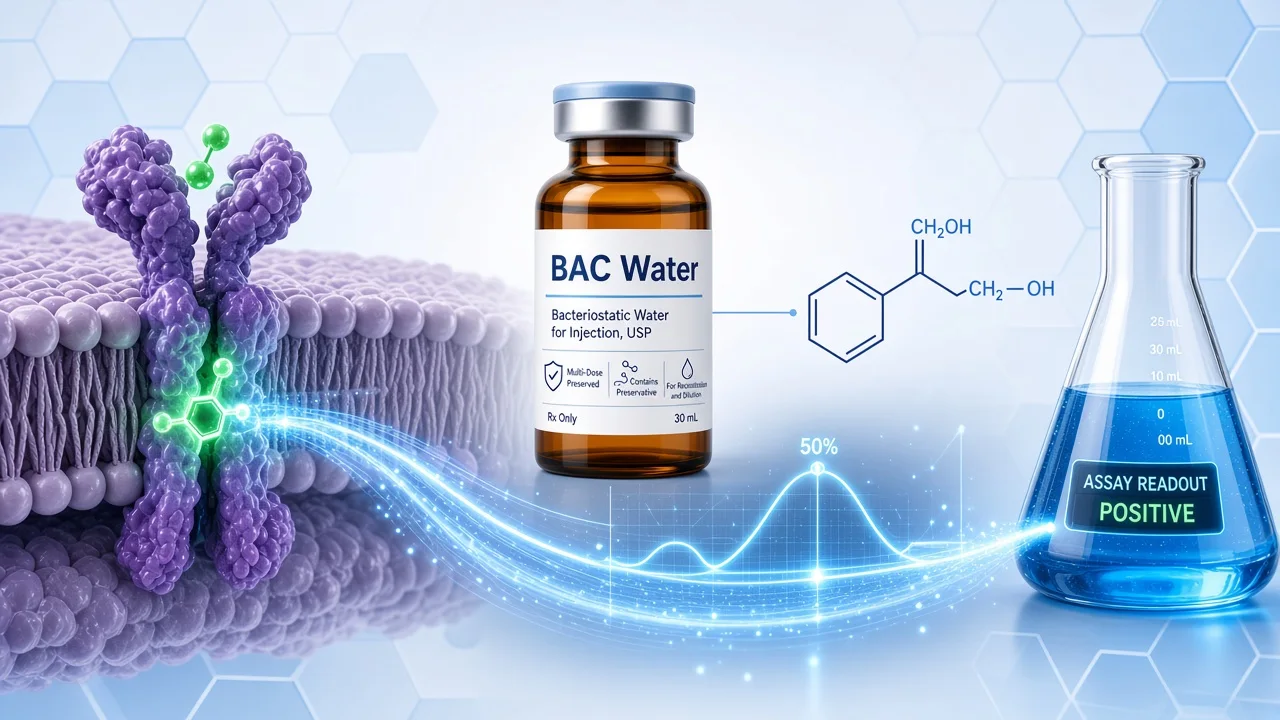
Occupancy ideas connect ligand availability and affinity to how many receptors are engaged in a simplified model. Higher availability and higher affinity both tend to increase occupancy when other factors are held equal.
Real cells add degradation, transporters, spare receptors, compartmentation, and pathway gain. That is why occupancy is a bridge concept, not a finish line.
Spare receptors and why 100 percent occupancy is not required
Teaching models often note that some agonists can produce a large response without occupying every receptor. Receptor reserve, sometimes called spare receptors, helps explain why occupancy and maximum response are not locked one-to-one.
Concentration boundary for this site
Concentrations in assay buffers are experimental descriptors. Viral Peptides will not translate them into personal dosing schedules. Literacy stops at understanding what the figure is measuring.
Where potency language creates confusion
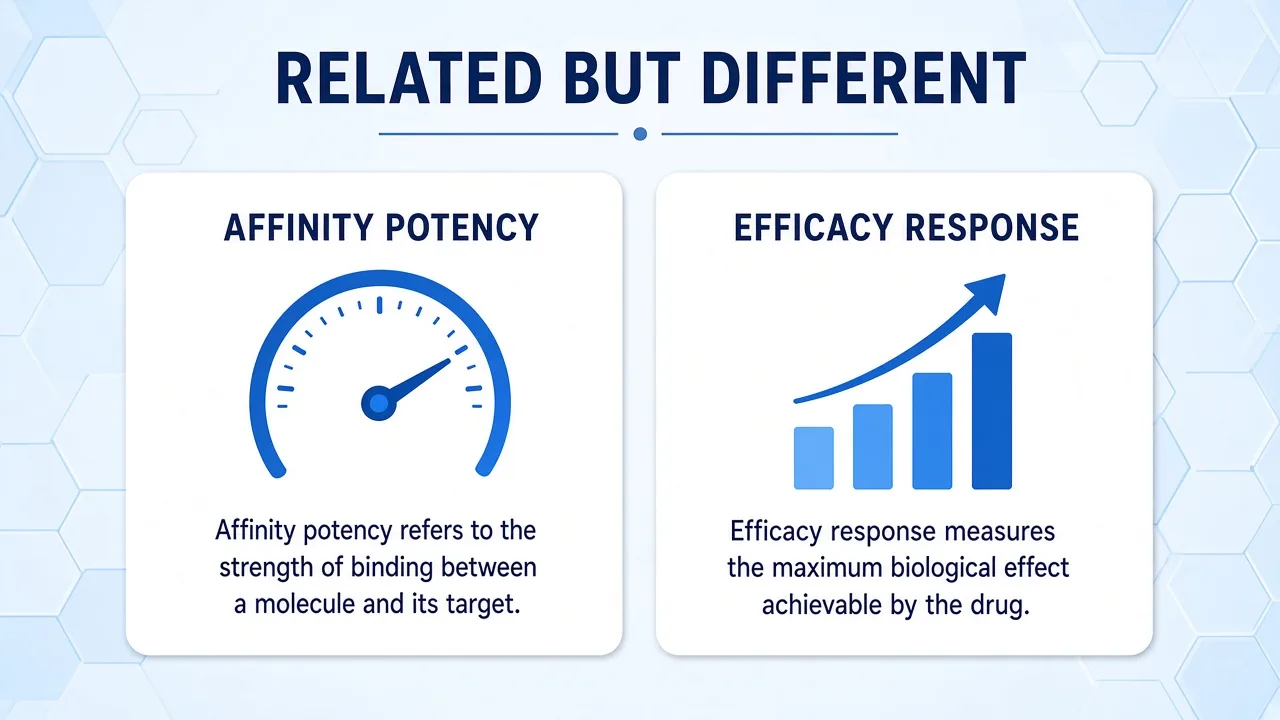
Potency language usually describes how much ligand is needed for a stated effect size. A ligand that produces a given response at a lower concentration is described as more potent in that assay.
Potency is related to affinity, but it is not identical to efficacy. Two ligands can differ in potency while reaching similar maximum responses, or share rough potency talk while differing in maximum response. Ask which curve feature is being claimed.
Chart habit
When a post says “more potent,” check whether it means lower concentration for a fixed effect, larger maximum effect, tighter binding, or just marketing emphasis. Those are different claims.
Partial agonism and related advanced labels
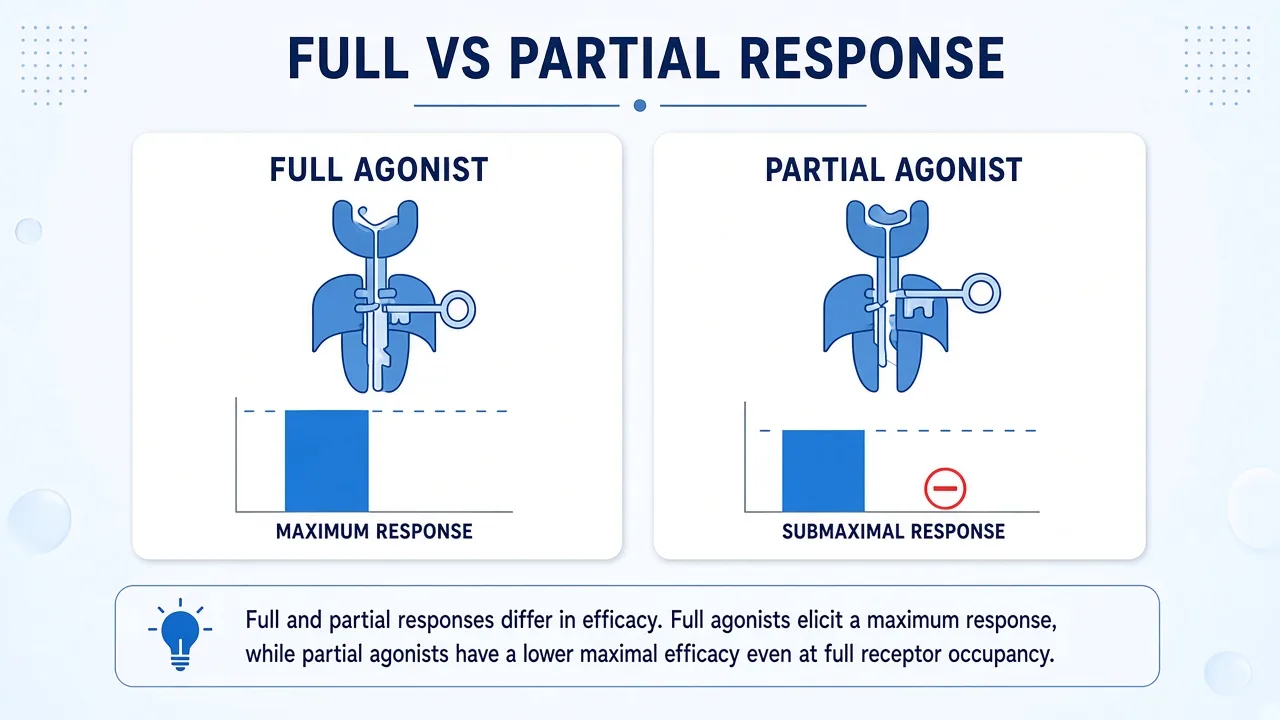
Partial agonists are a classroom example of the split: they can bind well enough to occupy receptors yet still fail to produce the maximum response available to a full agonist in that system.
Antagonism and biased signaling are advanced topics that build on the same separation. For this page, the beginner rule is enough: binding figures are not automatic proof of functional magnitude, let alone human benefit.
Use signaling literacy next
Pathway-layer reading continues in peptide cellular signaling. Binding literacy and signaling literacy work together. Neither is a complete shortcut.
Model limits: in vitro figures are not human verdicts
A binding or functional assay can be carefully done and still answer a narrow question. Moving from buffer to cell, animal, and human evidence classes requires new checks.
Keep in vitro vs in vivo peptide research nearby when a post jumps from nanomolar affinity to lifestyle certainty. Trial-reading habits continue in how to read peptide clinical trials.
Headline traps this split prevents
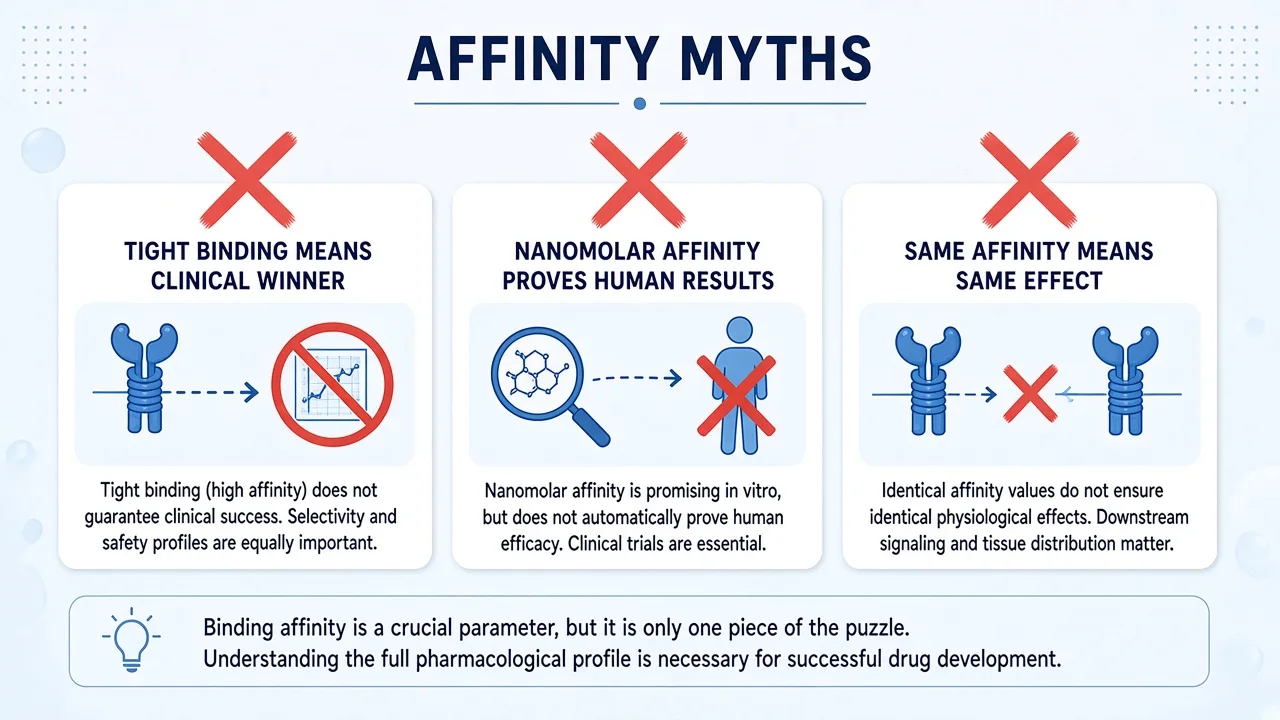
Trap one: nanomolar affinity presented as proof a compound “works in people.” Trap two: a bigger assay response treated as a personal ranking. Trap three: kinetics ignored when time windows matter. Trap four: potency used as a synonym for efficacy. Trap five: seller charts with no assay conditions.
Fair comparison habits live in how to compare peptide studies.
- Binding claim named separately from response claim.
- Assay system named.
- Endpoint named.
- Human leap refused unless appropriate evidence exists.
Verification checklist before sharing a binding claim
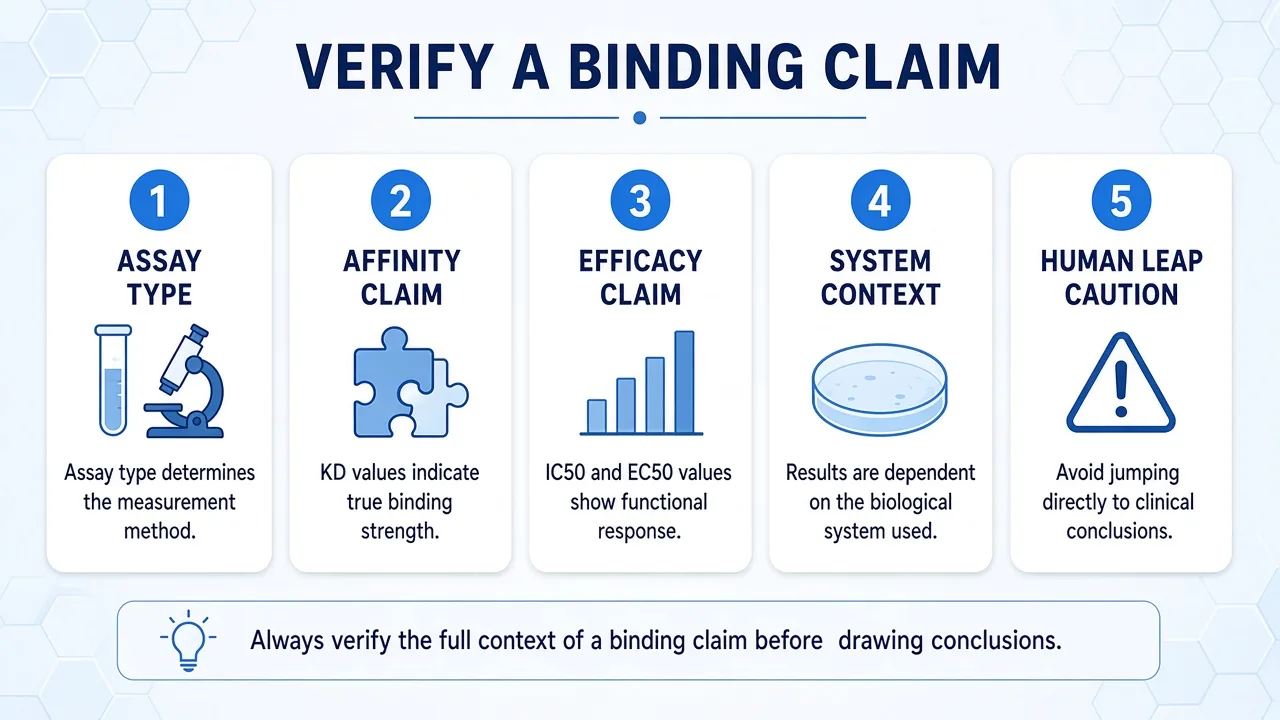
Use this checklist whenever a peptide post waves a binding number like a trophy.
- Assay typed: binding assay, functional assay, or unclear?
- Affinity claim checked: what constant or occupancy idea was reported?
- Efficacy claim checked: what response and maximum were measured?
- System named: receptor, cell type, pathway readout, conditions?
- Leap refused: is anyone converting this into personal use advice?
Pause rule
If the post cannot say whether it is talking about binding preference or functional response, pause. Completing the missing words for the poster is how literacy fails.
What this page will not do
It will not publish dosing schedules, assay recipes, or compound rankings for personal use. It will not translate buffer concentrations into lifestyle instructions. It will not declare a peptide “best” from a single binding figure.
Those refusals keep the page inside pharmacology literacy.
Links back to the Research & Science hub
This page sits under peptide research and science. Return to peptide receptor binding for the broader kinetics map and to peptide cellular signaling for pathway-layer reading.
When claims jump evidence classes, keep in vitro vs in vivo peptide research and how to compare peptide studies nearby.