

Body composition claims travel faster than measurement literacy. Online peptide conversation often treats fat loss or lean mass as settled outcomes of named sequences. Research and clinical methodology literature show that measurement method, study design, and evidence class decide what a claim can mean. This article is educational literacy only and is not medical advice.
Why body composition literacy belongs next to peptide claims
Marketing language prefers dramatic before-and-after stories. Research language prefers compartments, methods, and uncertainty. Peptide names often enter composition talk without carrying method detail.
Educational scope and limits
This article teaches how composition is measured and claimed. It does not recommend peptides for fat loss, muscle gain, or physique goals.
Not a compound ranking
No sequence is crowned here as a composition winner. Winner language is usually a sign that evidence classes were skipped.
BMI and other surrogates: what they can and cannot say
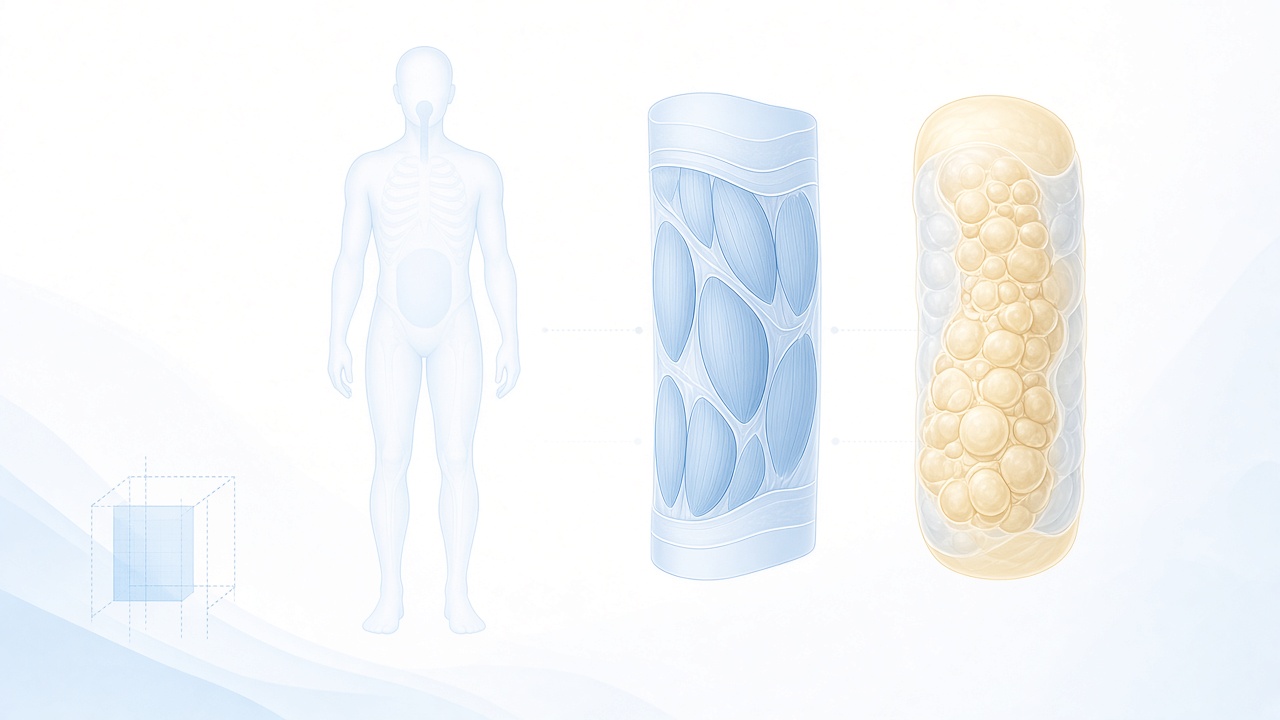
BMI remains widely used because it is simple. Expert guidance for obesity trial variables notes that BMI does not directly capture individual differences in lean mass and fat mass.
Useful as a population tool
At group level, BMI associates with many health outcomes in epidemiology. That does not make it a precise personal composition report.
Athlete and sarcopenia misclassification risk
People with high muscle mass or low muscle mass can be miscategorized by BMI alone. Composition claims that only report weight ignore that problem.
Circumferences as adjuncts
Waist and related circumferences appear in trial variable sets because distribution of fat matters. They still are not imaging of depots.
Common measurement methods in educational overview
Methodology reviews describe a ladder from simple anthropometry to multi-compartment models and imaging. Accuracy, cost, burden, and access trade off.
- Anthropometry and skinfolds: accessible, operator-dependent.
- Bioelectrical impedance analysis: estimates influenced by hydration and protocol.
- Air-displacement plethysmography: densitometry-based two-compartment approach.
- DXA: widely used criterion estimate of fat, lean, and bone mineral content.
- CT and MRI: strong for regional and visceral depots; often research-limited by cost.
DXA in trial recommendations
OBEDIS expert guidance for obesity intervention trials treats DXA as a preferred approach for fat and lean quantification when feasible, while acknowledging equipment and expertise barriers.
BIA needs standardized conditions
NIH technology assessment material on bioelectrical impedance emphasizes that position, hydration, recent food and fluid intake, temperature, and activity can affect values. Uncontrolled consumer scans are weak evidence.
Choose the method for the question
Bone-focused questions, sarcopenia screening, and visceral fat research may need different tools. A peptide marketing chart that ignores method choice is not educational.
Common peptide-related claim patterns online
Public composition claims often skip the hard parts: method, duration, energy balance, concurrent training, and evidence class.
Photos are not methods
Lighting, pump, sodium, and camera angle can move appearance without moving compartments. Photos are storytelling, not densitometry.
Scale-only stories
Weight change can reflect water, glycogen, gut content, and tissue. Composition claims need composition measures.
Mechanism leaps
Receptor or pathway talk is often presented as if it already proved fat-mass reduction in humans. Mechanism is a hypothesis layer, not an outcome layer.
Category collapse
Approved metabolic medicines, investigational drugs, and research-only labels get flattened into one peptide lifestyle category. Literacy keeps categories separate.
Evidence classes for composition endpoints

A fair reading separates in vitro hints, animal body-composition proxies, early human studies, and mature randomized trials with transparent methods.
Animal limits
Rodent fat-pad weights and human DXA fat mass are related ideas with different translation risks. Species, diet control, and growth stage all matter.
Human trial basics
Ask about randomization, blinding, sample size, attrition, and whether diet and activity were monitored. Composition is sensitive to those confounds.
Duration and maintenance
Short interventions can move water and glycogen more visibly than durable tissue change. Maintenance after the intervention is often under-reported in hype summaries.
Confounds that fake composition stories
Energy intake, protein intake, resistance training, sleep, medications, menstrual cycle, and illness can all shift weight or estimates. Ignoring them is not scientific comparison.
Training overlay
If participants started lifting while trying an experimental product, lean-mass narratives may belong to the training stimulus.
Hydration artifact
BIA and scale weight are especially vulnerable to fluid shifts. Educational readers should treat sudden swings with suspicion.
Expectation and adherence reporting
Unblinded designs plus enthusiastic communities inflate perceived change. Adherence diaries can be incomplete.
Approved metabolic medicines versus experimental chatter
Some peptide-based medicines have regulated indications and labeled evidence packages. Experimental research chemicals sold with physique promises are not the same object class.
Label and approval literacy
Approval status, indication, and pharmacovigilance obligations are status facts. They are not interchangeable with forum reputation.
No informal bridging
Readers should not assume that excitement about one approved peptide hormone class transfers to unrelated experimental sequences with similar marketing aesthetics.
Keep the safety frame visible
Composition desire does not erase unknown risks, quality problems, or legal status issues discussed in safety education pages.
Athletes, patients, and different reading lanes

Sport physiques, clinical obesity trials, and general wellness forums ask different questions. Mixing their endpoints creates false confidence.
Sport rules are separate
Athletes must check anti-doping rules independently of composition goals. See the WADA literacy article for obligation-focused education.
Clinical care is separate
Obesity, diabetes, and endocrine disorders belong in clinical pathways. Educational articles are not treatment plans.
No dosing or stacking content
This page will not translate composition literacy into use instructions of any kind.
A practical checklist for composition headlines
If a peptide-related composition claim cannot survive method questions, it is not ready for belief.
Questions to ask every claim
Which compartment changed? Which instrument? Over what duration? Against what control? In whom? With what concurrent diet and training? At what evidence class?
Prefer transparent reporting
Pre-registered trials, clear primary endpoints, and open limitations sections beat dramatic transformation narratives.
How this site frames next steps
Continue with comparison literacy and clinical-trial reading. Return to Safety-First Education whenever experimental products are implied.