
BAC water usually means Bacteriostatic Water for Injection, a sterile diluent that contains benzyl alcohol as a bacteriostatic preservative. Readers often ask what that preservative actually does. In labeling literacy, benzyl alcohol helps limit bacterial growth so a multi-dose container can be entered more than once under aseptic rules. It does not make unsafe practices safe, does not inactivate viruses, and does not create a universal peptide-stability certificate. This article explains those educational boundaries using public DailyMed labeling themes and CDC multi-dose vial concepts. It is not medical advice, not pharmacy compounding instruction, and not a reconstitution or dosing protocol.
What benzyl alcohol is doing in BAC water labeling
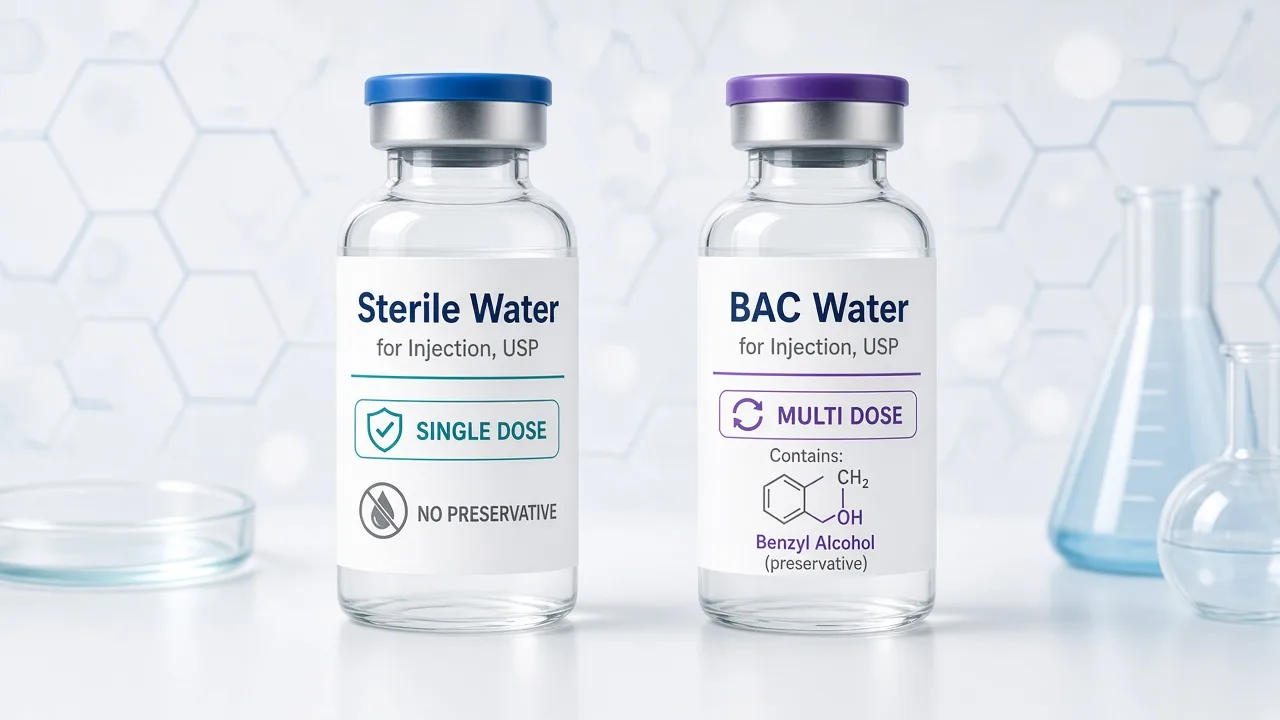
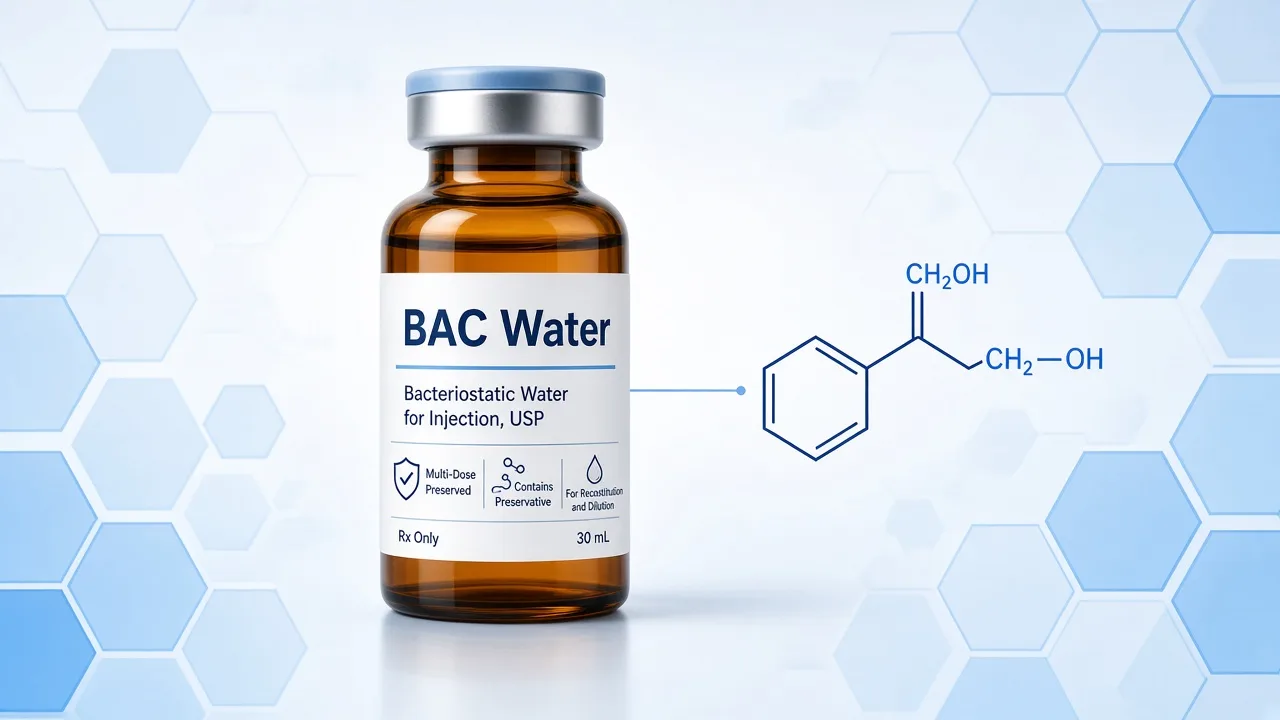
In typical U.S. Bacteriostatic Water for Injection labeling, benzyl alcohol appears at about 0.9 percent (9 mg/mL) or 1.1 percent (11 mg/mL) as a bacteriostatic preservative. The product is described as a sterile, nonpyrogenic preparation of water for injection supplied in a multiple-dose container.
That preservative is the main educational reason BAC water is not the same category as preservative-free Sterile Water for Injection. For the full product comparison, see sterile water vs bacteriostatic water.
Not a reconstitution protocol
Naming the preservative does not authorize personal preparation or use of research chemicals. This site refuses reconstitution steps on purpose.
Bacteriostatic role: limiting bacterial growth, not rewriting safety rules
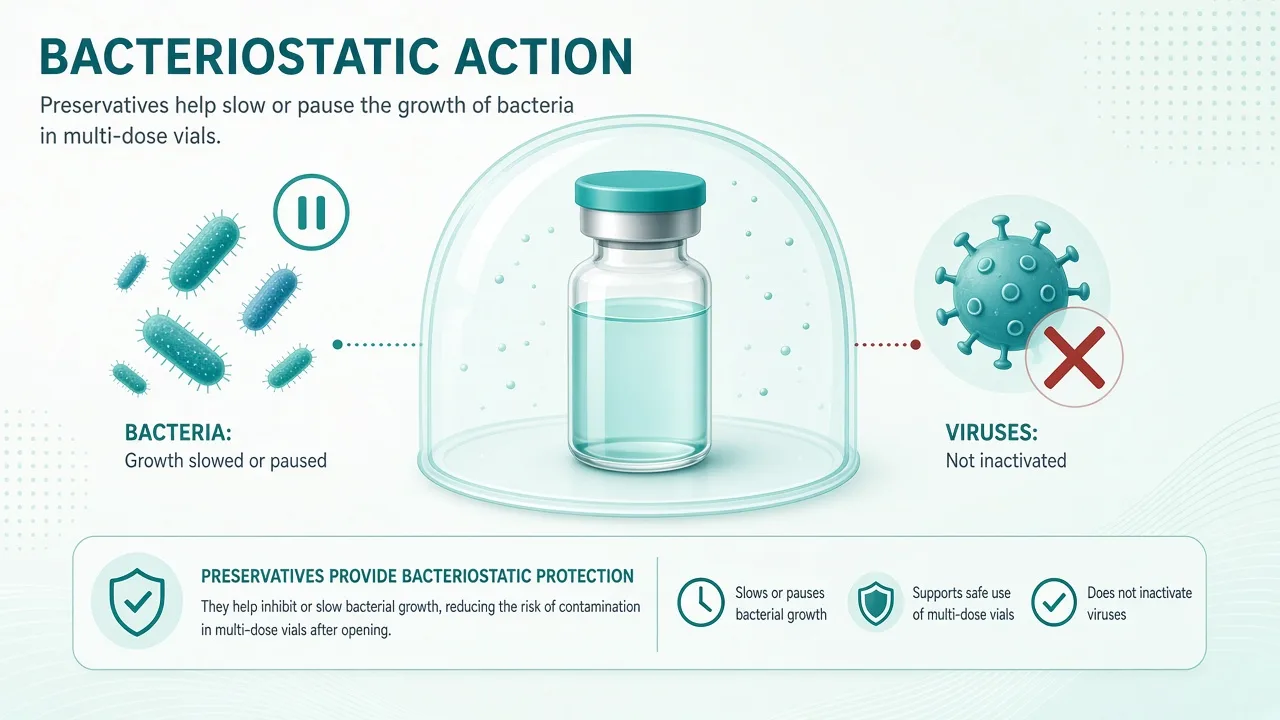
Bacteriostatic, in this labeling context, means the preservative helps suppress growth of many bacteria after the stopper is entered. That supports multi-dose architecture under aseptic technique. It is not a free pass for contaminated handling.
- Helps limit bacterial growth in labeled multi-dose sterile water products.
- Does not protect against viruses, per CDC multi-dose vial education themes.
- Does not replace sterile technique, dating discipline, or discard rules.
How this connects to the 28-day literacy theme
Multi-dose beyond-use dating after first puncture is a container integrity and practice concept summarized in CDC education linked to USP General Chapter 797 defaults. For that dating track, open how long does BAC water last.
Neonatal caution themes on official labels
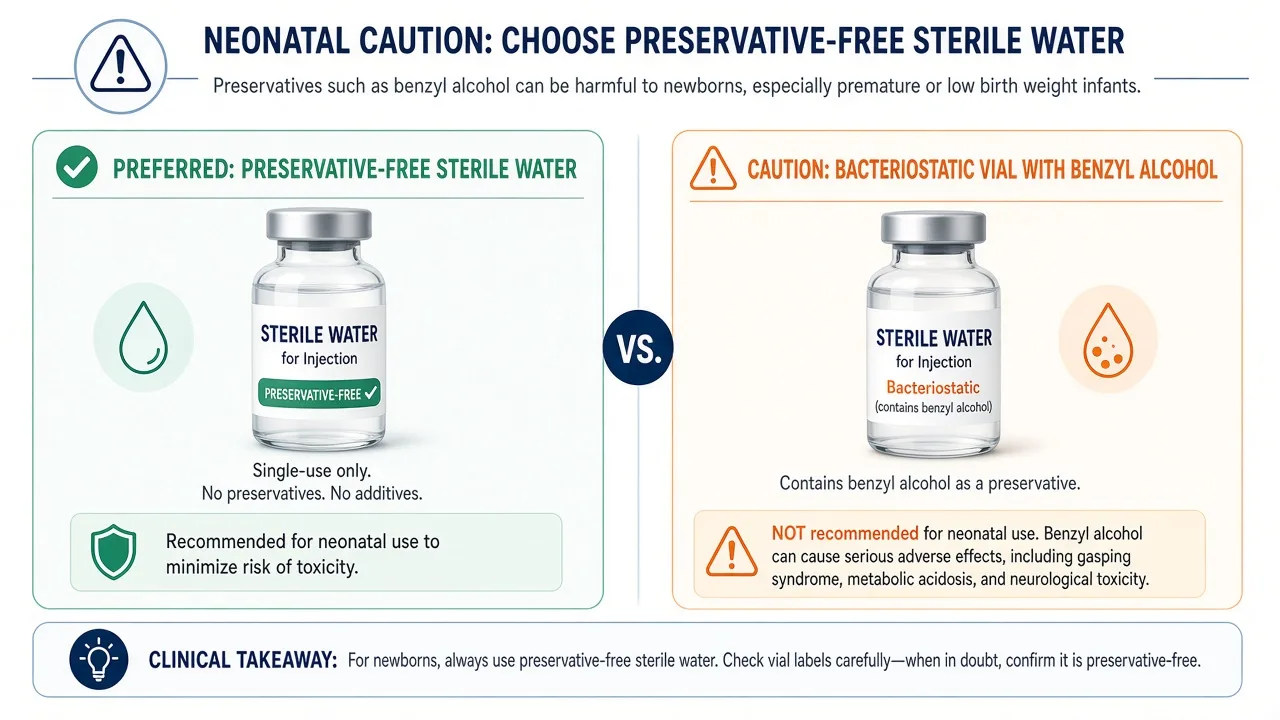
Official bacteriostatic water labeling associates benzyl alcohol with toxicity in neonates. Labels state that where water is required for preparing or diluting medications for neonates, only preservative-free Sterile Water for Injection should be used.
That warning belongs to clinicians and pharmacists reading product labels. This educational site does not convert it into personal-use instructions for any population.
Why absolute clinical boundaries stay outside this page
Children, pregnancy, and neonatal contexts require licensed clinical guidance. See peptide safety education first for how this site draws education-versus-advice lines.
Not a universal peptide stabilizer certificate
Benzyl alcohol’s labeled job in BAC water is preservative action in the diluent. Whether a dissolved peptide remains chemically intact depends on sequence, pH history, temperature, light, oxygen, freeze-thaw stress, and other formulation variables.
Keep the clocks separate: diluent preservative literacy here, peptide solution stability literacy in how long do reconstituted peptides last and research peptide storage basics.
Sensitive sequences still need sequence-specific reading
Some formulation discussions note that certain sensitive materials may interact with preservative-containing vehicles. That is a reason to read primary formulation data, not a reason for this site to invent a personal recipe.
Common misreadings about benzyl alcohol in BAC water
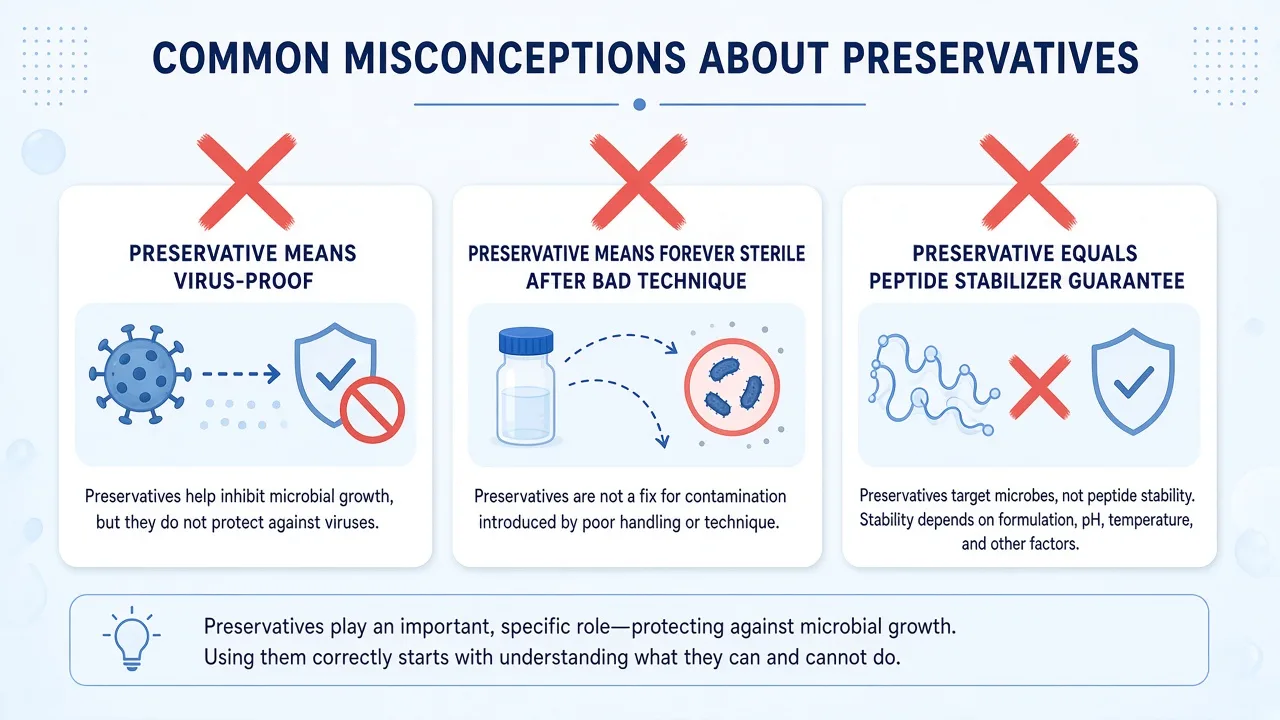
Forum shorthand stretches preservative chemistry into slogans. Literacy puts the slogans back into category.
- Misreading: benzyl alcohol makes the vial safe against viruses.
- Misreading: preservative forgives poor aseptic technique forever.
- Misreading: preservative automatically stabilizes every peptide sequence.
- Misreading: research-use marketing language replaces labeled pharmaceutical warnings.
RUO marketing does not erase label chemistry
Research-use-only framing does not rewrite USP injection diluent labeling. See what research-use-only means.
Where this article sits in Safety & Guides
This page belongs under Safety & Guides because it teaches preservative literacy without giving use instructions. Pair it with how long does BAC water last and sterile water vs bacteriostatic water, and with the Peptide Calculator only for educational unit-conversion math, not as a reconstitution guide.
Final limit statement
If you need institutional sterile compounding procedure, use your pharmacy or laboratory quality system. If you need advice about an approved medicine, use the product label and a licensed clinician or pharmacist. This article is neither a protocol nor a substitute for those sources.