
Online peptide conversations often treat sterile water and bacteriostatic water as interchangeable. Labeling literacy says otherwise. Sterile Water for Injection is typically discussed as a preservative-free, single-dose diluent. Bacteriostatic Water for Injection, often called BAC water, usually contains benzyl alcohol and is supplied as a multi-dose container. This article compares those educational differences using public DailyMed labeling themes and CDC injection-safety concepts. It is not medical advice, not pharmacy compounding instruction, and not a reconstitution or dosing protocol.
Why sterile water versus BAC water confuses readers
Both products are sterile aqueous diluents in labeled pharmaceutical contexts, so informal posts collapse them into one word: water. Educational reading keeps product name, preservative status, and container type visible.
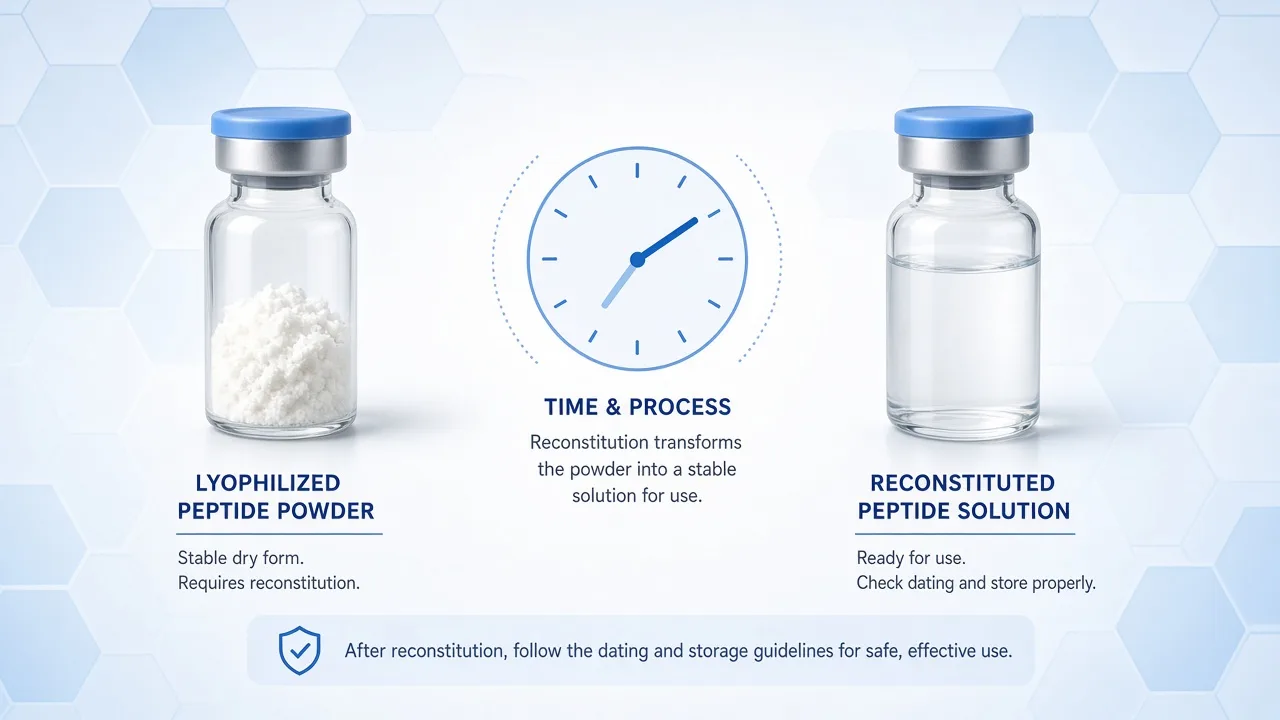
This comparison sits next to how long does BAC water last for dating literacy and research peptide storage basics for solid-versus-solution chemistry themes. None of those pages is a reconstitution guide.
Educational scope
We compare public labeling themes and injection-safety concepts. We do not recommend a diluent for any personal or research-use protocol.
Single-dose versus multi-dose: the container story
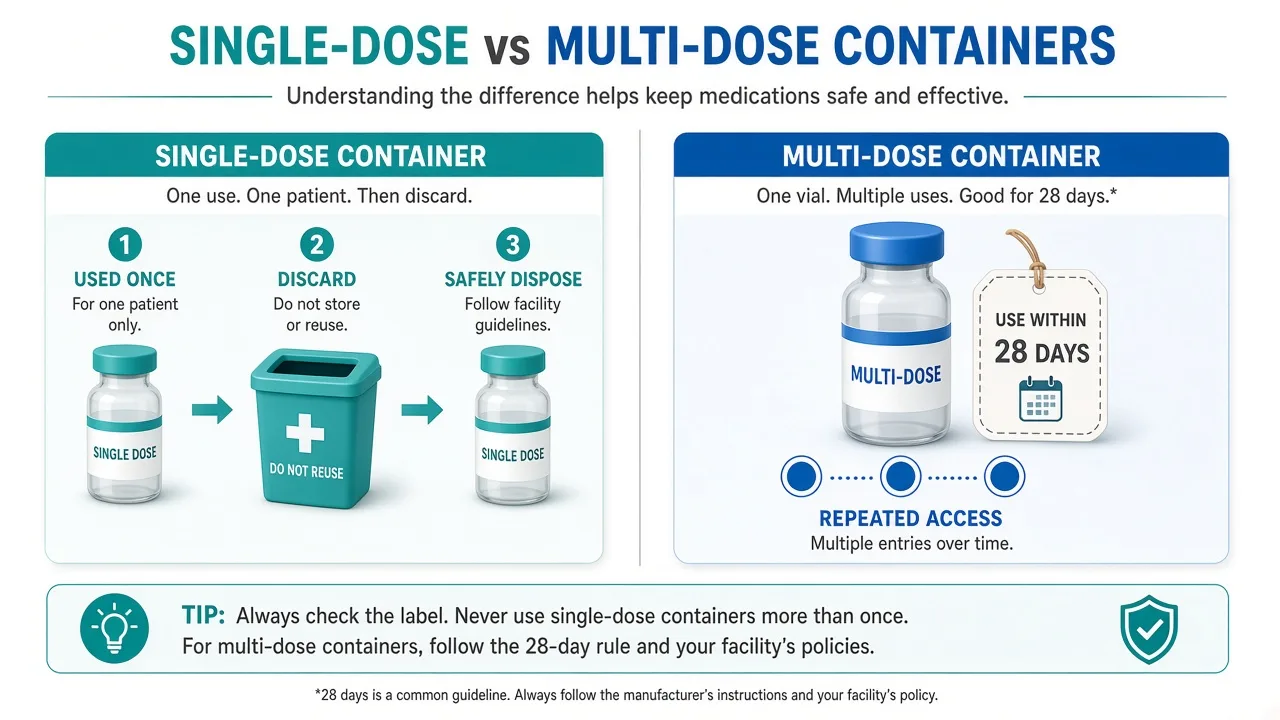
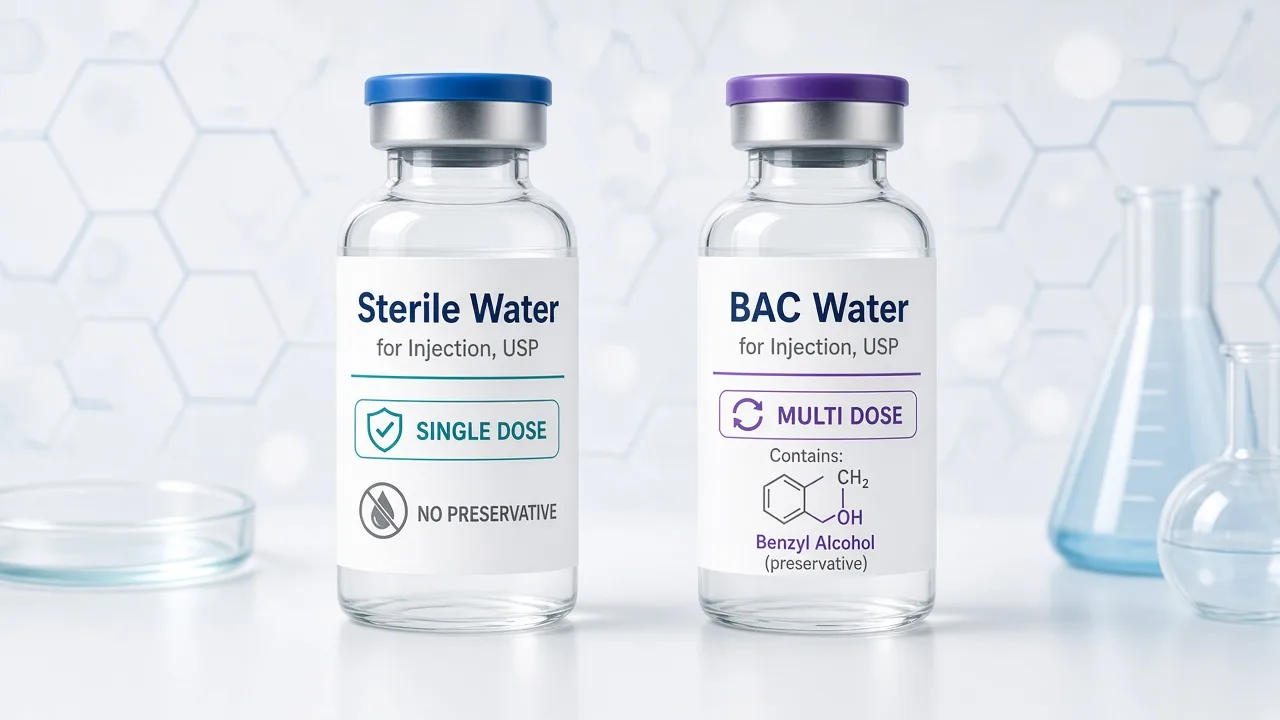
Sterile Water for Injection labeling commonly frames a single-dose container: after the intended admixture use, unused portion is discarded in that educational picture. Bacteriostatic Water for Injection labeling commonly frames a multiple-dose container from which repeated withdrawals may be made to dilute or dissolve drugs for injection according to the drug manufacturer’s instructions.
- Single-dose framing: one entry context, then discard unused portion as labeled.
- Multi-dose framing: repeated withdrawals possible because a bacteriostatic preservative is present, still under aseptic and labeling rules.
- CDC education prefers single-dose vials when possible in clinical injection-safety guidance, and still requires sterile technique for multi-dose access.
How dating literacy connects
Multi-dose dating after first puncture is a separate clock from manufacturer expiration. For the common 28-day beyond-use literacy theme, open how long does BAC water last.
Preservative difference: none versus benzyl alcohol
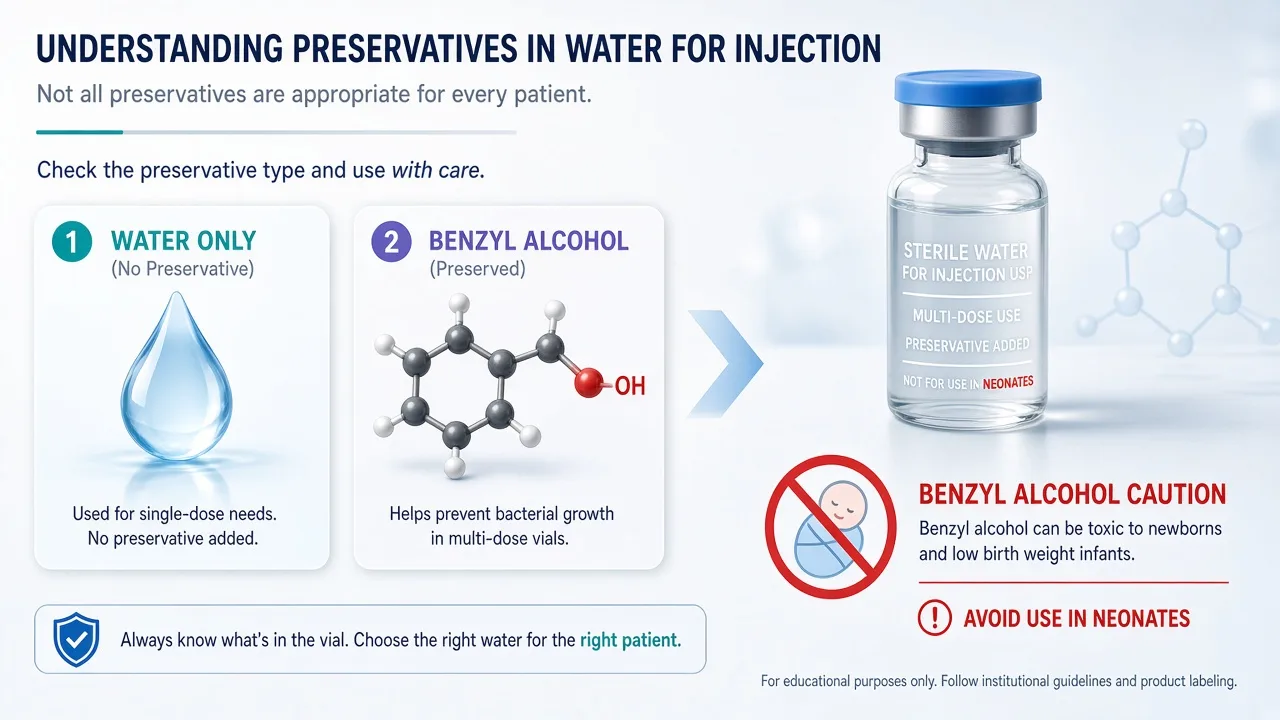
Sterile Water for Injection is typically described as containing no bacteriostat, antimicrobial agent, or added buffer. Bacteriostatic Water for Injection is typically described as containing about 0.9 percent or 1.1 percent benzyl alcohol as a bacteriostatic preservative, depending on the labeled product.
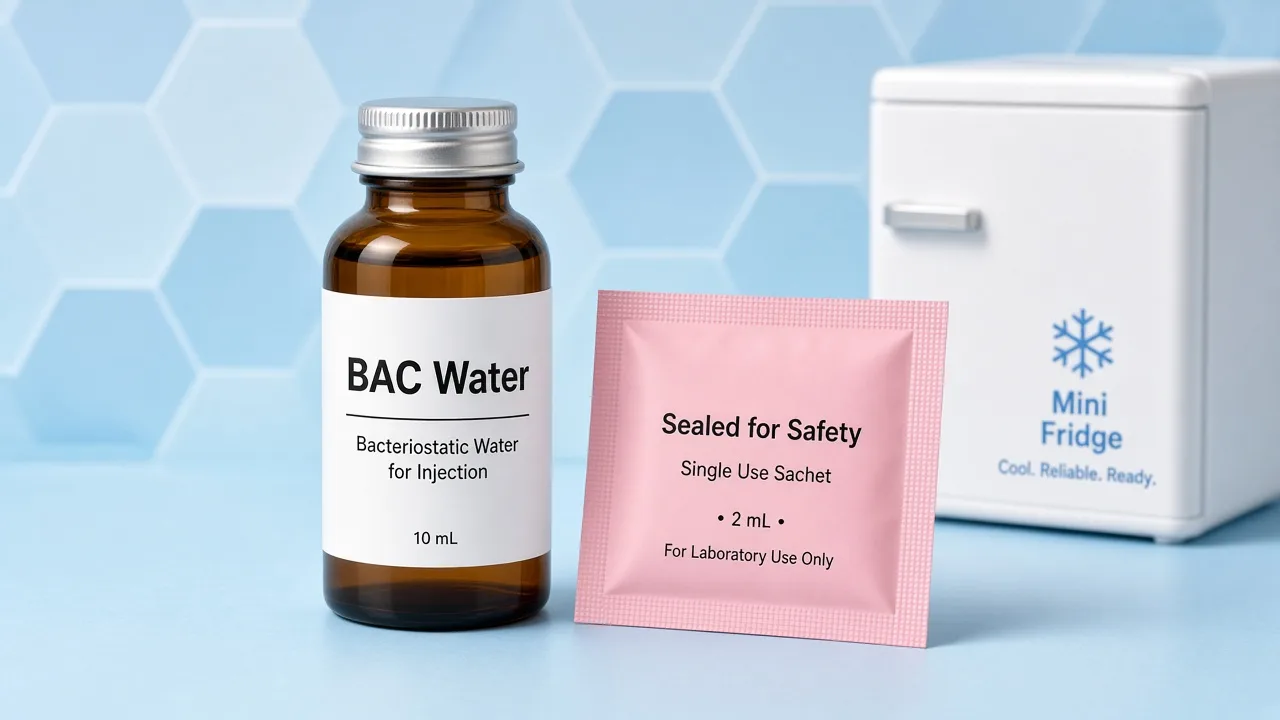
That preservative is why multi-dose architecture appears in BAC water labeling. It is also why neonatal caution language appears on bacteriostatic water labels: benzyl alcohol has been associated with toxicity in neonates, and labels direct preservative-free sterile water when water is required in that clinical context.
Not a virus shield
CDC multi-dose vial education stresses that preservatives help limit bacterial growth. They do not inactivate viruses and do not excuse unsafe practices. Preservative literacy is not permission language.
Isotonic admixture themes on labels
Both product families include clinical labeling themes about not using plain water for intravenous injection unless additives create an approximately isotonic admixture. That is manufacturer labeling literacy for clinicians and pharmacists, not a how-to from this site.
Common misreadings in peptide-forum diluent talk
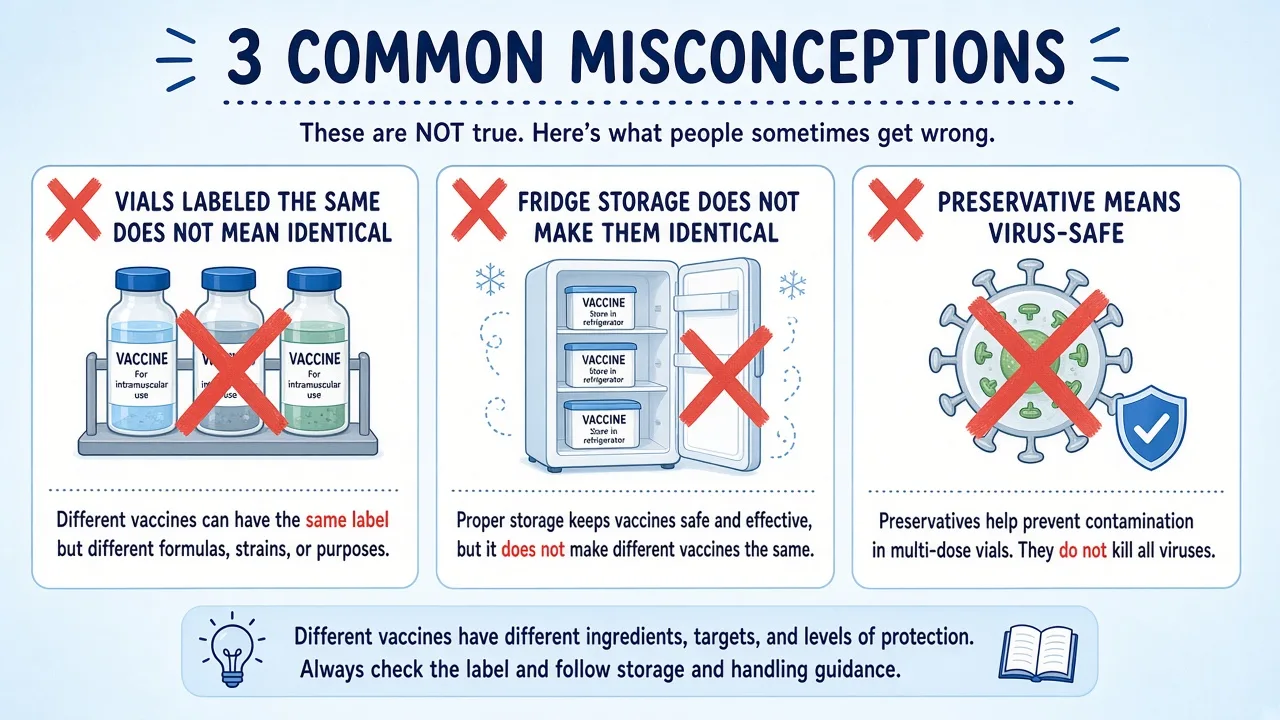
Forum shorthand creates avoidable mix-ups. Literacy puts the slogans back into category.
- Misreading: sterile water and BAC water are the same product with different nicknames.
- Misreading: refrigeration erases the single-dose versus multi-dose distinction.
- Misreading: a preservative makes any handling practice safe against all microbes, including viruses.
- Misreading: research-use marketing language replaces labeled pharmaceutical product categories.
RUO marketing is not a diluent category
Research-use-only framing does not rewrite USP injection diluent labeling. See what research-use-only means and compounded vs approved peptide medicines.
Where this article sits in Safety & Guides
This page belongs under Safety & Guides because it teaches labeled diluent category boundaries without giving use instructions. Pair it with peptide safety education first for the wider responsibility frame, and with the Peptide Calculator only for educational unit-conversion math, not as a reconstitution guide.
Final limit statement
If you need institutional sterile compounding procedure, use your pharmacy or laboratory quality system. If you need advice about an approved medicine, use the product label and a licensed clinician or pharmacist. This article is neither a protocol nor a substitute for those sources.