
Many peptide receptors couple to Gi or Go family G proteins and reduce adenylyl cyclase activity or engage beta-gamma effectors. An inhibitory cAMP result or a channel-linked readout describes a signaling response in a particular experimental system. Understanding that response means knowing what was inhibited, what was stimulated first, and how the comparison differs from a Gs or Gq assay of a related receptor.
What a Gi or inhibitory result actually describes
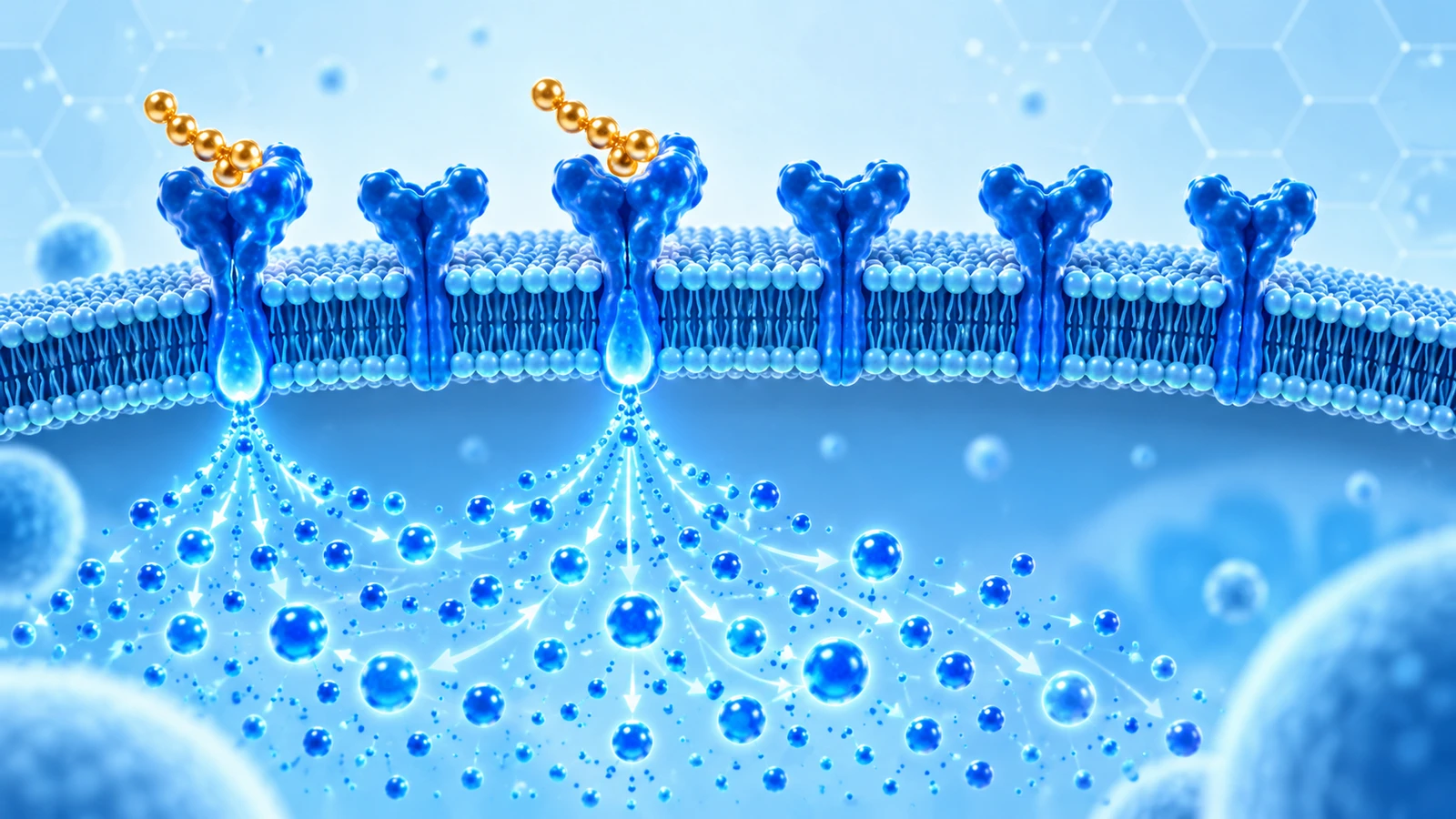
A peptide outside the cell can activate a receptor that couples to Gi or Go family G proteins. Inside the cell, that event often reduces adenylyl cyclase activity, which can lower cAMP relative to a stimulated baseline. Beta-gamma subunits released from the heterotrimer can also regulate potassium channels, calcium channels, and other effectors. The peptide is the first message. The inhibitory change in second messengers or channel behavior is part of the intracellular story.
A paper may report a smaller forskolin-stimulated cAMP rise, a reduced Gs-agonist cAMP response, a GIRK-related current, a calcium-channel modulation, or a later cellular output. These formats are not identical. Before comparing numbers across ligands or papers, identify what was being suppressed and how the system was first raised into a measurable range.
This guide sits under the Research & Science hub and completes a three-page pathway set with cAMP signaling in peptide research and Gq and calcium signaling. It develops the assay-reading side of peptide cellular signaling. The illustrations are conceptual teaching figures, not microscopy datasets or concentration maps for named products.
Adenylyl cyclase inhibition and beta-gamma effectors
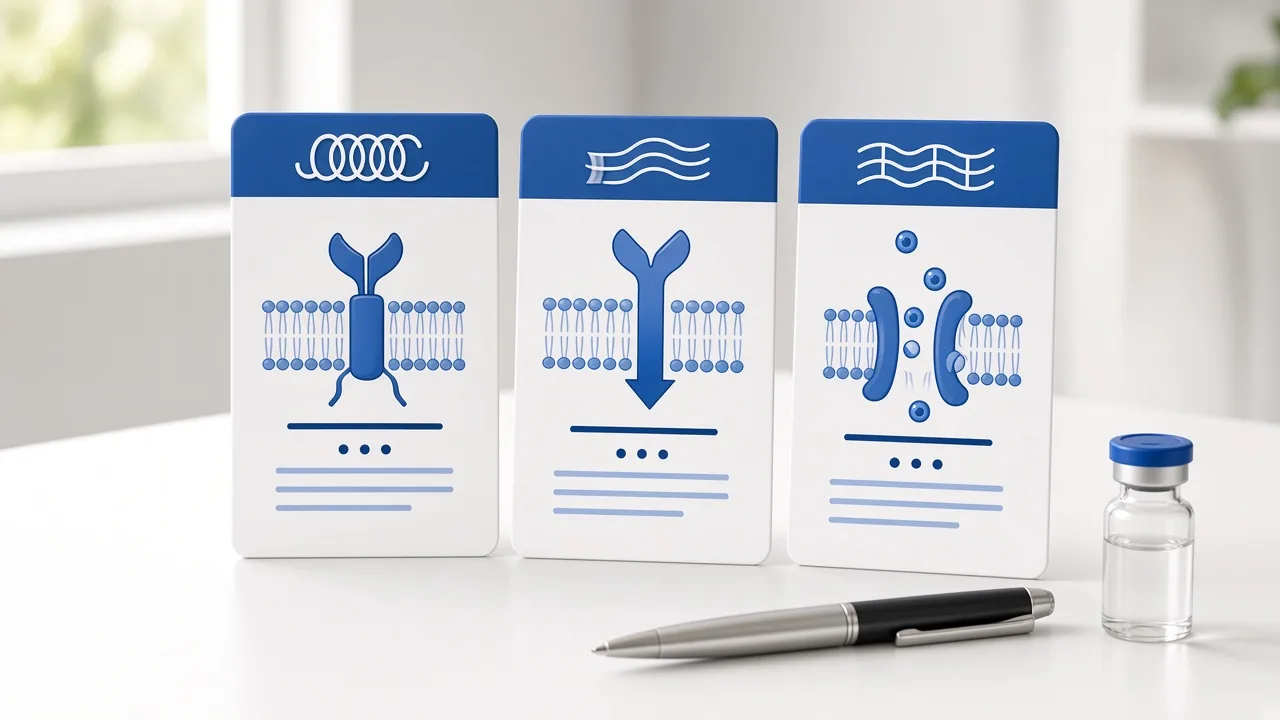
In a common teaching pathway, activated receptor engages Gi or Go. The alpha subunit can inhibit certain adenylyl cyclase isoforms. Separately, beta-gamma subunits can open G protein gated inward rectifier potassium channels in some neurons and heart models, or modulate voltage-gated calcium channels. Those routes can coexist or dominate depending on the cell type.
This diagram is a useful starting map. It is not a complete inventory of every Gi-linked effector. Some systems emphasize cAMP reduction. Others emphasize channel current. A review figure with one arrow should not be treated as the only possible mechanism.
Classic G-protein reviews by Gilman and by Wettschureck and Offermanns place inhibitory coupling in a wider family of cell-type specific functions. Hille’s work on GPCR modulation of ion channels likewise frames beta-gamma literacy as context-dependent. Those sources support pathway reading, not a ranking of peptides. Read Wettschureck and Offermanns. Read Hille on channel modulation.
Inhibition is usually measured against a raised signal

If the messenger you want to suppress is already near the floor of the assay, further inhibition can look like noise. Many Gi literacy experiments therefore raise cAMP with forskolin, a Gs-linked agonist, or another defined stimulus, then add the putative Gi agonist and ask whether the stimulated signal shrinks.
That design choice belongs in every comparison. Two papers can report different percent inhibition because they used different stimuli, different cyclase backgrounds, different phosphodiesterase blockers, or different sampling times. Matching the stimulus is part of fair ligand comparison, not an optional footnote.
Keep stimulus talk separate from receptor talk. A forskolin step is a tool to elevate cAMP production. It is not itself proof that the peptide receptor prefers Gs. The Gi agonist is what the inhibitory claim is about, under those raised conditions.
Inhibitory cAMP, channels, and downstream reporters differ
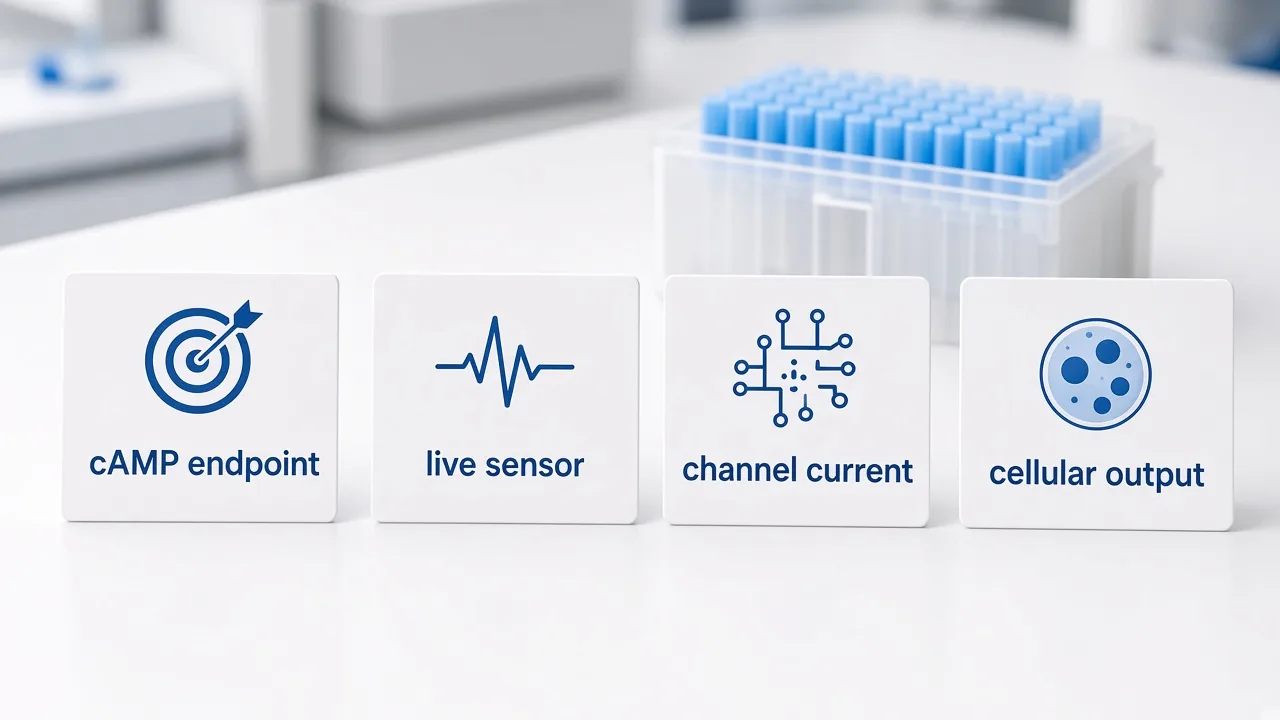
An endpoint assay can summarize how much a stimulated cAMP signal fell at a chosen time. A live-cell cAMP sensor can follow the rise and the subsequent reduction. A GIRK or related current measurement answers a channel question. A calcium-channel assay answers yet another effector question. Downstream phosphorylation reporters sit further away and reflect net pathway balance.
Naming traps appear here too. A smaller cAMP value after a Gi agonist is not automatically a calcium result. A channel current change is not automatically a proof of cyclase inhibition. Read the method section for the measured quantity before importing language from a different pathway page.
Sensor range still matters. If a cAMP reporter is already near its floor after the inhibitory step, similar-looking traces need not mean identical free cAMP. If a channel assay saturates, ceiling effects can hide ligand differences that would appear in another window.
Start with the measured quantity before interpreting the biological claim.
| Measurement | Question it can address | What it does not establish alone |
|---|---|---|
| Inhibitory cAMP endpoint | How much did a stimulated cAMP signal fall at the sampling time? | The full time course before sampling |
| Live cAMP sensor | How does stimulated cAMP-related signal change after the Gi agonist? | Absolute concentration without calibration and controls |
| GIRK or related current | How does a channel-linked current change? | Direct free cAMP abundance |
| Calcium channel modulation | How does a voltage-gated calcium current change? | Every cAMP or kinase event |
| Cellular output | Does a measured function change in this model? | Which inhibitory route caused the change |
Pertussis toxin and controls are literacy tools, not rankings
Pertussis toxin is often used to blunt Gi and Go family coupling in experimental systems. If an inhibitory effect shrinks after toxin treatment, authors may argue that a toxin-sensitive G protein contributed under those conditions. That is a mechanistic clue inside the model. It is not a consumer grade badge for a product.
Controls still need naming. Vehicle, inactive peptide, receptor antagonist when available, and matched stimulus without the Gi agonist all help separate genuine pathway effects from assay drift. A missing control can make a tidy percent inhibition look stronger than the design supports.
Toxin sensitivity also has limits. Not every inhibitory route in every cell is toxin sensitive in the same way. A residual effect after toxin does not automatically invent a new marketing pathway. It invites a narrower claim about what remained.
Gi, Gs, and Gq are different pathway readouts
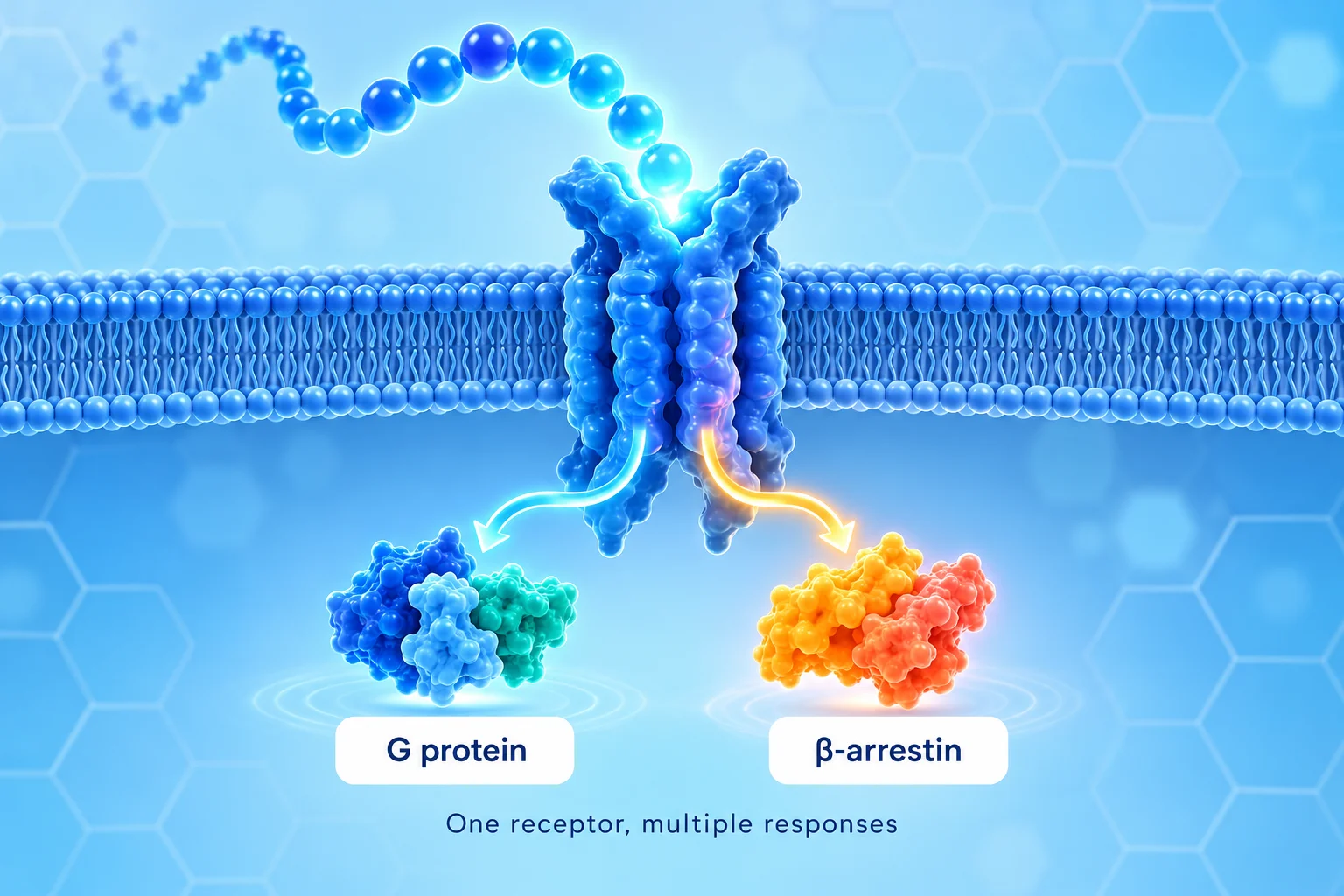
Teaching diagrams often place Gs with rising cAMP, Gi with falling cAMP relative to a stimulus, and Gq with PLC, IP3, DAG, and calcium. That triad is useful literacy for peptide receptor papers. It is not a rule that every receptor uses only one letter, or that mixed coupling never occurs.
A strong inhibitory cAMP effect does not prove a strong calcium response. A weak Gi effect does not prove antagonism at a Gs receptor. Pathway identity, basal activity, stimulus design, and the experimental comparison all matter. Keep cAMP signaling literacy and Gq calcium literacy beside this page when a post collapses every second messenger into one vibe word for stronger.
Claims of biased agonism need appropriate cross-pathway comparisons against a reference, with attention to assay amplification and timing. One inhibitory EC50 alone cannot settle bias.
An inhibitory concentration-response curve is a functional assay
When researchers vary ligand concentration, they can estimate a functional IC50 or EC50 for a specified inhibitory endpoint. That value concerns the concentration associated with half of the fitted inhibitory range under those conditions. It is not a direct binding constant. Amplification and receptor reserve can separate occupancy from the size of the observed downstream change.
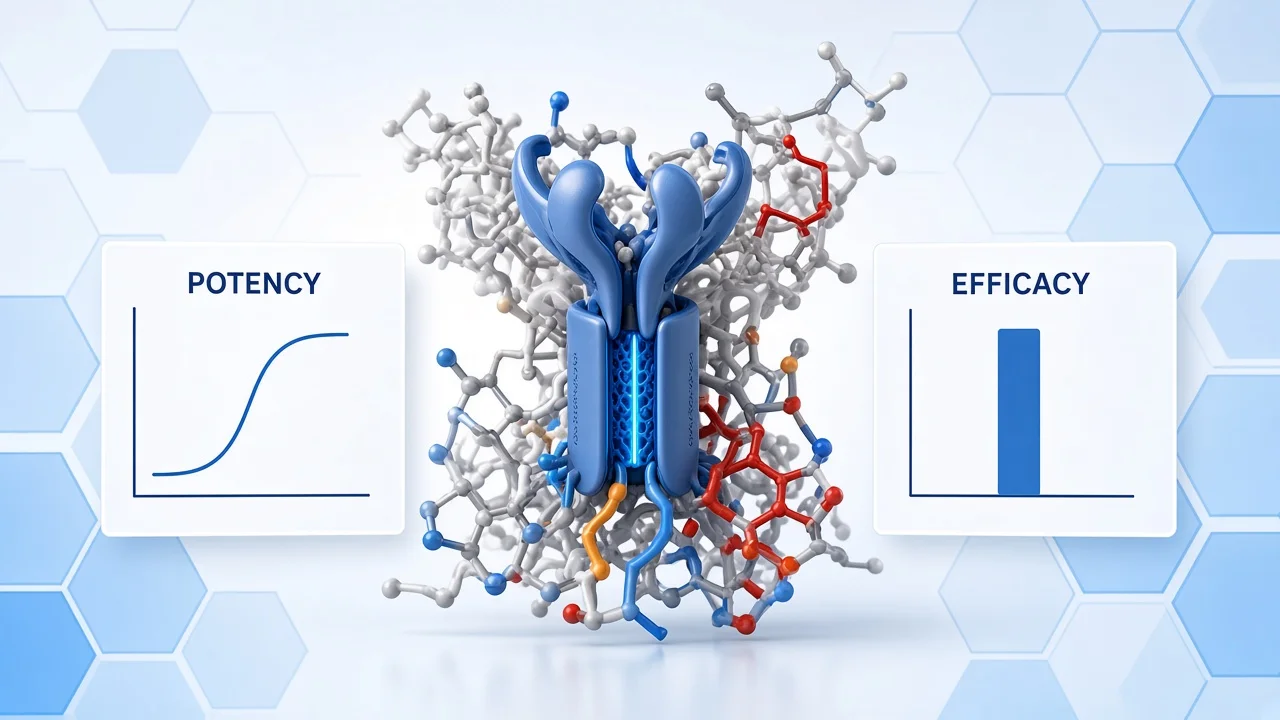
Read the normalization carefully. Percent inhibition depends on the size of the stimulated baseline. A ligand can look more inhibitory simply because the stimulus was larger, or less inhibitory because the assay floor was reached early. Curves scaled to each ligand’s own maximum can hide ceiling differences. The guide to potency versus efficacy keeps horizontal shifts and response height in separate columns.
Comparing inhibitory values from different cell lines without matched stimuli, sensors, and timing can turn a system difference into an apparent ligand difference. Fair comparison habits live in how to compare peptide studies.
Peptide examples that teach Gi literacy
Somatostatin receptor biology is a common teaching case for Gi-linked inhibition of adenylyl cyclase and related effector language in many cellular models. Reviews of the somatostatin receptor family describe structure, subtypes, and pathway context without converting every inhibitory figure into a lifestyle claim. Read a system review.
Opioid receptor signaling is likewise often discussed with Gi and Go coupling, beta-gamma channel effects, and inhibitory cAMP assays in research literacy. That contrast with Gs-linked teaching examples is educational shorthand. Individual papers still have to name the receptor subtype, species, and assay. Read a molecular mechanisms review.
These examples illustrate how to read inhibitory pathway language. They do not establish which peptide is better for people, and they do not support personal-use protocols. Keep clinical claims on clinical evidence.
Desensitization and internalization still need separate columns
A fading inhibitory effect during continued stimulation can reflect receptor desensitization, stimulus fade, reporter limits, or several of these together. A smaller second inhibitory challenge after a first exposure needs the same careful unpacking.
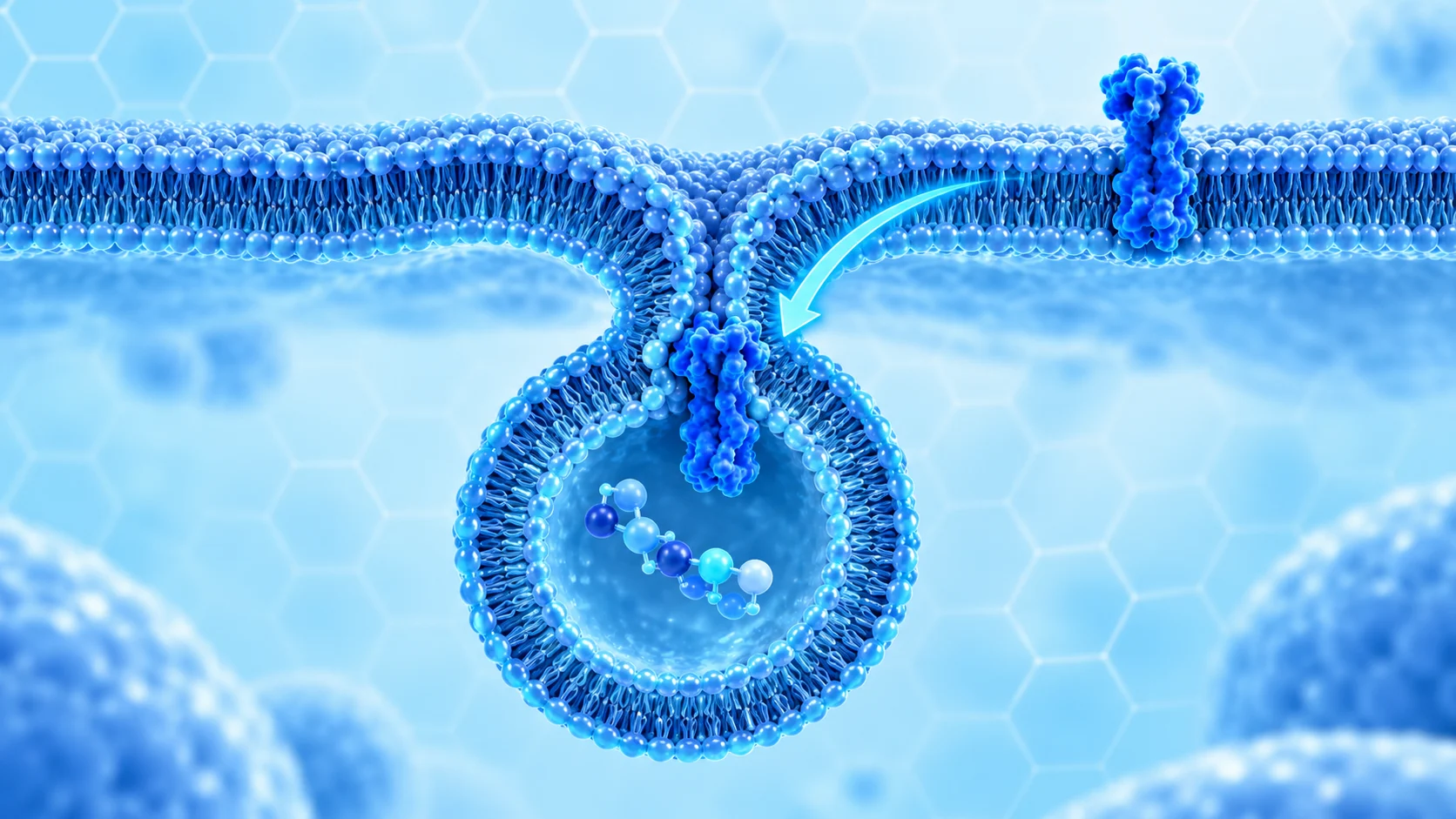
Receptor internalization images and inhibitory cAMP or channel traces answer different questions. Do not treat trafficking as automatic proof that Gi signaling stopped, or that it continued. The guide to desensitization and internalization keeps movement, reduced responsiveness, recycling, and degradation in separate columns.
A practical checklist for reading the next Gi paper

Start by rewriting the main result as one bounded sentence: in this cell model, this ligand reduced this stimulated reporter at this time relative to this control. That wording preserves the information needed to judge the finding. Then ask which further claims the experiments actually tested.
For example, suppose a paper shows a larger percent cAMP reduction for one ligand and a larger GIRK current for another. Those observations alone do not prove that the first ligand is stronger in every sense. Stimulus size, effector identity, sensor range, and later outputs remain possible contributors.
- Identify the receptor subtype, species, cell background, and whether expression is native or engineered.
- Name the measured quantity: inhibitory cAMP, live cAMP sensor, channel current, or a later cellular function.
- Check the stimulus used to raise the signal, sampling times, washout, and toxin or antagonist controls.
- Read normalization, reference ligand, assay floor and ceiling, and uncertainty around fitted comparisons.
- Separate cyclase inhibition from beta-gamma channel effects and from receptor location images.
- Keep conclusions within the model studied. Use clinical evidence for clinical claims.
Carry the assay context into the conclusion
When comparing articles, record the measurement and its stimulus conditions beside every potency or efficacy value. Two apparently conflicting inhibitory numbers may address different endpoints. Agreement between inhibitory cAMP and a channel assay also does not make those readouts interchangeable.
A useful interpretation follows the evidence from receptor to Gi or Go coupling to cyclase or beta-gamma effectors to cellular function, while identifying which links were measured and which remain proposed. That approach preserves the value of a Gi experiment without asking it to answer human benefit, safety, or dosing questions it was never designed to test.