
Semaglutide appears in injectable and oral finished-drug presentations under brand-specific labels. Public talk often treats “semaglutide” as one object regardless of form, then borrows administration folklore from social posts. This article teaches formulation literacy: route, product identity, absorption engineering, and label boundaries. It is research and regulatory education only. It is not dosing advice, not switching guidance, and not a recommendation to choose either form.
Why form literacy matters for semaglutide
Form is one of the first details social posts erase. A headline that says only “semaglutide” can mean an injectable finished drug, an oral finished drug, an older label snapshot, or an unapproved lookalike. Readers who skip form often invent synonymy that the labels never promised.
Form literacy sits beside brand literacy. After you name oral versus injectable, you still need brand and indication columns. That pairing continues in Ozempic vs Wegovy and the wider map in semaglutide research status.
Three questions before accepting a form claim
Which finished product is named? Which route is named? Which label revision supports the claim? If any answer is missing, the post is incomplete for formulation literacy.
Form is not a nickname synonym
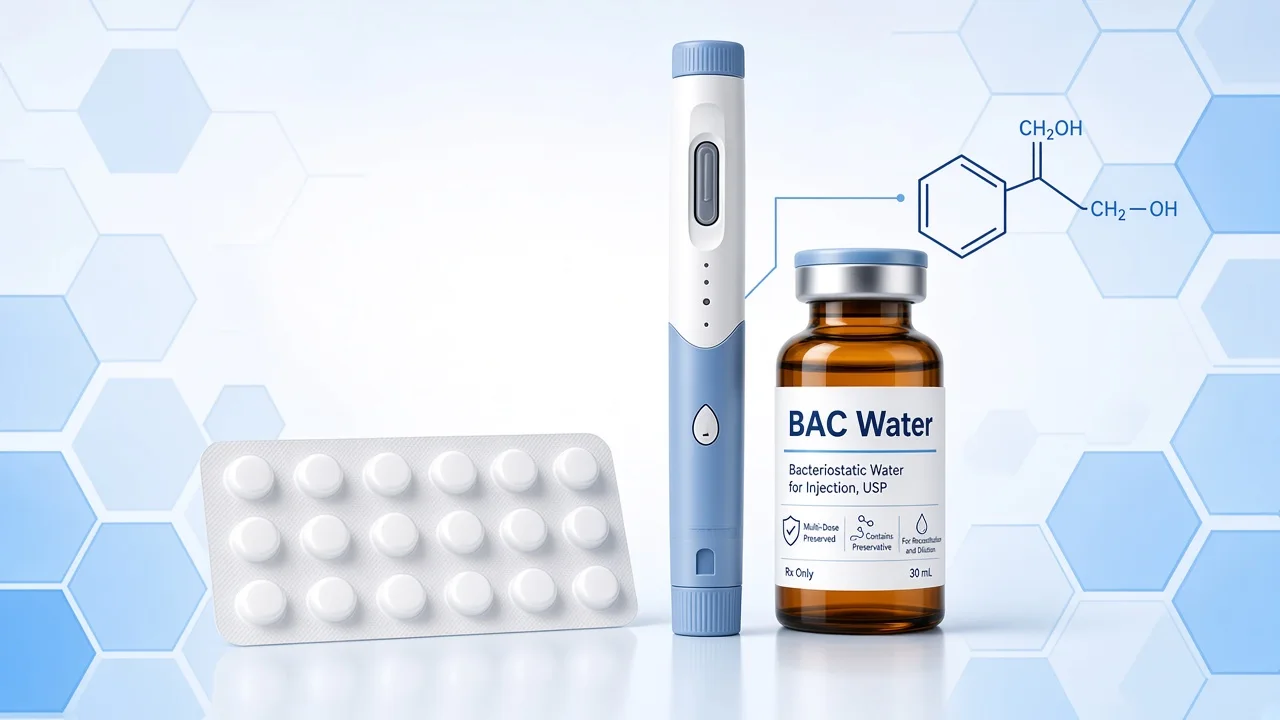
Oral and injectable presentations are developed, labeled, and regulated as specific products. Sharing an active ingredient name does not make every public claim portable across routes.
Educational readers should treat route as identity information, not as a lifestyle preference badge. Preferential language such as “just take the pill version” collapses finished-drug development into slang.
Brand still matters after form is named
Saying “injectable semaglutide” is still incomplete if the brand and indication are unnamed. Injectable presentations include more than one brand landscape. Oral presentations also need brand-specific label checks.
Why peptides are hard to take by mouth

Peptide research often discusses absorption barriers, enzymatic degradation, and delivery engineering. Stomach acid, digestive enzymes, and limited intestinal uptake can make oral delivery difficult for many peptide sequences.
Those themes explain why an approved oral peptide medicine is noteworthy. They do not justify informal powders, crushed research vials, or kitchen experiments. For the broader vocabulary, continue with peptide bioavailability and peptide half-life.
Literacy boundary around barrier talk
Barrier talk is a reading tool for papers and labels. It is not a prompt to design your own absorption hack. Formal finished drugs are reviewed as specific formulations under specific conditions of use.
SNAC co-formulation: absorption engineering literacy
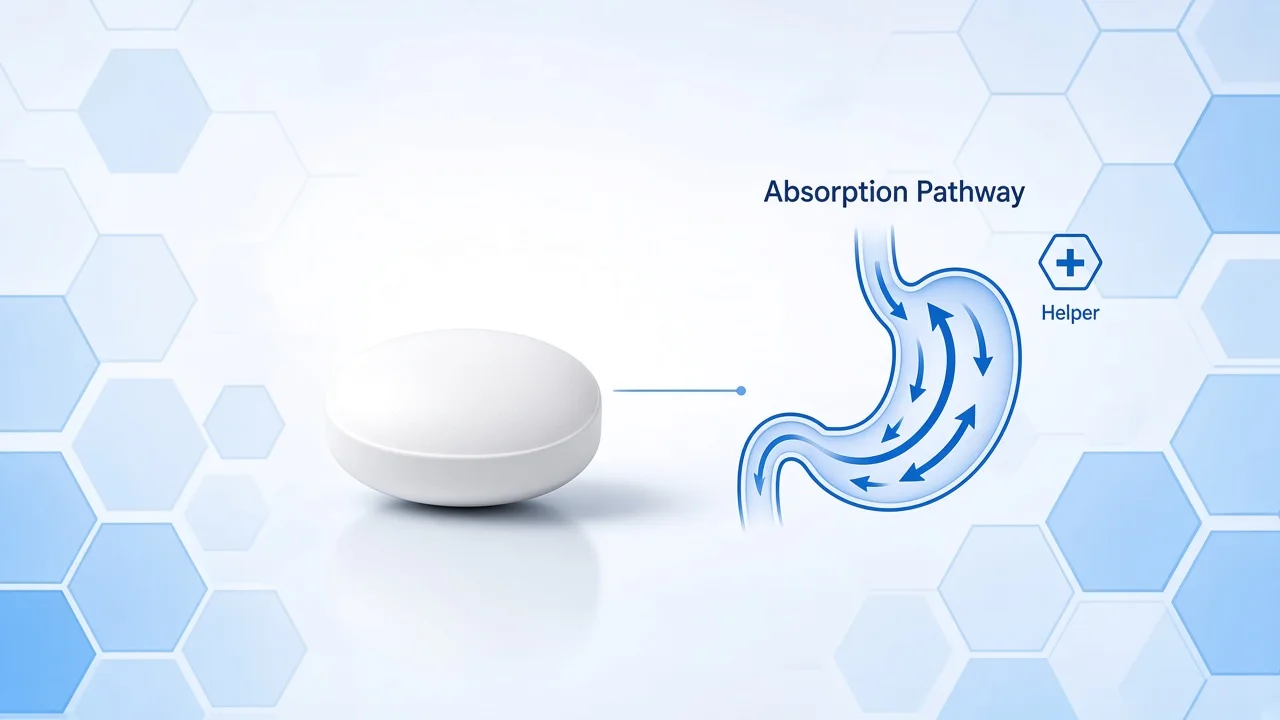
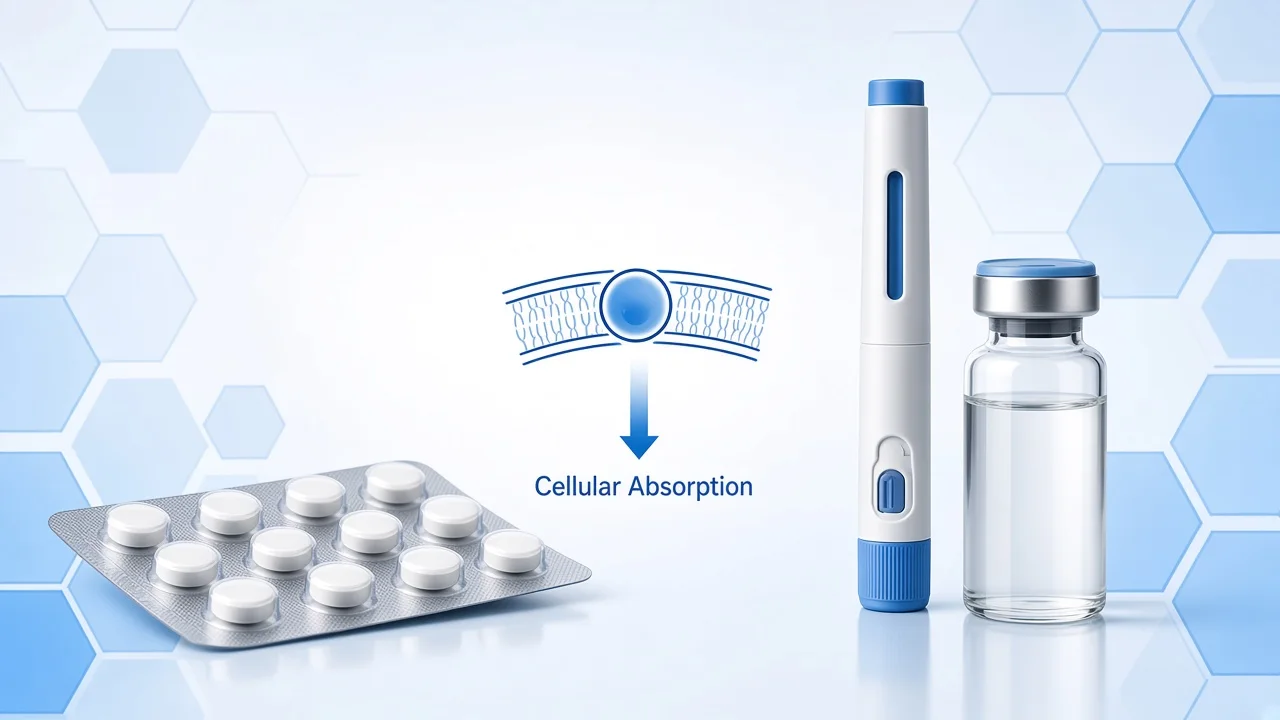
Oral semaglutide tablet labeling describes co-formulation with salcaprozate sodium, often abbreviated SNAC. Label and clinical pharmacology reviews describe SNAC as facilitating absorption of semaglutide after oral administration, with absorption discussed as occurring predominantly in the stomach under the product’s formulated conditions.
That is why oral semaglutide is not educationally interchangeable with “any tablet that says semaglutide on a seller page.” The finished-drug story includes the absorption-enhancing formulation strategy, not only the peptide name.
SNAC mentions are not DIY instructions
Reading that an approved tablet uses an absorption enhancer does not create permission to improvise enhancers, crush tablets into unapproved mixtures, or treat research chemicals as oral medicines. Formulation literacy stops at understanding why the approved product is unusual.
Oral finished-drug column
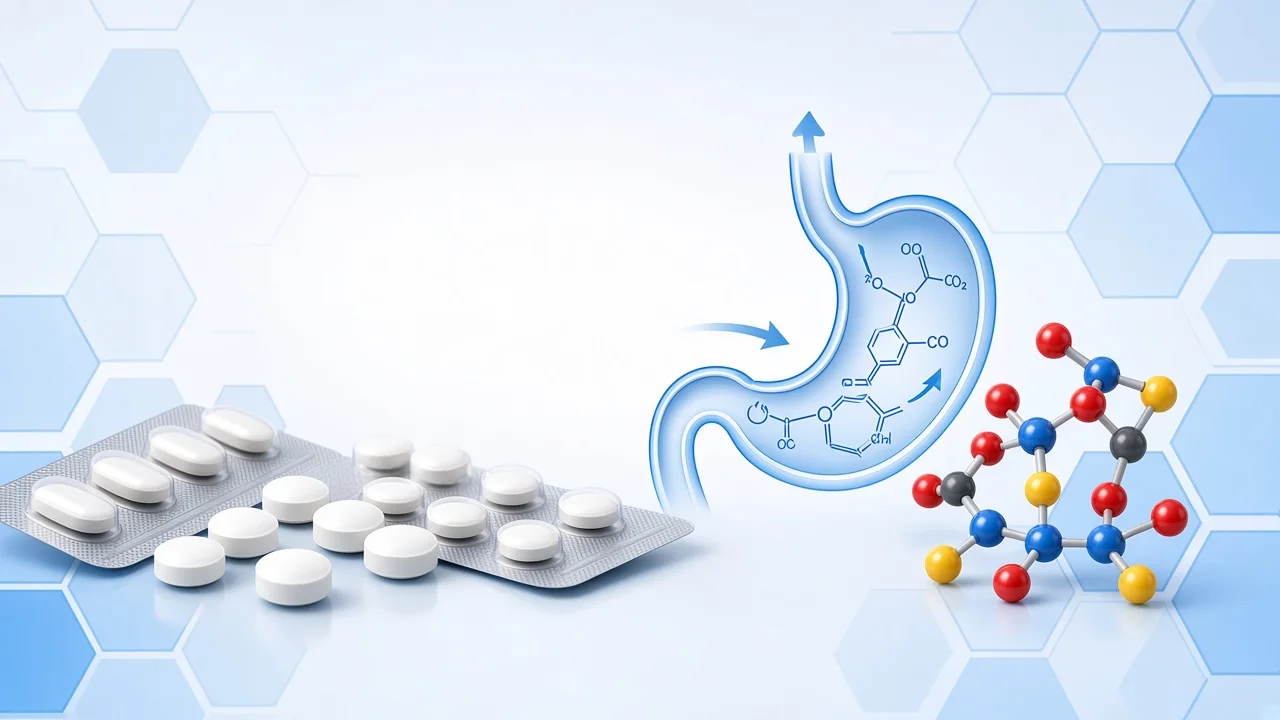
Rybelsus is the best-known oral semaglutide brand in public conversation. Current oral-label themes include glycemic-control language for adults with type 2 diabetes and cardiovascular risk-reduction language in adults with type 2 diabetes at high risk for major adverse cardiovascular events.
Oral brand families can evolve. Related oral presentations may appear under familiar brand names as labels revise. Educational readers should verify the exact product name and current prescribing information instead of assuming one oral nickname covers every tablet claim.
Oral formulations may not be milligram-for-milligram synonyms
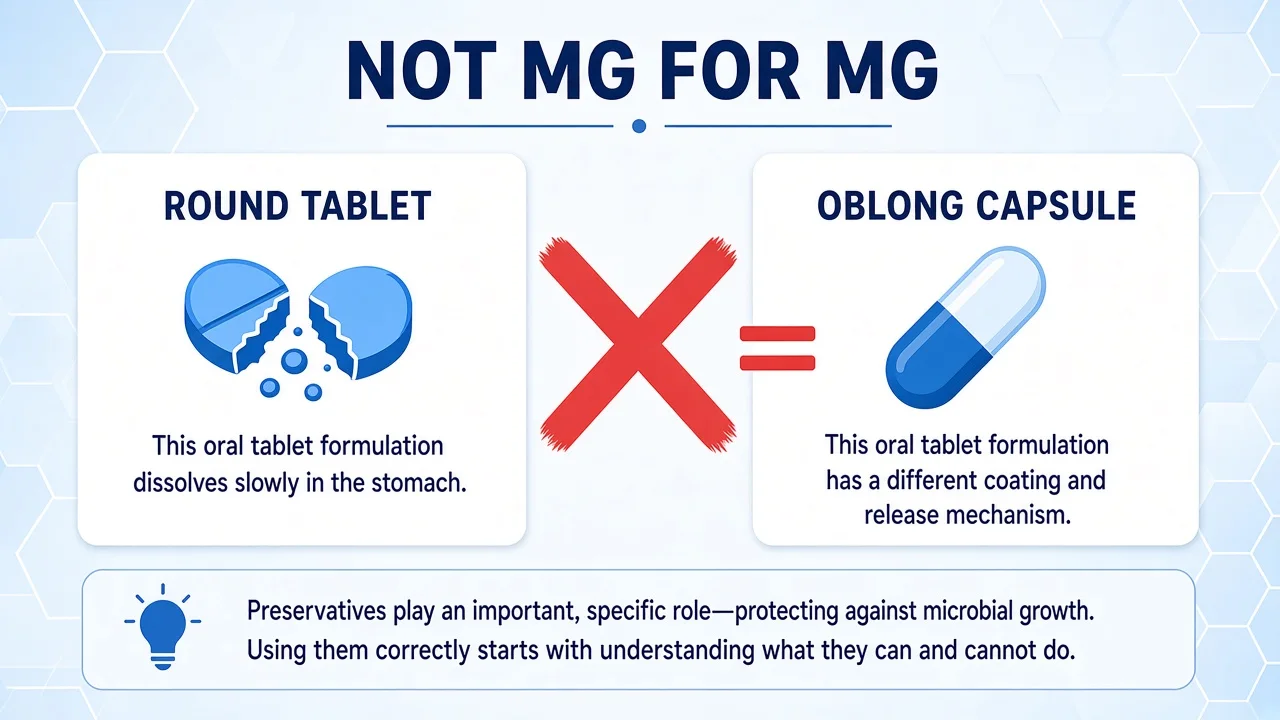
Labeling for oral semaglutide products can describe more than one formulation and state that products are not substitutable on a milligram-to-milligram basis. That is a finished-drug literacy point: tablet strength numbers are not a casual conversion chart across formulations.
This page will not reprint strength ladders, titration schedules, or food-timing protocols. Those details belong in the official label and clinician guidance.
Injectable finished-drug column
Injectable semaglutide finished drugs include familiar brand landscapes such as Ozempic and Wegovy. Those brands share the active ingredient name and still differ by labeled indication and population. Form literacy does not erase brand literacy.
For brand-indication twins, continue with Ozempic vs Wegovy. For the molecule-wide status map, return to semaglutide research status.
What “injectable” does not automatically mean
It does not mean every online vial is an approved finished drug. It does not mean compounded products match branded pens. It does not mean research-use labeling is a consumer pathway. Route words can be borrowed by marketplace claims just as easily as molecule names.
Route, absorption, and overconfident slogans
Clinical pharmacology discussions of oral semaglutide note that once absorbed, semaglutide is distributed, metabolized, and eliminated in ways discussed as route-independent at the systemic level. Educational readers sometimes overhear that idea and conclude “route does not matter at all.”
That leap is too large. Route still matters for product identity, formulation, labeled administration conditions, and which finished drug is being discussed. Systemic pharmacology after absorption does not collapse oral and injectable finished drugs into one public object.
Headline trap to refuse
Refuse slogans that say oral and injectable are “basically the same thing, so pick whichever.” Same active ingredient family is not a complete comparison. Labels, formulations, and populations still need naming.
Marketplace boundaries for oral-looking products
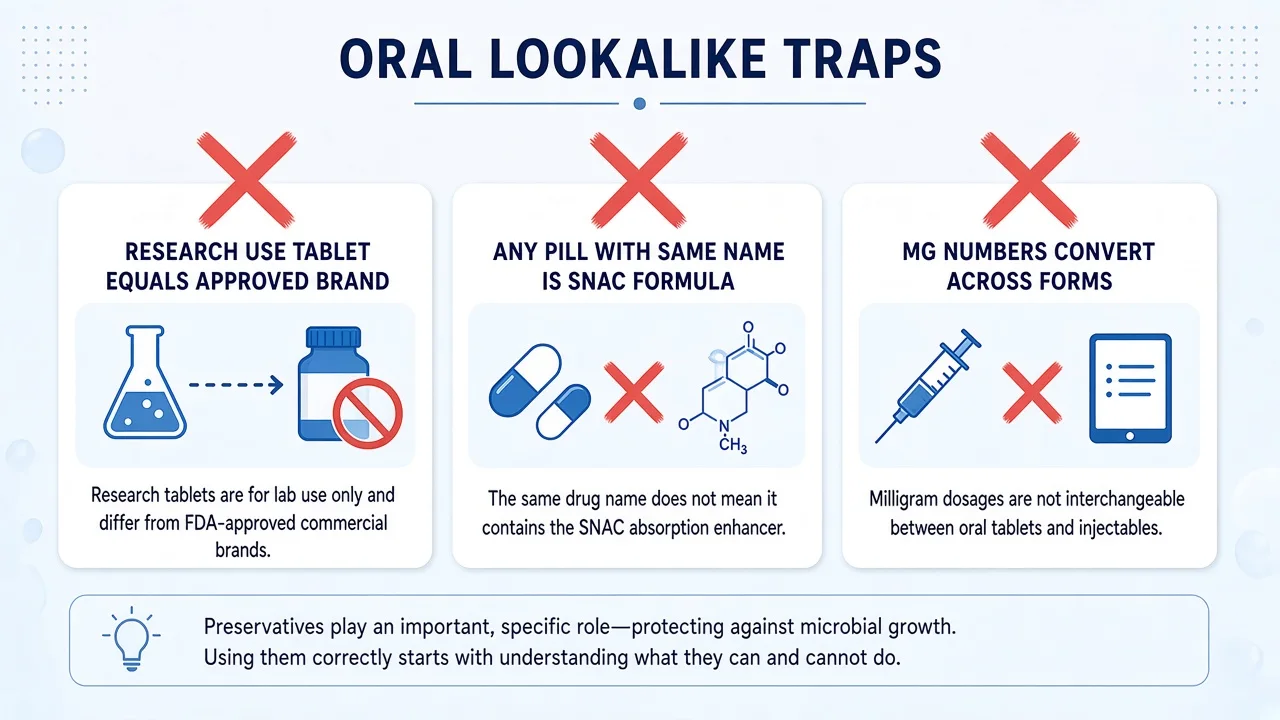
FDA has warned about unapproved GLP-1 related products marketed to consumers, including illegal online sales and products falsely labeled for research use or “not for human consumption.” Oral-looking tablets outside approved finished-drug channels are a literacy red flag, not a shortcut to a brand label.
Keep compounded GLP-1 vs FDA approved nearby when a seller uses pill photos to borrow approved-brand prestige.
Name similarity is not formulation identity
FDA has also discussed salt-form and lookalike naming problems around unapproved semaglutide products. A tablet that uses a similar word is not automatically the approved oral finished drug with SNAC co-formulation and reviewed labeling.
Verification checklist before sharing a form claim
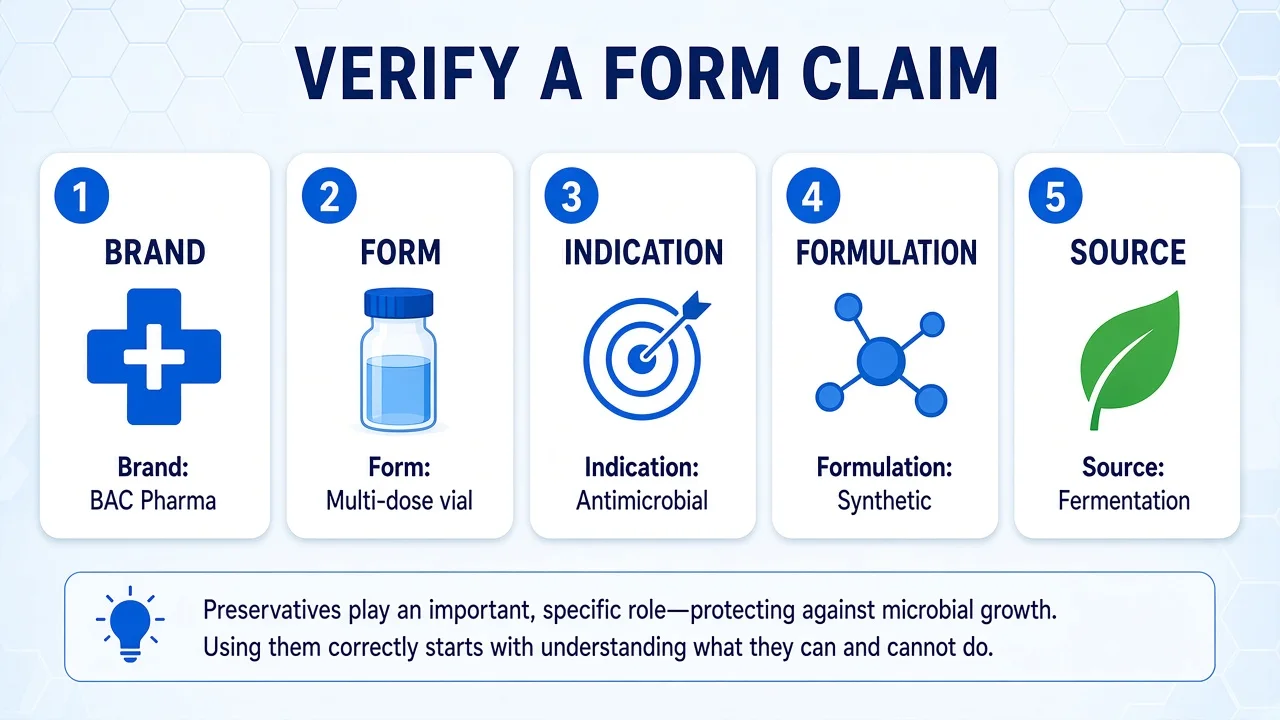
Use this checklist when a post compares oral and injectable semaglutide in one sentence.
- Brand named: Rybelsus, Ozempic, Wegovy, or only the molecule nickname?
- Form named: oral finished drug, injectable finished drug, or unspecified?
- Indication named: glycemic, weight management, cardiovascular, or vague “same effect” language?
- Formulation detail: approved finished drug versus marketplace lookalike?
- Source typed: current label, peer-reviewed paper, press release, or seller page?
Pause rule
If the post converts milligram numbers across forms or across oral formulations as if they were kitchen math, pause. Strength comparisons belong in official labeling and clinician care, not in viral conversion charts on this site.
What this page will not do
It will not publish dosing schedules, titration tips, food-timing protocols, or switching recipes between oral and injectable products. It will not rank forms for personal preference. It will not help readers obtain unapproved tablets or vials.
Those refusals keep the page inside formulation literacy.
Links back to Research & Science
This page sits under peptide research and science. Start from semaglutide research status for the broader molecule map, then peptide bioavailability for absorption vocabulary.
Brand twins continue in Ozempic vs Wegovy. Marketplace lookalikes belong under peptide safety education.