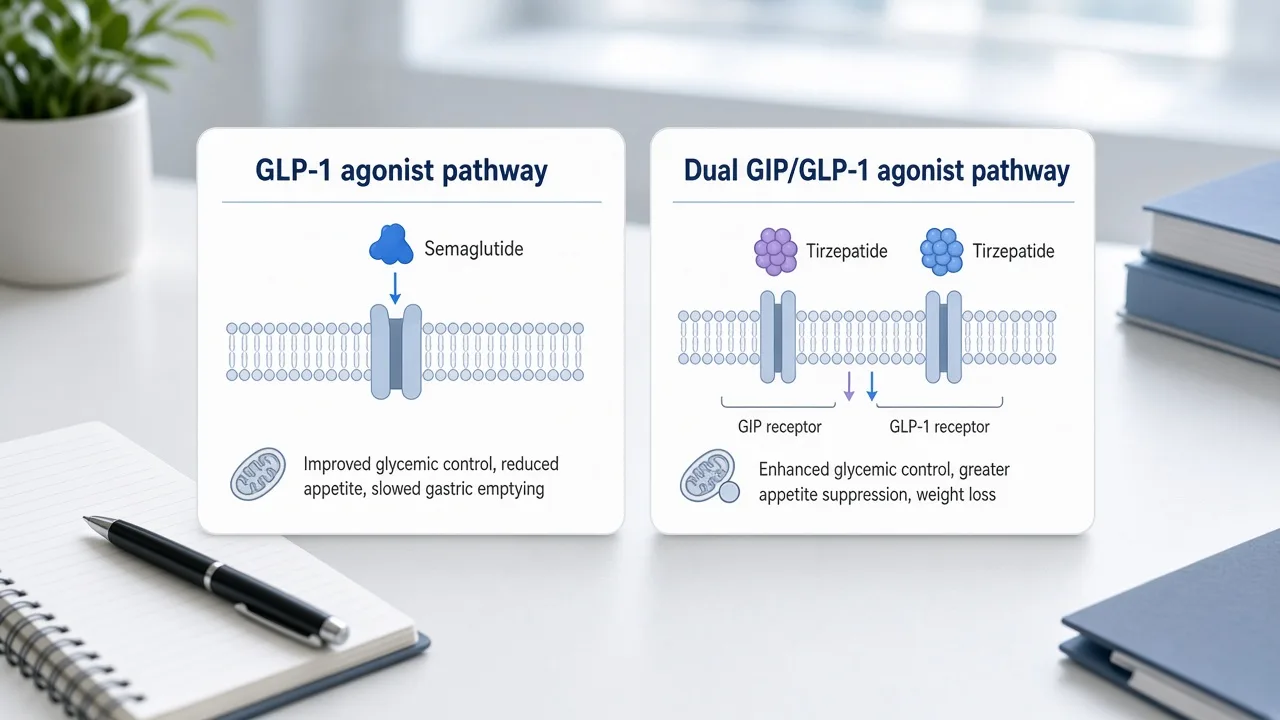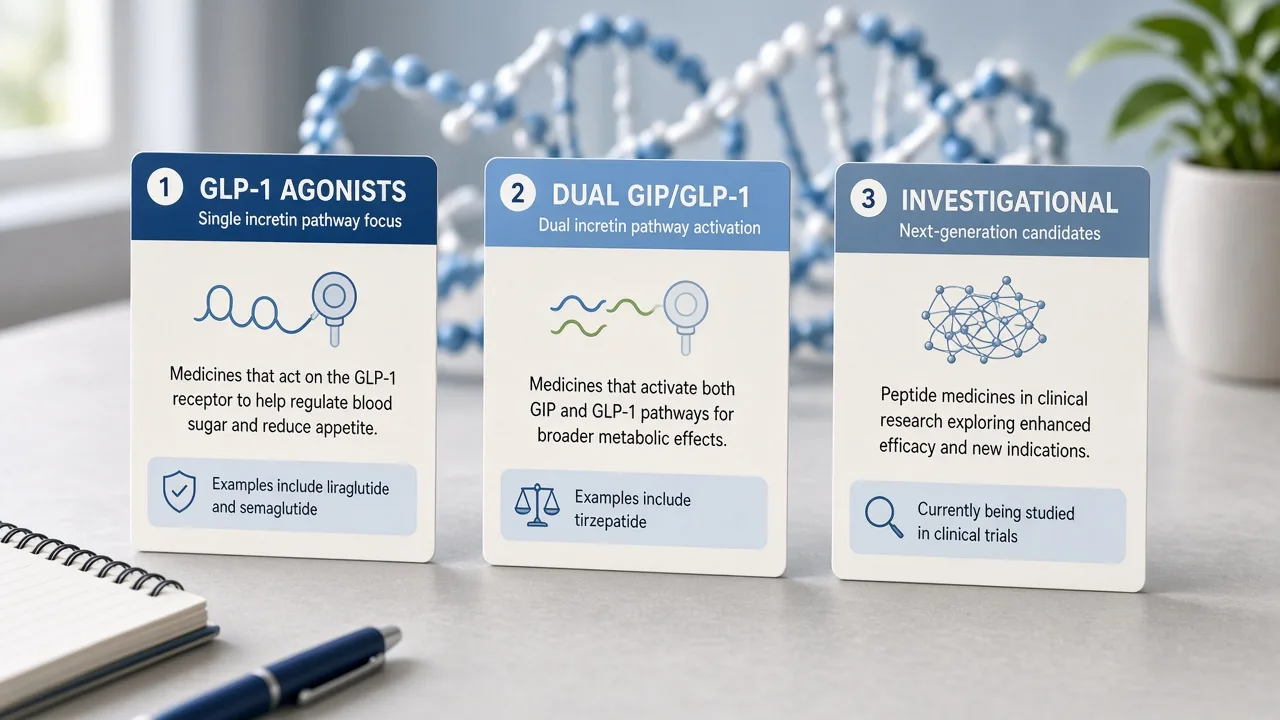

Ozempic and Wegovy both contain semaglutide, and that shared chemistry is why the internet treats the names as twins. They are not identical public objects. Each brand has its own prescribing information, labeled uses, populations, and limitations. This article teaches the fair comparison method for educational readers: molecule identity in one column, brand indication in another, form in a third. It is not medical advice, not a ranking, and not dosing or switching guidance.
Why this comparison gets oversimplified online
Searchers type “Ozempic vs Wegovy” because social posts treat the names as interchangeable slang for semaglutide. That slang is convenient and wrong for careful reading. Convenience collapses brand indication into chemistry identity.
A fair comparison starts with what is shared, then refuses to stop there. Shared active ingredient explains the nickname confusion. It does not erase labeled uses, populations, limitations, warnings, or form.
Broader molecule status lives in semaglutide research status. This page stays on the brand-twin problem.
The comparison method used here
This article compares literacy columns, not lifestyle winners. It will not crown a personal favorite, invent switching recipes, or translate trial averages into expectations for an unnamed reader.
Shared molecule, separate labels

Chemistry identity answers one question: both brands contain semaglutide and are described as GLP-1 receptor agonists. Indication labeling answers another: each brand’s prescribing information defines what use is claimed for which population.
Keeping those questions separate prevents most Ozempic versus Wegovy confusion online. The same reading pattern appears for tirzepatide brands in Mounjaro vs Zepbound.
Ozempic indication column
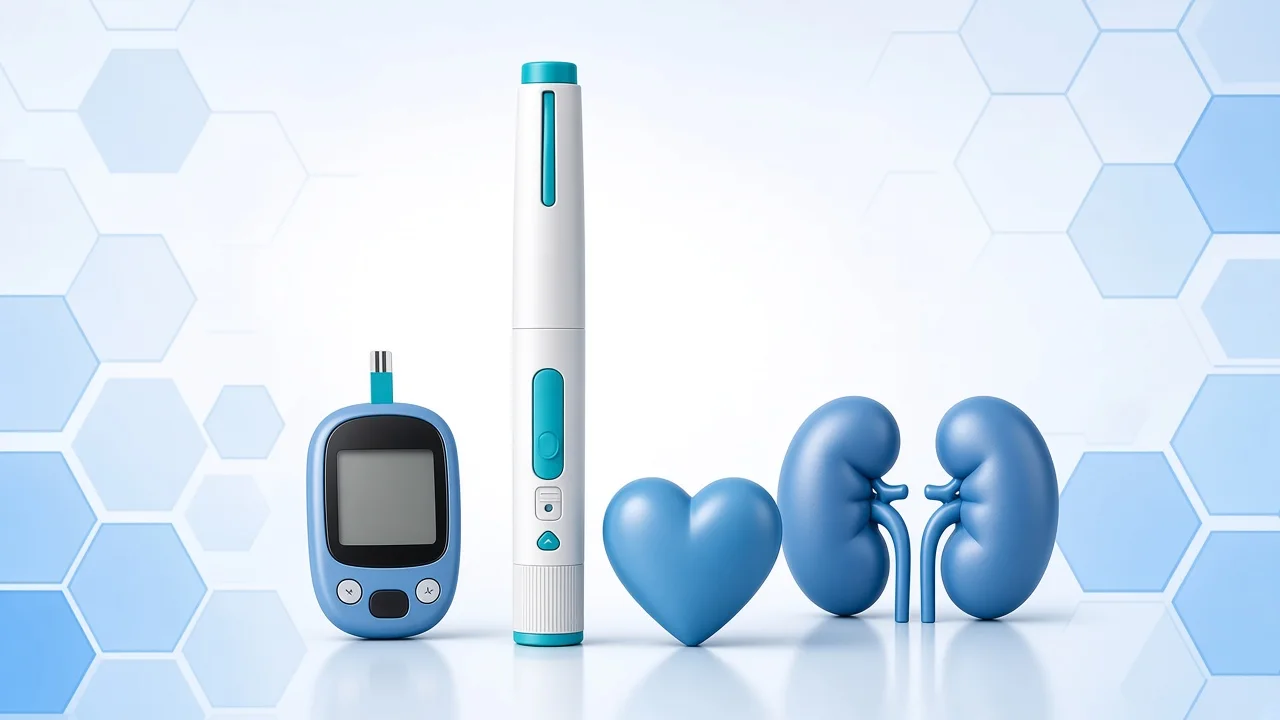
Current Ozempic injection labeling describes a GLP-1 receptor agonist indicated, with diet and exercise, to improve glycemic control in adults with type 2 diabetes mellitus.
The same label family also includes risk-reduction language for major adverse cardiovascular events in adults with type 2 diabetes and established cardiovascular disease, and kidney-related outcome language in adults with type 2 diabetes and chronic kidney disease.
Reading habit for Ozempic claims
If a post uses the Ozempic name for a pure weight-management slogan without diabetes context, ask whether the claim is brand-label language or borrowed slang. Weight change can appear in research and clinical discussion around diabetes care, but brand indication literacy still starts from the current label, not from a meme.
Wegovy indication column
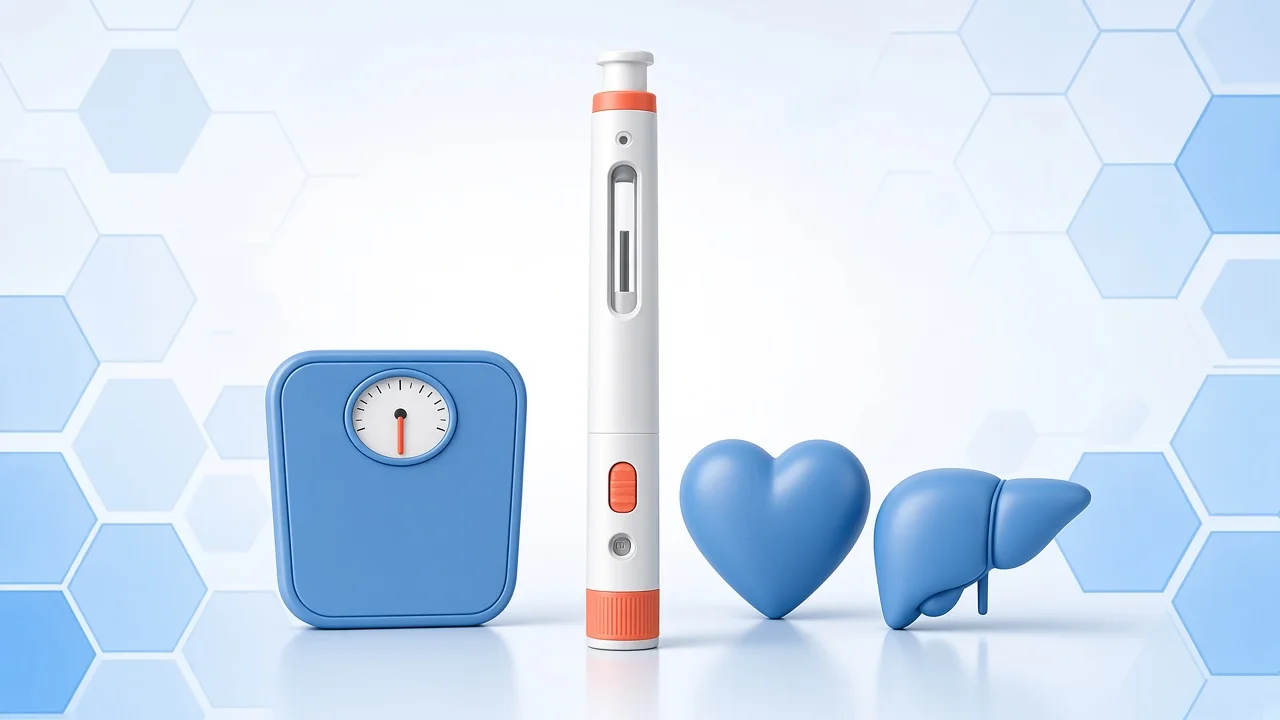
Current Wegovy labeling uses the same active ingredient name under a different brand framework. Label themes include reducing excess body weight and maintaining weight reduction long term in adults and pediatric patients aged 12 years and older with obesity, and in adults with overweight plus at least one weight-related comorbid condition, in the labeled diet-and-activity framing.
Wegovy labeling also includes major adverse cardiovascular event risk-reduction language in adults with established cardiovascular disease and either obesity or overweight, plus accelerated-approval language for noncirrhotic metabolic dysfunction-associated steatohepatitis (MASH) with moderate to advanced fibrosis in adults.
Accelerated approval needs an extra note
Accelerated-approval language is a regulatory literacy detail: continued approval for that indication may depend on confirmatory evidence. It is not a reason to invent home protocols, and it is not proof that every online “liver detox” claim belongs to the brand.
The overlapping cardiovascular language trap
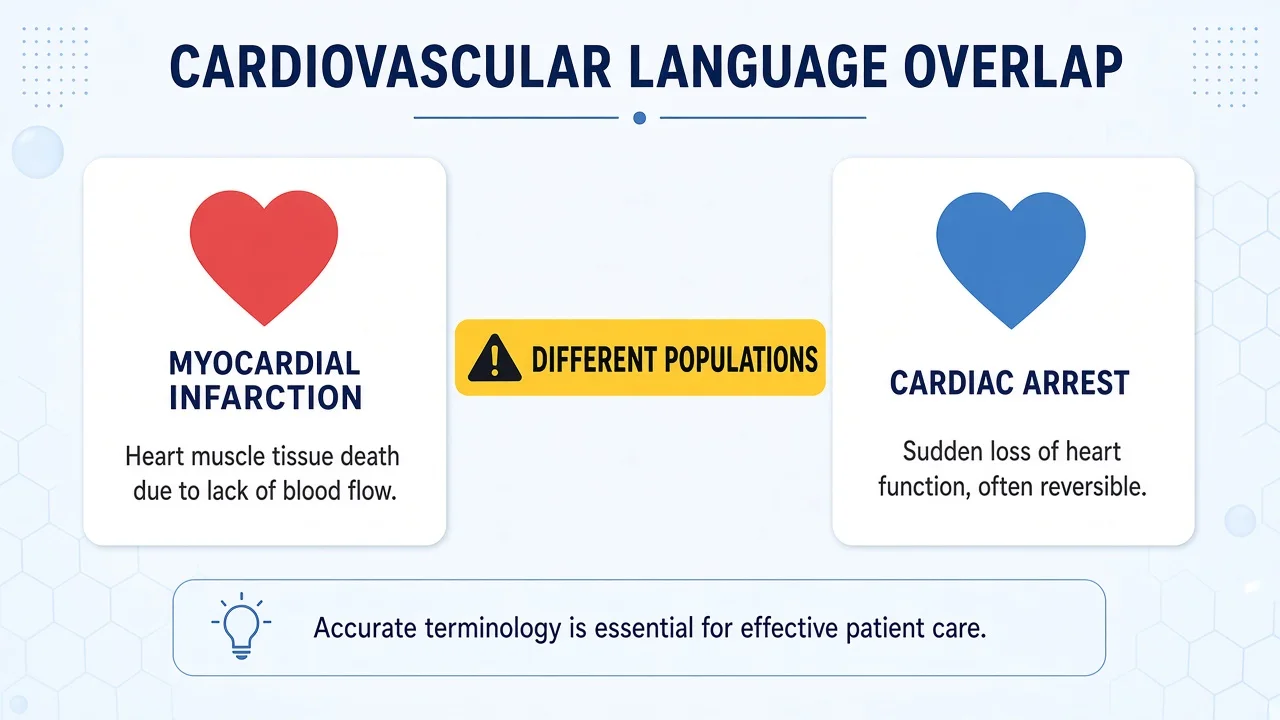
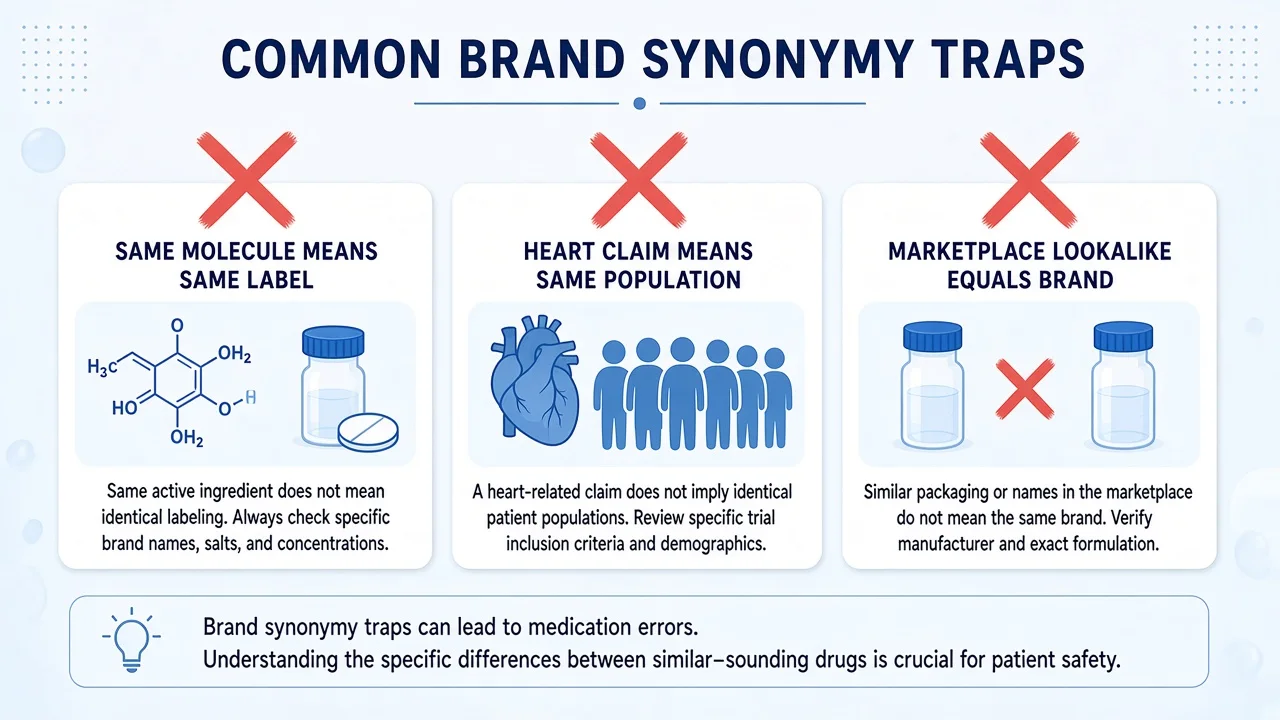
Both brands can appear in headlines about heart risk reduction. That overlap is exactly where synonymy errors grow. The endpoint family may sound the same while the labeled population differs.
Educational contrast: Ozempic cardiovascular language is tied to adults with type 2 diabetes and established cardiovascular disease. Wegovy cardiovascular language is tied to adults with established cardiovascular disease and either obesity or overweight. Readers should quote the population, not only the endpoint acronym.
Why population detail is the whole point
If a chart says “semaglutide cuts heart risk” without naming brand and population, it is incomplete for brand literacy. Completing the sentence with the wrong brand is how misinformation spreads while sounding scientific.
Form is a third column, not a footnote
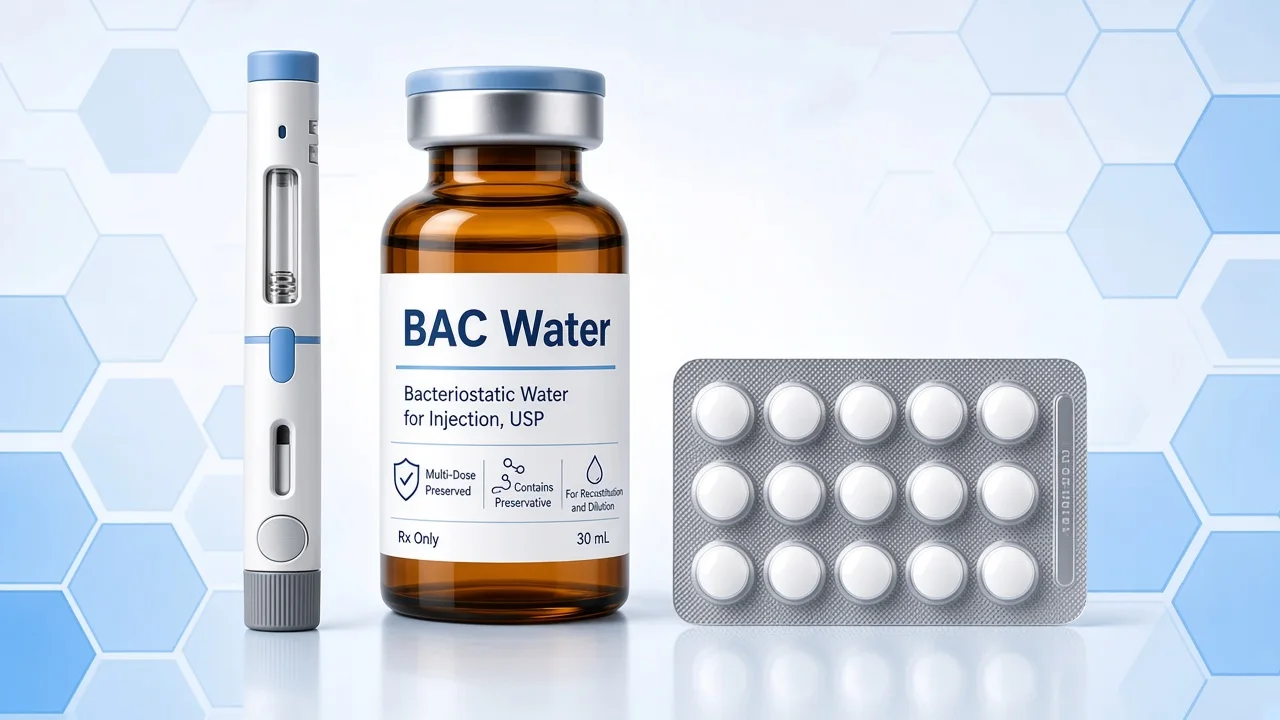
Public nicknames often erase form. Injectable and oral finished-drug presentations are labeled as specific products, and presentations can evolve over time. A claim that says only “Ozempic” or only “Wegovy” without form can still be incomplete.
Oral-versus-injectable literacy for semaglutide products continues in oral vs injectable semaglutide. This comparison page refuses to reprint administration instructions for any form.
Where Rybelsus fits in the wider map
Rybelsus is another familiar oral semaglutide brand in public conversation. It is not a silent third twin inside every Ozempic-versus-Wegovy meme. When oral products enter the discussion, name them explicitly and return to the molecule status page if needed.
Shared warning themes still need brand labels
Both brand labels include a boxed warning about thyroid C-cell tumors observed in rodents, with related contraindication language involving personal or family history of medullary thyroid carcinoma or MEN2. Shared warning themes are part of responsible reading.
Shared warning language does not collapse the brands into one object. Safety literacy and indication literacy are parallel skills, not substitutes for each other.
Synonymy traps this comparison should refuse
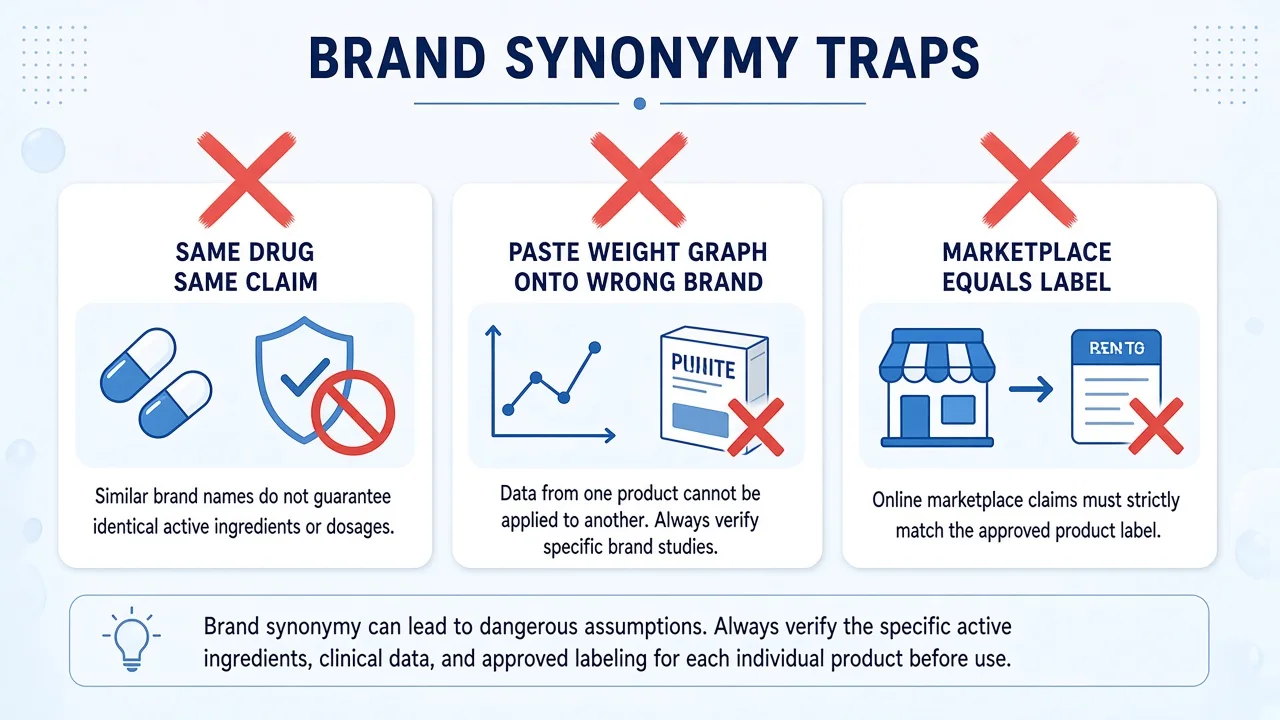
Trap one: “same drug, so same claim.” Trap two: pasting a weight-management percentage onto an Ozempic-named post without brand and population checks. Trap three: treating marketplace “semaglutide” as either brand. Trap four: using an old label screenshot after a revision.
For media habits around obesity-drug headlines, continue with how to read obesity drug trial headlines. For cross-molecule mechanism comparisons, use semaglutide vs tirzepatide.
- Shared chemistry is not shared brand indication.
- Shared endpoint words can hide different populations.
- Shared warning themes do not erase brand columns.
- Seller synonymy is not label synonymy.
Marketplace lookalikes are outside both brands
FDA has warned about unapproved GLP-1 products, counterfeit risks, and research-use consumer marketing that borrows the prestige of approved brand names. A product that claims to be “the same as Ozempic” or “Wegovy alternative” is making a marketing move, not proving brand identity.
Keep compounded GLP-1 vs FDA approved nearby when the comparison leaves official labels.
How to verify before sharing a claim
Use this checklist whenever an Ozempic-versus-Wegovy post sounds certain and short.
- Brand named clearly: Ozempic, Wegovy, or only “semaglutide”?
- Indication named: glycemic, weight management, cardiovascular, kidney, MASH, or vague “better” language?
- Population named: diabetes, obesity, overweight plus comorbidity, age group, or missing?
- Form named: injectable finished drug, oral finished drug, or unspecified?
- Source typed: current label, peer-reviewed paper, press release, or seller page?
Pause rule
If the post mixes diabetes and weight-management language without naming brand and population, pause. Completing the missing words for the poster is how literacy fails.
What this page will not do
It will not publish dosing schedules, titration tips, or switching recipes between brands. It will not rank clinics or sellers. It will not declare a lifestyle winner from a single chart. It will not help readers obtain unapproved products.
Those refusals keep the page inside comparison literacy.
Links back to Comparisons & News
Return to peptide comparisons and research news for the fair-comparison method that keeps molecule identity and labeled indication in separate columns.
Molecule status detail continues in semaglutide research status under peptide research and science. Marketplace lookalikes belong under peptide safety education.